
5 best submersible aquaculture lights for offshore pen farming
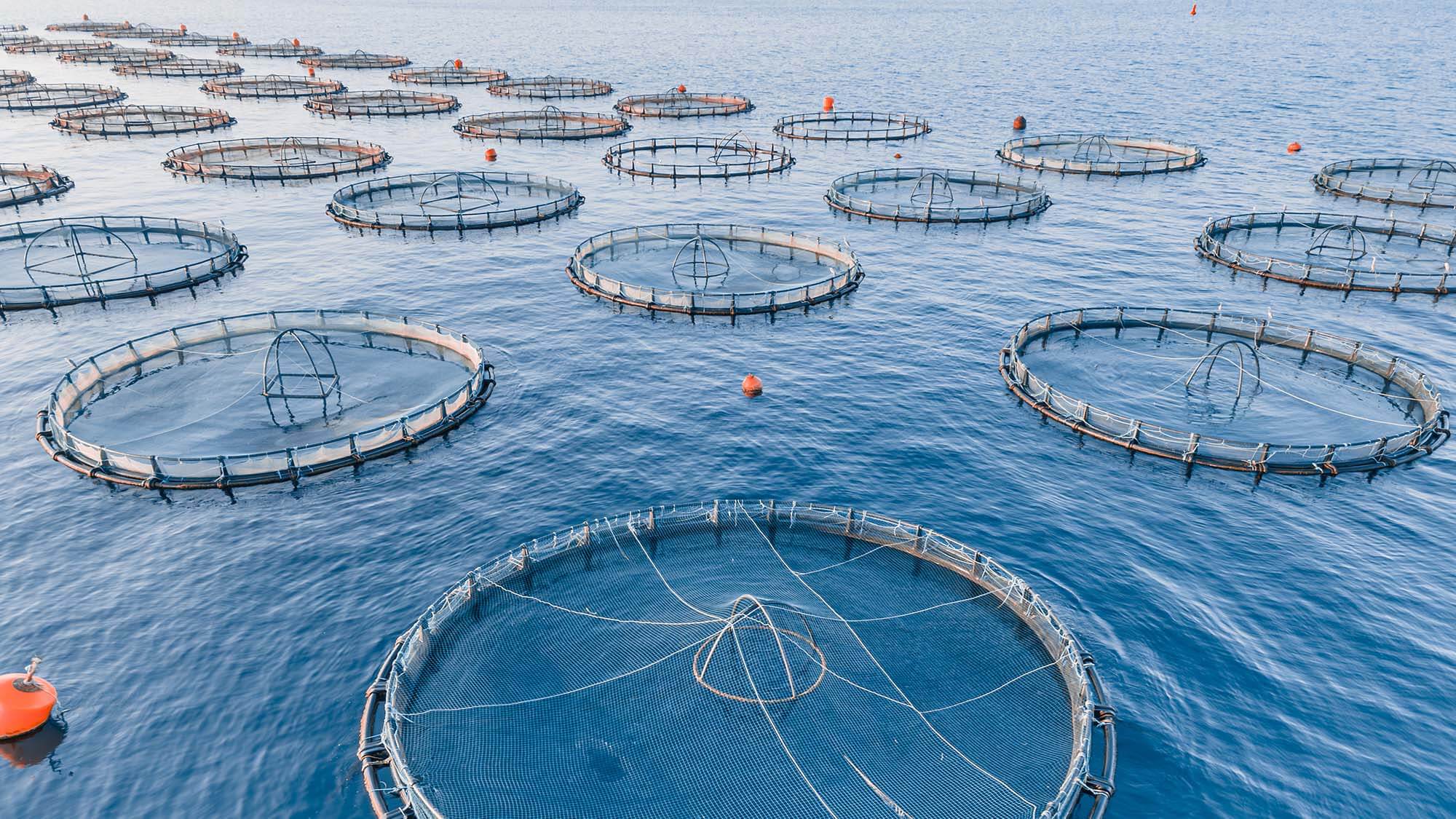
Offshore pen farming demands more from aquaculture lighting than most environments. Vessels operating near cage perimeters in reduced visibility, regulatory requirements for marked structures, and the physical punishment of open-water conditions all set a high bar for any lighting solution. This guide examines five submersible and marine-rated aquaculture lights used in offshore pen farming, evaluating each on the criteria that matter most to farm operators: reliability under load, compliance credentials, power independence, and practical maintenance demands.
What Separates Reliable Offshore Aquaculture Lighting
Offshore pen farming presents a specific combination of hazards that standard marine lighting is not always designed to address. Cage perimeters must be clearly marked to prevent vessel strikes, underwater structures need to be visible to divers and ROV operators, and working areas require consistent illumination through multi-day weather events. The lighting solutions that perform in these conditions share a common set of characteristics: sealed construction rated for continuous submersion, power systems that operate independently of shore infrastructure, and flash patterns or intensity levels that meet the visibility requirements set by maritime authorities.
Regulatory compliance is not optional in offshore aquaculture. Most national maritime authorities require that fish farm installations be marked in accordance with IALA recommendations, and failure to maintain compliant lighting can result in permit suspension or legal liability following an incident. The five options reviewed here represent different approaches to meeting those requirements, ranging from purpose-built aquaculture marker lights to high-performance solar marine lanterns adapted for farm perimeter marking.
When evaluating submersible aquaculture lights and offshore pen farming lights, the key criteria are: IP or IK rating for submersion depth and impact resistance, power source independence, available flash characters and IALA colour compliance, remote monitoring capability, and service life under continuous salt water exposure.
Sabik SBFL 160 Marker Light: Purpose-Built for Aquaculture Farm Marking
The Sabik SBFL 160 is the only light on this list designed specifically for aquaculture farm applications, and that specificity is its primary differentiator. Where other options require adaptation from marine aids-to-navigation use cases, the SBFL 160 addresses the aquaculture environment directly, meeting requirements for both daytime and nighttime visibility as well as radar detection in a single integrated unit.
The SBFL 160 houses its LED lantern, light reflectors, and an internal radar reflector within a yellow buoy tube, powered by an integrated alkaline battery. The IALA-standard yellow colouring signals an obstruction to approaching vessels, and the internal radar reflector ensures the installation remains detectable in conditions where optical visibility is compromised. The unit is designed for direct installation on floats, which eliminates the need for separate mounting infrastructure and simplifies deployment across multiple cage positions.
This light is best suited to offshore fish farmers who need to mark cage perimeters in compliance with national maritime regulations without complex installation procedures. The self-contained design means no external wiring, no solar panel alignment, and no separate battery housing to maintain. For operators managing a large number of cage markers across an exposed offshore site, the SBFL 160’s direct-float installation and low maintenance profile represent a practical operational advantage.
Sabik M660 Self-Contained LED Lantern: Long-Life Solar Performance for Cage Perimeters
The M660 is a high-performance solar-powered marine lantern with an eight-year battery service life, making it one of the most maintenance-efficient options available for offshore aquaculture lighting. Its combination of adjustable intensity, IALA-compliant colour options, and a built-in calendar for off-season deactivation makes it well suited to fish farms that operate seasonally or that need to reduce power consumption during extended periods of low activity.
The M660 carries five available colours meeting IALA chromaticity requirements, including the yellow designation used for obstruction marking. Its 80-degree vertical divergence ensures the light remains visible across a wide range of sea states and vessel approach angles, which is particularly relevant for offshore farms where swell conditions can vary significantly. The optional dual Li-ion battery pack extends autonomous operation further, and the built-in calendar function allows operators to programme deactivation windows without requiring a site visit. Bluetooth connectivity enables configuration using an IR programmer, reducing the need for physical handling during routine adjustments.
The M660 is best suited to offshore pen operators who prioritise long service intervals and solar-powered independence from shore infrastructure. With four mounting options and a UV-resistant polycarbonate and polysiloxane body, it is designed to withstand prolonged salt water exposure and UV degradation in open-water deployments. Operators managing remote offshore sites where maintenance vessel access is costly will find the M660’s eight-year battery service life and minimal intervention requirements directly aligned with their operational priorities.
Sabik VPL 110 Integrated Buoy Lantern: Remote Monitoring for Distributed Farm Networks
The VPL 110 distinguishes itself through its native integration with the LightGuard Monitor remote monitoring platform, making it the strongest option on this list for offshore fish farm operators who need real-time status visibility across multiple installation points. In distributed aquaculture operations where individual cage markers may be spread across several kilometres of open water, the ability to detect a non-operational light without dispatching a maintenance vessel has direct safety and cost implications.
The VPL 110 is a solar-powered integrated buoy lantern designed for ultra-low power consumption, with GNSS synchronisation as standard and Bluetooth programming via an Android or iOS application. Its adjustable intensity and range, combined with IALA-standard colours and an 80-degree vertical divergence, deliver consistent omnidirectional visibility across the cage perimeter. The optional LightGuard Monitor connectivity enables farm operators or their maintenance teams to access battery status, operational data, and alarm notifications through a web-based interface on any device, without requiring a site visit to assess equipment condition.
This lantern is best suited to operators managing large or geographically dispersed offshore aquaculture installations where the cost of undetected equipment failure is high. The LightGuard Monitor integration transforms individual cage markers into a connected network, enabling proactive maintenance scheduling rather than reactive responses to reported outages. For operations where a single unlit marker could constitute a regulatory breach or contribute to a vessel collision, the VPL 110’s monitoring capability addresses a genuine operational risk.
Sabik M850 Self-Contained LED Lantern: Extended Range for High-Traffic Offshore Zones
The M850 delivers visibility up to 36 nautical miles in its maximum configuration, making it the highest-range option in this review and the appropriate choice for offshore aquaculture installations located in or adjacent to active shipping lanes or high-traffic coastal waters. Where standard cage marker lights are designed for short-range identification, the M850 provides the kind of extended-range performance that ensures an offshore farm is visible well before a vessel reaches the perimeter.
The M850 features GPS-synchronised flash capability, which enables multiple lanterns across a farm installation to operate in coordinated patterns, reducing the risk of confusion with other navigation marks in the area. Its powder-coated aluminium chassis and UV-resistant polycarbonate lens are designed for long service life in exposed marine environments, and multiple battery pack options allow the system to be configured for the specific solar availability and operational duration requirements of the deployment site. Bluetooth and Satcom connectivity, combined with Sabik LightGuard Bluetooth monitoring, support remote status checks and configuration without on-site access.
The M850 is best suited to offshore fish farmers operating in areas with significant vessel traffic, where the consequences of reduced visibility extend beyond regulatory non-compliance to active collision risk. The GPS synchronisation feature is particularly valuable for large installations where multiple lanterns need to present a coherent, recognisable pattern to approaching vessels. Operators in high-latitude locations with variable solar conditions will also benefit from the M850’s multiple battery pack options, which allow the power configuration to be matched to actual insolation levels at the installation site.
Sabik M860 Self-Contained LED Lantern: Reliable Performance in Low-Insolation Environments
The M860 is engineered specifically for remote and low-insolation deployments, making it the most operationally resilient option for offshore aquaculture sites at higher latitudes or in regions with extended overcast periods. While most solar-powered marine lanterns are designed for average solar conditions, the M860’s large-format solar engine is sized to maintain reliable performance where other systems would experience battery depletion during extended periods of reduced sunlight.
The M860 delivers a range of up to 37 nautical miles and shares the M850’s powder-coated aluminium chassis and UV-resistant polycarbonate lens construction. Its built-in calendar for off-season deactivation, tap-to-activate LED display for field diagnostics, and adjustable intensity and range give operators practical control over the lantern’s operation without requiring specialist equipment. Bluetooth and Satcom connectivity support remote configuration and monitoring, and the standard and wide divergence options allow the lantern to be configured for fixed or floating applications depending on the cage structure.
The M860 is best suited to offshore fish farmers operating in northern waters, high-latitude sites, or any location where seasonal light reduction creates a genuine risk of solar power deficit. Norwegian, Scottish, Icelandic, and Canadian offshore aquaculture operators in particular will find the M860’s large-format solar engine addresses a real operational constraint that standard solar lanterns may not reliably overcome. For installations where a power failure during winter months would leave cage perimeters unmarked for extended periods, the M860’s design philosophy directly mitigates that risk.
Choosing the Right Light for Your Offshore Operation
Selecting the appropriate LED aquaculture lights for an offshore pen farming operation depends on four primary factors: the regulatory requirements of the relevant maritime authority, the traffic density and vessel types operating near the installation, the solar resource available at the deployment latitude, and the operator’s capacity for on-site maintenance.
For operators whose primary requirement is straightforward regulatory compliance with minimal installation complexity, the SBFL 160’s purpose-built design and direct-float mounting make it the most immediate solution. For farms in high-traffic areas where extended visibility range is a safety priority, the M850 and M860 provide the output levels and GPS synchronisation needed to mark an installation clearly against a busy navigational background. Where remote monitoring is the priority, the VPL 110 with LightGuard Monitor integration provides real-time network status across a distributed installation without requiring additional hardware investment.
Power independence is a consistent requirement across all offshore aquaculture lighting applications. Grid connectivity is rarely available at open-water cage sites, and reliance on battery-only systems without solar recharging creates maintenance intervals that are operationally impractical at remote locations. All five options reviewed here operate on solar or primary battery power, but the M860’s large-format solar engine sets it apart for sites where seasonal insolation is a genuine constraint rather than a minor variable.
With more than 20 years of experience developing aquaculture lighting solutions for offshore environments, Sabik designs its products to perform in the conditions that define open-water fish farming: sustained salt water exposure, storm-force weather events, and continuous 24-hour operation across multi-year service periods. Sabik’s aquaculture lighting range covers the full spectrum of offshore marking requirements, from individual cage markers to coordinated multi-lantern farm perimeter systems with remote monitoring capability.