
9 ways a lighting upgrade can fix slow fish growth rates
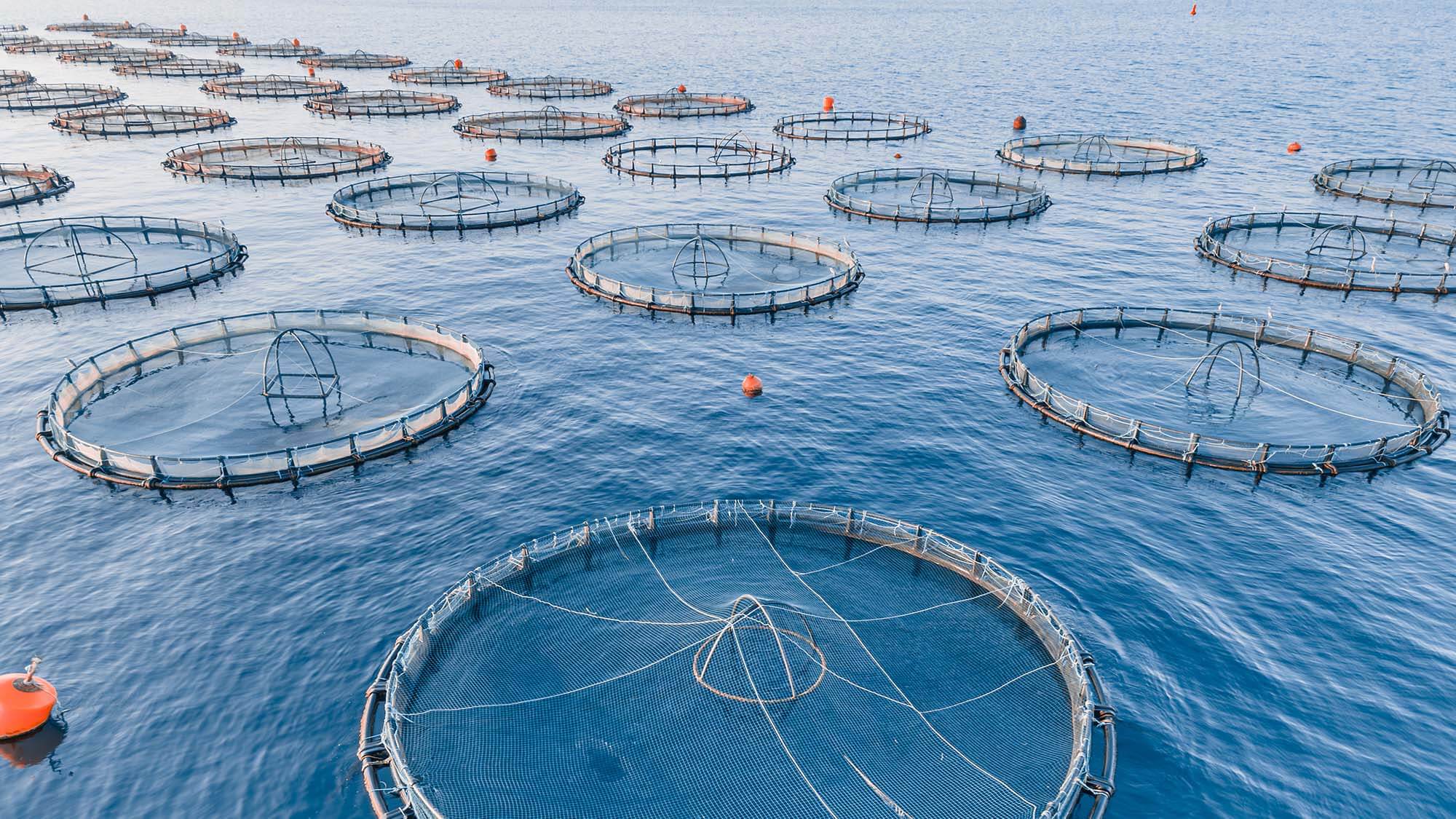
Slow fish growth rates in offshore aquaculture are rarely the result of a single cause, but lighting is one of the most controllable variables available to farm operators. Light governs photoperiod perception, feeding behaviour, stress responses, and hormonal cycles in most commercially farmed species. When aquaculture lighting is poorly matched to species requirements, inadequately maintained, or simply outdated, the biological consequences show up directly in growth performance and feed conversion ratios. A structured lighting upgrade, guided by the right technical decisions, addresses these losses systematically. The nine approaches below represent the most impactful changes offshore fish farmers can make to their fish farm lighting infrastructure in 2026.
How Lighting Directly Controls Fish Growth
Fish do not experience light passively. Photoperiod signals regulate melatonin and growth hormone secretion in many commercially farmed species, including Atlantic salmon, sea bass, and sea bream. Extended or manipulated light cycles can suppress early sexual maturation, accelerate smoltification in salmonids, and increase the proportion of the year during which fish actively feed and convert nutrients into body mass.
The relationship between aquaculture lighting and fish growth rates operates across several biological mechanisms simultaneously. Light intensity at depth determines whether submerged fish in a cage actually receive a meaningful photoperiod signal. Spectral composition affects how deeply light penetrates seawater and how strongly it stimulates photoreceptors in different species. The timing and consistency of the light cycle influence circadian rhythm stability, which in turn affects feed intake and digestive efficiency.
Understanding these mechanisms is the foundation of any effective LED aquaculture lights strategy. The nine upgrades below address each mechanism in turn, from spectrum selection through to remote diagnostics and fixture durability.
1: Match Light Spectrum to Your Fish Species
Spectral matching is the single most species-specific decision in aquaculture lighting design. Different fish species have evolved photoreceptor sensitivities tuned to the light environments of their natural habitats, and a light source that delivers the wrong wavelengths wastes energy while failing to produce the intended biological response.
Atlantic salmon respond most strongly to green and blue wavelengths, which align with the spectral transmission window of cold northern waters. Warmer-water species such as sea bass and sea bream show broader spectral sensitivity but still benefit from fixtures optimised for the blue-green range that dominates shallow marine environments. Red wavelengths attenuate rapidly with depth, making red-heavy light sources largely ineffective for submerged cage lighting regardless of their surface intensity.
Modern LED aquaculture lights allow precise spectral tuning that was not achievable with legacy incandescent or fluorescent systems. When specifying a lighting upgrade, request spectral data from the manufacturer and cross-reference it against published photoreceptor sensitivity data for your target species. This single step can meaningfully improve the biological effectiveness of your light output without increasing energy consumption.
2: Extend Photoperiod to Suppress Early Maturation
Early sexual maturation is one of the most economically damaging events in offshore salmonid farming. Fish that mature prematurely divert energy from somatic growth to reproductive development, reducing flesh quality, increasing feed conversion ratios, and shortening the productive growing window. Controlled photoperiod extension using underwater lighting is one of the most well-established tools for suppressing this process.
Continuous light or extended photoperiod regimes applied during critical developmental windows prevent the short-day signal that triggers maturation onset in many salmonid populations. The timing and duration of these light treatments must be calibrated to the specific production cycle and geographic latitude of the farm, since the ambient photoperiod varies significantly between high-latitude Norwegian fjords and temperate Atlantic sites.
Implementing photoperiod control requires reliable, programmable aquaculture lighting that can maintain consistent output over extended periods without interruption. Fixtures with built-in calendar control and programmable flash characters, such as those available across Sabik’s marine lantern range, provide the scheduling precision that photoperiod manipulation demands. Any interruption in the light regime during a critical treatment window can reduce its effectiveness and compromise the season’s growth targets.
3: Optimise Light Intensity at Depth
Surface-mounted or poorly positioned lights frequently fail to deliver adequate intensity at the depths where fish actually spend most of their time. In a typical offshore cage, fish may be distributed from the surface to depths of 20 metres or more. A light source that reads as high-intensity at the water surface may be delivering a negligible signal to fish at the bottom of the net pen.
Intensity at depth is determined by the initial output of the fixture, the spectral composition of the light, water clarity, and the angle of light distribution. Turbid or heavily biofouled water conditions, common in productive aquaculture sites, accelerate attenuation significantly. Calculating the required surface intensity to achieve a target intensity at the maximum stocking depth requires site-specific data on water clarity and should be revisited seasonally as conditions change.
Submersible LED aquaculture lights positioned within the cage volume, rather than mounted externally, deliver intensity where it is biologically relevant and reduce the attenuation losses associated with surface-to-depth transmission. When designing a lighting upgrade, model the intensity distribution across the full depth profile of each cage rather than specifying fixtures based on surface output alone. This approach ensures that fish growth rates benefit from the full investment in new lighting infrastructure.
4: Use Dynamic Dimming to Mimic Natural Cycles
Abrupt transitions between full artificial light and darkness create physiological stress responses in farmed fish. Natural light cycles are characterised by gradual dawn and dusk transitions that allow fish to adjust their behaviour, feeding activity, and hormonal status progressively. Replicating these transitions through dynamic dimming improves welfare outcomes and supports more consistent feed intake across the day.
Dynamic dimming also enables farms to apply light at the precise intensity required for a given time of day or production stage, rather than operating at maximum output continuously. During periods when only a low-level photoperiod signal is required, reducing intensity conserves battery capacity in solar-powered systems and extends fixture service life by reducing thermal load on LED components.
Fixtures with automatic intensity adjustment, such as those using the Schmidt-Clausen method for day-to-night transition control, provide this capability without requiring manual intervention. The VLB-5X-SA and VLB-5X-SS lanterns in Sabik’s range offer 12 programmable day-to-night transition levels, allowing farm operators to configure light transitions that align with their species requirements and site conditions. This level of control represents a meaningful improvement over fixed-output legacy systems.
5: Synchronise Lights Across Multiple Cages
Offshore fish farms typically operate multiple cages in close proximity, and inconsistent light timing between cages introduces variability in the photoperiod signal received by fish in different units. Fish that are exposed to slightly different light cycles across a production cohort will show divergent maturation timing and growth trajectories, complicating harvest scheduling and reducing the uniformity of the final product.
GNSS synchronisation enables all lights on a farm to operate on precisely the same timing reference, regardless of individual battery states or programming drift over time. This ensures that photoperiod treatments are applied consistently across every cage simultaneously, eliminating the biological variability introduced by unsynchronised fixtures.
The SBFL 160 Marker Light and VPL 110 Integrated Buoy Lantern both incorporate GNSS synchronisation as standard, making farm-wide light timing consistency achievable without complex wired infrastructure. For offshore fish farming operations managing six or more cages, synchronisation is not an optional feature but an operational requirement for maintaining cohort uniformity and predictable growth performance.
6: Reduce Light Pollution to Protect Feed Efficiency
Uncontrolled light spill beyond the intended cage boundaries attracts zooplankton, jellyfish, and other organisms that compete with farmed fish for feed or introduce welfare risks. It also creates light gradients within cages that cause fish to aggregate near the light source rather than distributing evenly across the feeding zone, reducing feed utilisation efficiency and increasing competition stress.
Fixtures with controlled vertical and horizontal divergence direct light output into the water column where it is needed, rather than broadcasting broadly across the sea surface. This targeted approach reduces the biological draw on unwanted organisms while ensuring that the photoperiod signal reaches the intended depth range within the cage. An 8-degree vertical divergence, as specified in several Sabik aquaculture and buoy lanterns, concentrates output within a defined cone rather than dispersing it across a wide arc.
Reducing light pollution also has regulatory implications at sites located near sensitive marine habitats or other aquaculture operations. Demonstrating that your lighting installation minimises environmental impact beyond the farm boundary supports licence compliance and constructive relationships with maritime authorities. This is an increasingly relevant consideration as offshore fish farming expands into areas subject to environmental monitoring requirements.
7: Switch to Low-Heat LEDs to Avoid Thermal Stress
Legacy lighting technologies, including metal halide and high-pressure sodium fixtures, generate significant thermal output alongside their light output. In enclosed or semi-enclosed aquaculture environments, this heat contribution can elevate water temperature locally around the light source, creating thermal gradients that cause fish to avoid the illuminated zone and reduce the effectiveness of the photoperiod treatment.
LED technology converts a substantially higher proportion of electrical input into light rather than heat, making LED aquaculture lights the appropriate choice for any installation where thermal management is a consideration. In warmer-water species farming, where fish are already operating close to their thermal tolerance limits during summer months, eliminating unnecessary heat sources is an operational priority rather than a secondary concern.
Beyond thermal management, the long service life of LED fixtures reduces the frequency of maintenance interventions in offshore environments where every service visit carries significant operational cost and weather-dependent risk. Sabik’s LED marine lanterns are designed for long service life in demanding marine conditions, with UV-resistant polycarbonate and polysiloxane housings that maintain optical performance over multi-year deployment cycles. This durability directly reduces the risk of light cycle interruptions that would compromise ongoing photoperiod treatments.
8: Monitor Light Performance with Remote Diagnostics
A lighting upgrade delivers its intended benefits only for as long as every fixture operates to specification. In offshore aquaculture environments, fixture failures caused by biofouling, storm damage, battery depletion, or component degradation are not immediately visible from shore. An undetected failure in a photoperiod lighting system can allow maturation to proceed unchecked through an entire growing cycle before the problem is identified.
Remote monitoring capability transforms this risk profile. Systems that provide real-time status data on battery levels, operational hours, and alarm conditions allow farm operators to identify and respond to failures before they produce measurable biological consequences. The LightGuard Monitor, available as an option on compatible Sabik lanterns including the VPL 110, delivers this visibility through a web-based interface accessible on any device, without requiring dedicated hardware on site.
For offshore fish farming operations where the cost of a maintenance vessel deployment is significant and weather windows are limited, remote diagnostics also enables planned maintenance to replace reactive callouts. Knowing the battery state and operational history of every fixture on the farm allows maintenance to be scheduled efficiently, reducing total operational cost while maintaining the continuity of light treatments that fish growth rates depend on.
9: Select Corrosion-Resistant Fixtures for Long-Term Reliability
Offshore marine environments subject lighting fixtures to continuous salt spray, biofouling, UV radiation, and mechanical stress from wave action and mooring loads. Fixtures that are not engineered specifically for these conditions will degrade rapidly, with corrosion compromising electrical connections, optical surfaces, and structural integrity within months of deployment.
The materials specification of an aquaculture lighting fixture is therefore a direct determinant of its long-term performance. UV-resistant polycarbonate and polysiloxane housings maintain optical clarity and structural integrity under prolonged solar and marine exposure. Powder-coated aluminium chassis resist corrosion in salt-laden atmospheres without the weight penalty of stainless steel alternatives. Sealed battery compartments with appropriate ventilation protect electrochemical components from moisture ingress while preventing pressure build-up in temperature-cycling environments.
Sabik has been engineering marine lanterns for offshore environments for over four decades, with aquaculture-specific lighting solutions developed and refined over more than 20 years of deployment across a wide range of offshore conditions. The aquaculture lighting range is designed to withstand the same demanding conditions as aids-to-navigation infrastructure in Arctic and open-ocean deployments, providing the long service life and consistent performance that offshore fish farm productivity requires. Selecting fixtures built to this standard reduces the total lifecycle cost of a lighting upgrade and protects the continuity of biological programmes that depend on uninterrupted light delivery.
Building a Lighting Strategy That Scales with Your Farm
The nine upgrades above are most effective when implemented as part of a coherent lighting strategy rather than as isolated interventions. Matching spectrum to species biology, for example, delivers limited value if intensity at depth is insufficient for that spectrum to produce a meaningful photoperiod signal. Similarly, GNSS synchronisation across multiple cages achieves its full benefit only when the individual fixtures are also operating at the correct intensity and spectral output.
A scalable aquaculture lighting strategy begins with a site assessment that documents current light levels at depth, identifies the species-specific photoperiod requirements for the production cycle, and maps the existing fixture inventory against those requirements. From this baseline, a structured upgrade plan can prioritise the interventions with the greatest biological and operational impact for the specific farm configuration.
As offshore fish farming operations expand, adding new cages or extending into deeper water, a well-designed lighting system scales with the farm. Fixtures with programmable flash characters, calendar control, GNSS synchronisation, and remote monitoring capability provide the flexibility to adapt light regimes as production requirements evolve, without requiring a complete infrastructure replacement. The investment in technically capable aquaculture lighting is therefore an investment in the long-term productivity of the entire operation, not only in the current production cycle.
To discuss lighting requirements for your offshore fish farming operation and identify the most appropriate fixtures for your site conditions and species, contact Sabik’s technical team with your project details.