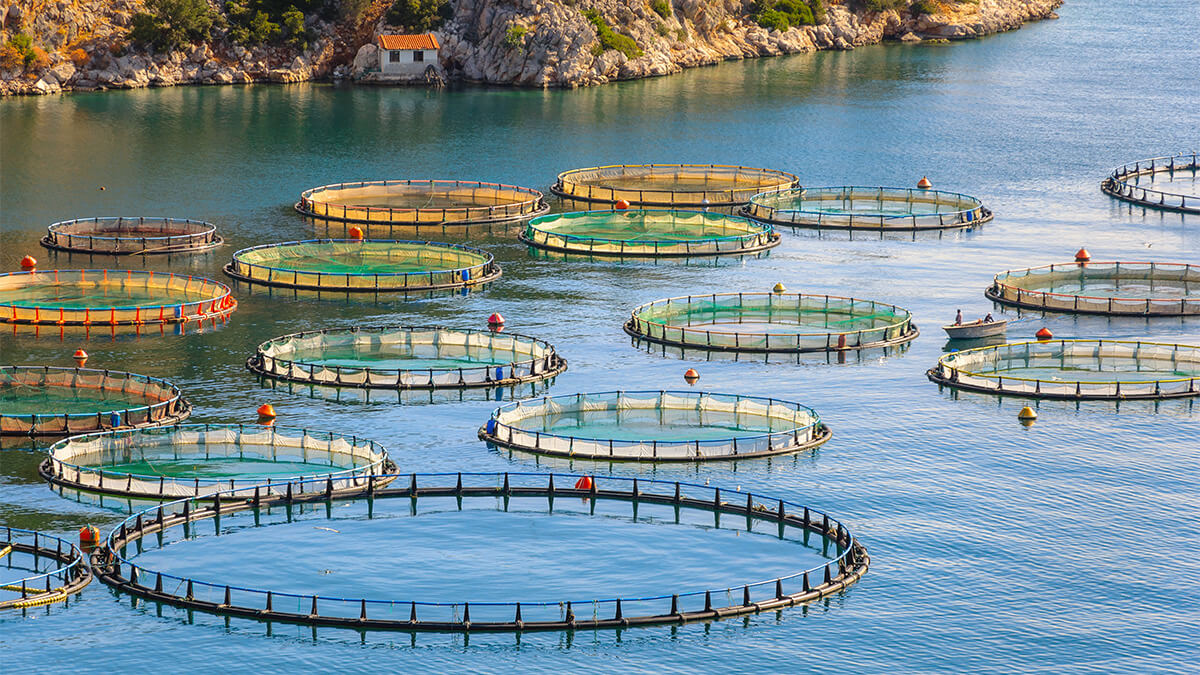

Why outdated lighting protocols are silently limiting your farm’s feed conversion ratio
Feed conversion ratio sits at the heart of every profitable aquaculture operation. It measures how efficiently your fish convert feed into body mass, and even marginal improvements translate directly into lower feed costs, faster growth cycles, and stronger returns. Yet many offshore fish farmers continue to operate with lighting protocols that were designed for basic visibility rather than biological performance, and the cost of that gap rarely appears on a single line of the balance sheet. Instead, it accumulates quietly across every feeding cycle, every season, every year.
This article builds from the foundational biology of how light affects fish physiology through to the practical steps you can take to diagnose and correct FCR problems linked to lighting. Each section adds a layer of understanding that the next depends on, so reading in sequence will give you the clearest picture of why aquaculture lighting is one of the most underutilised tools for fish farm efficiency.
What Is Feed Conversion Ratio and Why Lighting Affects It
Feed conversion ratio (FCR) is the quantity of feed required to produce one unit of fish body weight. A ratio of 1.2, for example, means your fish require 1.2 kilograms of feed to gain one kilogram of mass. Lower FCR values indicate greater efficiency; higher values signal that feed is being consumed without producing proportional growth.
The factors that influence FCR are well understood in principle: water temperature, dissolved oxygen, stocking density, feed quality, and fish health all play documented roles. What receives less attention is the role of light. Light does not merely help your crew see the cages at night. For fish, it is a primary environmental signal that regulates feeding behaviour, metabolic rate, and hormonal cycles. When the light environment your fish experience does not align with their biological requirements, feed uptake becomes inefficient regardless of how well every other variable is managed.
For a concrete illustration, consider two identical salmon cages with identical feed rations and water conditions. The cage operating under a controlled photoperiod calibrated to stimulate appetite at feeding time consistently outperforms the cage operating under uncontrolled ambient and artificial light, because the fish in the second cage are not reliably in a physiological state that promotes feed uptake when the feed arrives. The difference in FCR between these two scenarios reflects a biological reality, not a management failure in the conventional sense.
How Fish Biology Responds to Light Cycles
Fish are photoperiod-sensitive organisms, meaning they use the duration and intensity of light exposure to regulate core biological processes. This sensitivity is mediated primarily through the pineal gland, which detects changes in light and translates them into hormonal signals. These signals govern the timing of feeding activity, digestion rates, growth hormone release, and reproductive cycles.
The Relationship Between Photoperiod and Appetite
Photoperiod refers to the ratio of light hours to dark hours within a 24-hour cycle. Many commercially farmed species, including Atlantic salmon and sea bass, show peak appetite and feed conversion efficiency during specific phases of the light cycle. When artificial lighting extends or disrupts the natural photoperiod, it can either stimulate or suppress feeding drive depending on how it is applied. Applied correctly, extended photoperiods are used deliberately in salmon farming to accelerate smoltification and suppress early maturation, both of which affect growth efficiency.
The key principle is that the fish’s feeding behaviour is not simply a response to hunger in the way we might experience it. It is a rhythmically timed biological event. Feeding that occurs outside the fish’s active metabolic window results in lower feed uptake, reduced digestive efficiency, and ultimately higher FCR.
Light Intensity and Its Effect on Feed Uptake
Intensity matters as much as duration. Excessively bright light during feeding periods can suppress appetite in some species by triggering a stress response, while insufficient light during active periods can reduce visibility of feed particles in the water column, leading to missed feed and waste. The optimal intensity range is species-specific, but the principle applies broadly: light that does not match the fish’s biological tolerance at the time of feeding creates a measurable drag on FCR.
What Makes a Lighting Protocol Outdated
An outdated lighting protocol is one that was designed around a single objective, most commonly navigation safety or basic cage visibility, without accounting for the biological requirements of the fish. Recognising the characteristics of an outdated protocol is the first step toward understanding what needs to change.
Outdated protocols typically share several defining characteristics:
- Fixed light schedules that do not adjust for seasonal changes in natural daylight duration
- Uniform intensity across all hours of operation, with no distinction between feeding periods and rest periods
- Light sources positioned and specified for human visibility rather than for subsurface light distribution within the cage
- No synchronisation between lighting across multiple cages or installations, creating inconsistent light environments across the farm
- No remote monitoring capability, meaning deviations from the intended schedule go undetected until a physical inspection
The critical misconception to address here is that compliance with maritime visibility regulations automatically means your lighting is adequate for fish farming purposes. Regulatory requirements for marking offshore aquaculture installations, such as IALA-compliant yellow marker lights, are designed to protect vessels and personnel from collision risk. They are a legal baseline, not a production optimisation tool. A farm can be fully compliant with maritime lighting regulations and still be operating a lighting protocol that actively suppresses FCR.
Apply Photoperiod Control to Improve Feed Uptake
Photoperiod control is the deliberate management of light duration and timing to align the fish’s biological rhythms with your feeding schedule and production targets. Building on the biological principles covered above, the practical application involves three interconnected decisions: when to provide light, at what intensity, and with what degree of consistency across the farm.
Defining the Target Photoperiod for Your Species
Different species respond to photoperiod manipulation in different ways, and the target photoperiod for FCR optimisation will differ from the target used for smoltification control or maturation suppression. For FCR purposes, the primary objective is to ensure that fish are in an active metabolic state during feeding windows. This typically means providing sufficient light during the hours when feeding occurs and maintaining consistent dark periods that allow the hormonal recovery cycles that support growth hormone release.
Synchronisation Across the Installation
One of the most common sources of photoperiod inconsistency on offshore farms is the lack of synchronisation between individual cage lights. When lights across a multi-cage installation operate on slightly different schedules, fish in adjacent cages experience different light environments simultaneously. This creates uneven feeding responses across the stock and makes it impossible to attribute FCR variation to any single cause. GNSS synchronisation, available in purpose-built aquaculture lighting systems, ensures that every light on the installation operates on an identical schedule referenced to a common time source, eliminating this variable entirely.
Automatic brightness adjustment is the second element of effective photoperiod control. Systems that modulate intensity based on ambient light levels ensure that the fish experience a consistent light environment regardless of cloud cover, season, or time of day, without requiring manual intervention from farm staff.
Diagnosing Lighting-Related FCR Problems on Your Farm
Diagnosing whether your current FCR performance has a lighting component requires a structured approach. The challenge is that lighting effects on FCR are cumulative and indirect, meaning they rarely produce a single identifiable event. Instead, they manifest as persistent underperformance relative to expected benchmarks.
The following indicators suggest that lighting is contributing to FCR inefficiency:
- FCR values that are consistently higher than species benchmarks despite optimal water quality and feed specification
- Significant FCR variation between cages on the same farm with identical feed regimes
- Reduced feed uptake rates during specific times of day that do not correspond to temperature or dissolved oxygen events
- Increased feed wastage observed at the cage surface during scheduled feeding periods
- Unexplained variation in FCR between seasons that is disproportionate to the change in water temperature
The diagnostic process begins with documenting your current light schedule precisely, including any periods where lights fail, cycle inconsistently, or deviate from the programmed schedule. Without remote monitoring capability, this documentation is only possible through manual inspection, which introduces gaps. A farm operating without real-time visibility into light status cannot confirm whether the intended photoperiod is actually being delivered to the fish. This is not a minor operational detail; it is the difference between managing a controlled variable and assuming one.
Once the current light environment is documented, compare the timing of feeding events against the light schedule and look for misalignments. If your feeding windows fall during transitions between light and dark phases, or during periods when intensity is suboptimal for the species, you have identified a direct target for improvement.
Build a Lighting Upgrade Strategy for Long-Term FCR Gains
A lighting upgrade strategy for FCR improvement is not simply a hardware replacement exercise. It is a systematic shift in how you treat light as a production variable, with the same rigour you would apply to feed formulation or water quality management.
The strategy should be built around four sequential steps:
- Establish your baseline. Before making any changes, document current FCR performance, feed uptake rates, and the precise light schedule being delivered to each cage. This baseline is the reference point against which any improvement will be measured.
- Define the target light environment. Based on the species you are farming and your production objectives, determine the optimal photoperiod, intensity range, and light distribution required. This step may require consultation with a species-specific aquaculture specialist if you do not have this data internally.
- Select equipment that delivers controllability, not just visibility. The lighting system you install must be capable of programmable schedules, automatic intensity adjustment, and synchronisation across the installation. It must also be built to withstand the specific conditions of your offshore environment, including salt corrosion, storm loading, and continuous operation. Purpose-built aquaculture lighting systems, rather than repurposed navigation or general marine lights, are the appropriate specification for this application.
- Implement remote monitoring as a non-negotiable element. The gains from a well-designed photoperiod protocol are only realised if the protocol is consistently delivered. Remote monitoring capability ensures that any deviation, whether from equipment failure, battery depletion, or programming error, is detected and corrected before it affects a full feeding cycle. On an offshore installation where a physical inspection requires a vessel deployment, the cost of an undetected lighting failure over several days can easily exceed the cost of the monitoring system itself.
The long-term FCR gains from a properly implemented lighting strategy are not a one-time improvement. They compound across every production cycle, because you are removing a persistent source of biological inefficiency from your system. Farms that have transitioned from passive, compliance-focused lighting to active, biology-informed photoperiod management consistently report that light becomes one of the most controllable and cost-effective levers available to them, precisely because it had previously been left unmanaged.
Sabik has been designing and supplying aquaculture lighting systems for offshore fish farming environments for more than 20 years, with solutions engineered to deliver the programmability, synchronisation, and long service life that FCR-focused lighting management demands. If you are ready to assess whether your current lighting protocol is limiting your farm’s performance, contact our technical team to discuss the specific requirements of your installation.