
5 best aquaculture LED lights for salmon farms in 2026
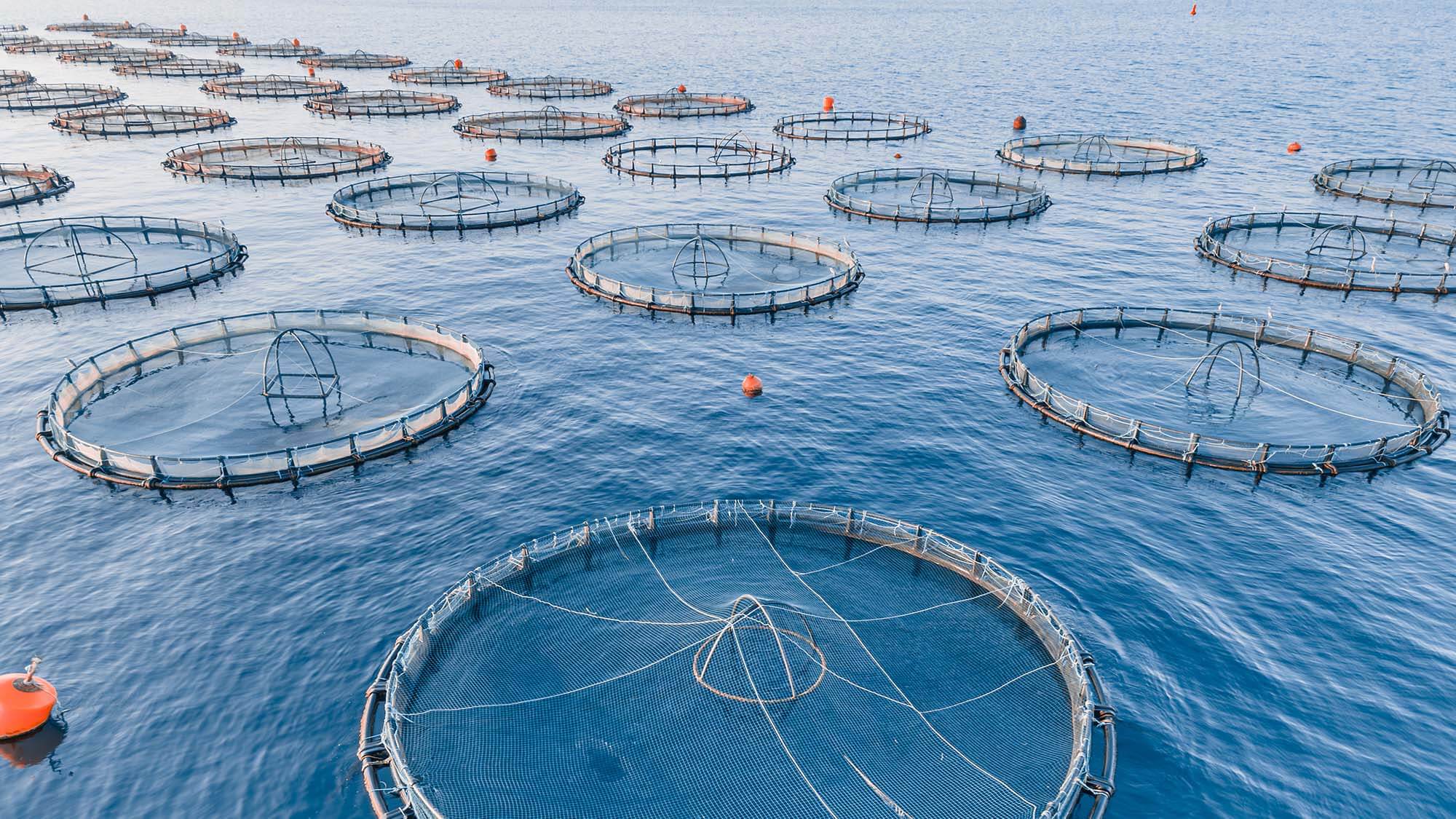
Salmon farms operating in open water face a lighting challenge that shore-based operations rarely encounter: the lights must perform without interruption, in conditions ranging from summer fog to winter storm swells, while meeting the IALA-compliant marking requirements that maritime authorities enforce. Choosing the wrong aquaculture LED lights means more than a maintenance call — it means unlit perimeters, collision risk, and potential regulatory consequences. This guide examines five purpose-built options for offshore salmon farm lighting in 2026, with a focus on what each delivers in practice and which operational scenarios each suits best.
What Separates Top-Tier Salmon Farm Lights from the Rest
Not every marine lantern qualifies as a serious aquaculture lighting solution. The offshore fish farm environment imposes demands that standard port or marina lights are not designed to meet: continuous 24/7 operation on exposed structures, salt spray and wave impact, the need for IALA-compliant yellow marking, and often the complete absence of grid power. The lights that perform reliably in these conditions share a consistent set of characteristics.
The most important differentiator is structural integrity under sustained marine exposure. UV-resistant housings, sealed battery compartments, and corrosion-resistant materials are not optional enhancements — they determine whether a lantern survives its first winter or its fifth. Beyond physical durability, the best aquaculture LED lights combine energy autonomy (solar or primary battery power) with intelligent flash management, so they continue operating correctly even when no one is on site to intervene.
Regulatory compliance is equally non-negotiable. Offshore salmon farms are required to mark their perimeters and structures with IALA-approved yellow lights that meet specific intensity and chromaticity standards. A lantern that fails this requirement does not simply underperform — it exposes the operator to enforcement action. The five lights reviewed here all address these core requirements, but each does so with a distinct emphasis that makes it better suited to specific farm configurations and operational priorities.
Sabik SBFL 160 Marker Light: Purpose-Built for Offshore Fish Farms
The Sabik SBFL 160 is the only light in this comparison designed specifically for aquaculture farm marking, and that specificity shows in every aspect of its construction. It delivers both daytime and nighttime visibility while incorporating an internal radar reflector — addressing the full visibility requirement that offshore fish farm regulations demand, not just the optical component.
The SBFL 160 is housed in a yellow buoy tube that integrates an alkaline battery, LED lantern, light reflectors, and radar reflector into a single self-contained unit. This integration matters on a working fish farm, where installation simplicity directly affects deployment time and the risk of installation error. The standard IALA yellow light output ensures immediate regulatory compliance, and the unit mounts directly on floats without requiring additional support structures or wiring runs across the farm perimeter.
This light is best suited to salmon farm operators who need a straightforward, regulation-ready perimeter marking solution that can be deployed across multiple cage positions without complex configuration. The combination of optical and radar visibility in one unit makes it particularly valuable on farms in areas with significant commercial vessel traffic, where radar detection provides an additional layer of collision protection beyond the visual signal alone.
VPL 110 Integrated Buoy Lantern: High-Visibility Perimeter Marking
The VPL 110 delivers a 24 NM visibility range from a compact, buoy-mounted form factor — a combination that makes it one of the most capable perimeter marking options available for offshore aquaculture installations. Its polycarbonate outer cover is engineered for ultra-low power consumption, which directly extends autonomous operation time between maintenance interventions.
What distinguishes the VPL 110 for salmon farm perimeter marking is its combination of GNSS synchronisation and optional LightGuard remote monitoring. GNSS sync ensures that all lanterns around a farm perimeter flash in a coordinated sequence, which significantly improves the legibility of the farm boundary to approaching vessel operators — a critical safety advantage in low-visibility conditions. The Bluetooth programming capability via Android or iOS enables on-site configuration adjustments without physical disassembly of the lantern.
The optional LightGuard remote monitoring integration elevates the VPL 110 beyond a passive marking device. Farm operators can verify the operational status of each perimeter light from shore, receiving automatic alerts if any unit shows an anomaly. For large offshore salmon farms with dozens of marking positions, this capability transforms the maintenance model — moving from scheduled physical inspection rounds to condition-based response. The VPL 110 is best suited to operators managing extended perimeters where manual inspection of every light position is operationally impractical.
M660 Self-Contained LED Lantern: Off-Grid Reliability
The M660 is a solar-powered marine lantern built around an eight-year lithium-ion battery service life — a specification that reframes the economics of aquaculture lighting in remote offshore locations. Where grid power is unavailable and maintenance vessel access is costly, the M660’s autonomous operation capability directly reduces the total operational cost of the lighting installation over its service life.
The M660 supports four different mounting configurations, which gives farm operators flexibility to integrate it across varied structural types — cage collars, mooring buoys, walkway supports, and perimeter floats. Its built-in calendar function enables off-season deactivation, preserving battery capacity during periods when the farm is not in production. The optional dual lithium-ion battery pack extends reserve capacity further, providing additional resilience through extended periods of low solar irradiance — a meaningful advantage at northern latitudes where winter daylight is limited.
Bluetooth connectivity enables programming adjustments using the Sabik Bluetooth® Control App, and the M660 is available in all five IALA standard colours, including the yellow required for aquaculture marking. The adjustable intensity and range settings allow operators to calibrate each lantern to the specific visibility requirement of its position — higher intensity on exposed perimeter corners, lower intensity on internal working area markers where glare management matters. The M660 is best suited to salmon farms in remote or high-latitude locations where long autonomous operation and minimal maintenance intervention are the primary operational requirements.
What Makes a Light Truly Maintenance-Free at Sea?
The term “low maintenance” is applied broadly across marine lighting products, but in an offshore salmon farm context, it carries a specific and demanding meaning. A truly maintenance-tolerant aquaculture LED light must sustain reliable operation across a full season — or multiple seasons — without requiring a technician to visit the structure. In remote offshore environments, that maintenance visit involves vessel time, crew deployment, and weather dependency. The cost of a single unplanned intervention can exceed the cost of the light itself.
Three design factors determine whether a marine lantern genuinely meets this standard. First, battery technology and charging efficiency: lithium-ion batteries with optimised solar charging algorithms, such as those used in the M660 and VLB-5X-SS, maintain consistent capacity across temperature extremes that would degrade lower-specification battery chemistries. Second, housing integrity: UV-resistant polycarbonate or polysiloxane bodies with ventilated battery compartments prevent moisture ingress and thermal stress that cause premature failure in harsh marine environments. Third, intelligent operation: features such as calendar control, automatic day-to-night intensity adjustment using the Schmidt-Clausen method, and alarm output mean the lantern manages its own energy budget and alerts operators to anomalies before they become failures.
Remote monitoring capability is the factor that most significantly changes the maintenance economics of a distributed aquaculture lighting installation. When farm operators can verify the status of every light position through the LightGuard remote monitoring platform without deploying a vessel, they replace reactive emergency callouts with planned, condition-based maintenance. The practical result is fewer vessel deployments, lower operational costs, and — critically — a higher probability that every light on the farm perimeter is operational at any given moment. For offshore salmon farm operators, that continuous operational certainty is not a convenience; it is a safety and compliance requirement.
M850 Self-Contained LED Lantern: Remote Monitoring Built In
The M850 extends the solar marine lantern concept to a 36 NM visibility range while integrating GPS sync flash capability and Sabik LightGuard Bluetooth monitoring — making it the most capable self-contained option in this comparison for salmon farms that require both long-range visibility and active operational oversight. Its powder-coated aluminium chassis and UV-resistant polycarbonate lens are engineered for sustained performance in demanding offshore conditions.
The GPS sync flash function ensures that all M850 units deployed across a farm perimeter operate in precise synchronisation, which is particularly valuable on large installations where the farm boundary spans significant distances. Approaching vessel operators see a coherent, coordinated light pattern rather than an irregular array of independent flashes — a distinction that meaningfully improves the legibility of the farm boundary at night and in reduced visibility. The tap-to-activate LED display provides immediate on-site status confirmation without requiring a programmer or mobile device.
The M850 supports both Bluetooth and Satcom connectivity, and its multiple battery pack options allow operators to configure the lantern for the specific solar resource available at the installation site. The built-in calendar for off-season deactivation and the adjustable intensity and range settings provide the same operational flexibility found across Sabik’s solar lantern range. The M850 is best suited to large offshore salmon farms where long-range visibility, GPS-synchronised perimeter marking, and remote monitoring capability are all operational requirements — and where the scale of the installation justifies the M850’s enhanced specification.
Choosing the Right LED Light for Your Salmon Farm
The five lights reviewed here address the same fundamental requirement — reliable, IALA-compliant aquaculture lighting for offshore salmon farms — but each is optimised for a different operational profile. Selecting the right light depends on three primary factors: the scale and configuration of the farm, the availability of solar resources at the installation latitude, and the degree of remote monitoring capability the operation requires.
For operators whose primary need is straightforward regulatory compliance with minimal installation complexity, the SBFL 160’s purpose-built aquaculture design and integrated radar reflector provide the most direct solution. For farms managing extended perimeters where coordinated visibility and remote status monitoring are operational priorities, the VPL 110 with LightGuard integration delivers the most capable combination. The M660 addresses the off-grid reliability requirement most effectively for remote or high-latitude installations, while the M850 serves large farms where long-range visibility and GPS synchronisation are essential.
Sabik has been developing aquaculture lighting solutions for more than 20 years, and the product range reflects accumulated operational experience across offshore environments at every latitude. All products in the range are IALA-compliant and backed by manufacturing quality certified to ISO 9001 standards. The right starting point for any salmon farm lighting project is a clear specification of the visibility, power, and monitoring requirements — from there, the appropriate lantern selection follows directly.
Contact Sabik’s technical team to discuss your aquaculture lighting requirements and receive a product specification matched to your farm’s operational profile.