
5 top-rated aquaculture lighting systems for RAS facilities in 2026
Lighting in a recirculating aquaculture system (RAS) facility is not a secondary consideration. In enclosed, high-density production environments where biological cycles, worker safety, and regulatory compliance all depend on consistent, reliable illumination, the lighting system you select has direct operational consequences. The wrong choice contributes to photoperiod disruption, elevated maintenance costs, and compliance gaps. The right choice supports fish welfare, operational continuity, and the safety of everyone working on or around the installation. This guide examines five top-rated aquaculture lighting systems for RAS facilities in 2026, covering what distinguishes each option and which operational contexts each serves best.
What Separates Elite RAS Lighting from Standard Options
Not all aquaculture LED lights perform equally in the demanding conditions of a RAS facility. Standard commercial lighting is designed for stable indoor environments. RAS facilities present a fundamentally different challenge: high humidity, corrosive saline atmospheres, continuous operation cycles, and the need to maintain precise photoperiod control across multiple tank zones simultaneously. Elite RAS facility lighting solutions are engineered specifically for these conditions, not adapted from general-purpose products.
The criteria that separate professional-grade aquaculture lighting systems from standard alternatives are consistent across the industry. Genuine IP-rated enclosures that withstand prolonged exposure to moisture and salt are non-negotiable. Spectral output matched to species-specific biological requirements determines growth rates and feed conversion. Programmable control systems that automate photoperiod transitions reduce labour overhead and eliminate human error. And in offshore or remote RAS installations, energy autonomy through solar integration determines whether a facility can operate without grid dependency.
For 2026, the top-rated systems share one additional characteristic: they deliver reliable performance without requiring frequent maintenance interventions. In a high-density production environment, every unplanned maintenance event carries a cost. The systems reviewed here are selected on the basis of engineering quality, operational suitability for RAS environments, and the specific capabilities that matter most to professional aquaculture operators.
1: Sabik Aquaculture LED — Offshore-Grade RAS Performance
Sabik’s purpose-built aquaculture lighting range leads this list because it addresses the full operational scope of offshore and remote RAS installations, not just the lighting requirement in isolation. With more than 20 years of experience delivering aquaculture lights across demanding marine environments, Sabik has developed a product line that treats visibility, safety compliance, and long-term reliability as integrated design requirements rather than separate specifications.
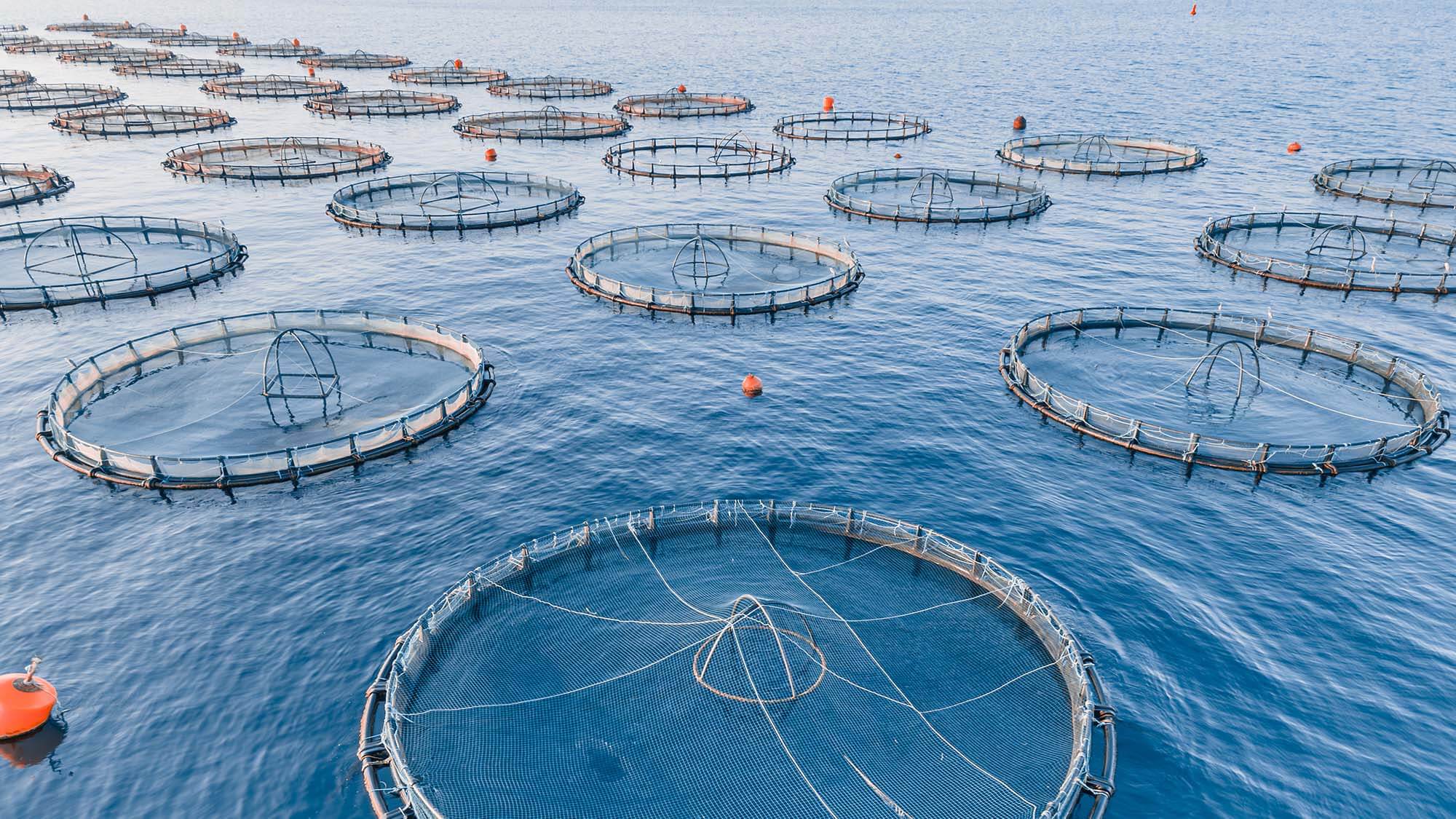
The Sabik aquaculture lights portfolio includes the SBFL 160 Marker Light, which is specifically engineered for aquaculture farms and meets requirements for both daytime and nighttime visibility as well as radar detection. The unit features an integrated alkaline battery, LED lantern, light reflectors, and an internal radar reflector housed in a yellow buoy tube that can be directly installed on floats. This combination of visibility and radar detectability addresses one of the most critical risks in offshore RAS operations: vessel collision with poorly marked cage perimeters. The IALA yellow light standard, GNSS synchronisation capability, and Bluetooth connectivity for programming via the Sabik Easy Programmer give operators precise control without requiring physical access to each unit.
This system is best suited for offshore RAS operators managing cage perimeters and exclusion zones in open water environments where IALA-compliant marking is a regulatory requirement. For facilities that also need to mark internal working areas and underwater structures, Sabik’s broader omnidirectional lantern range, including the VPL 110 with optional LightGuard Monitor remote monitoring, provides complementary coverage. Operators managing distributed installations will find the combination of GNSS synchronisation and remote monitoring particularly valuable for maintaining consistent operation across multiple marking points without proportional increases in maintenance overhead.
2: Periphyton LED Arrays for High-Density Tank Environments
High-density RAS tank environments present a specific photobiological challenge that general-purpose LED fixtures do not resolve. Periphyton LED arrays are engineered to deliver uniform spectral distribution across the full tank surface area, eliminating the intensity gradients that cause uneven growth distribution in densely stocked systems. In a well-designed array configuration, every fish in the tank receives consistent photoperiod exposure regardless of its position in the water column.
The defining characteristic of purpose-built periphyton arrays is their spectral precision. Rather than producing broad-spectrum white light, these systems are configured to deliver specific wavelength combinations, typically emphasising blue and red spectral bands, that align with the photoreceptor sensitivity of target species. For salmonids, this means supporting melatonin suppression during extended photoperiod regimes without the thermal load associated with older fluorescent systems. The result is a measurable improvement in growth rates and feed conversion efficiency under controlled photoperiod management protocols.
These systems are best suited for land-based RAS facilities operating intensive production cycles where photoperiod manipulation is a core production tool. The ideal installation context is a purpose-built tank hall with controlled ambient light, where the array can be configured to deliver precise lux levels at the water surface without interference from external light sources. Operators considering periphyton arrays should evaluate mounting height, tank geometry, and the control system’s capacity for gradual dawn and dusk simulation, as abrupt photoperiod transitions can trigger stress responses in high-density populations.
3: Solar-Integrated Units for Remote RAS Installations
Remote RAS installations, whether located on isolated coastlines, island sites, or offshore platforms without reliable grid infrastructure, require lighting systems capable of autonomous operation. Solar-integrated units designed for marine environments deliver this capability without compromising on the performance standards that RAS operations demand. The key engineering challenge is maintaining consistent output through periods of low solar insolation, which in high-latitude aquaculture regions can extend across multiple weeks.
Sabik’s solar-powered marine lantern range addresses this challenge directly. The M660 Self-Contained LED Lantern features a lithium-ion battery with an optional dual pack configuration and a built-in calendar for off-season deactivation, extending battery service life to eight years. The M850 incorporates a high-efficiency solar engine with multiple battery pack options, GPS sync flash capability, and connectivity for LightGuard Monitor remote monitoring, making it suitable for remote installations where maintenance visits must be minimised. For the most demanding low-insolation environments, the M860 is engineered with a large-format solar engine specifically optimised for reliable performance in locations where standard solar designs would underperform.
Solar-integrated units are best suited for remote RAS installations where grid connection is unavailable or prohibitively expensive, and where the cost of maintenance voyages makes long service life a primary selection criterion. Operators in high-latitude locations should specify units with extended battery autonomy and verified performance in low-insolation conditions. Sabik’s solar lanterns use UV-resistant polycarbonate lenses and powder-coated aluminium chassis construction, both of which are material choices that reflect the operational reality of long-term deployment in saltwater environments without regular intervention.
4: What Makes GPS-Synced Lighting Worth the Investment?
GPS-synchronised lighting is not a premium feature for its own sake. In aquaculture installations with multiple marking points distributed across a cage perimeter or exclusion zone, unsynchronised flash patterns create visual confusion for approaching vessels. A vessel operator attempting to identify the boundaries of an offshore fish farm at night relies on consistent, predictable flash patterns to distinguish the installation from background lighting. When individual lanterns operate on independent timing cycles, that predictability is lost, increasing collision risk precisely in the conditions where clear marking matters most.
GNSS synchronisation ensures that every lantern in a distributed installation operates on an identical flash cycle, referenced to a common time signal. For aquaculture operators, this means the perimeter of a cage array presents a coherent, recognisable pattern to approaching vessels, coast guard patrols, and aircraft. It also simplifies compliance verification: a single flash character specification applies uniformly across the installation rather than requiring individual unit inspection. Sabik’s VPL 110 Integrated Buoy Lantern includes GNSS sync as standard, and the SBFL 160 Marker Light offers GNSS synchronisation alongside Bluetooth programming capability.
The investment in GPS-synced fish farm lighting is justified most clearly in installations with four or more marking points, where the visual coherence benefit is most operationally significant. For smaller installations with two or three perimeter lights, standard flash character matching through IR or Bluetooth programming may be sufficient. However, operators in high-traffic waterways or areas with complex background lighting should consider synchronisation regardless of installation scale, as the safety margin it provides is directly proportional to the visual complexity of the operating environment.
5: Smart Remote-Monitoring Lighting Platforms for RAS
Remote monitoring transforms aquaculture lighting from a passive infrastructure component into an actively managed safety system. In a distributed offshore RAS installation, an undetected lantern failure creates an unmarked hazard that persists until the next scheduled maintenance visit or until a vessel operator reports the issue. Smart remote-monitoring platforms eliminate this gap by providing continuous operational status data for every light in the network, with automatic alerts triggered the moment a fault is detected.
Sabik’s LightGuard Monitor delivers this capability for installations equipped with compatible marine lanterns. The system provides real-time access to battery levels, operational status, and positioning data through a web-based interface accessible on any device. For aquaculture operators managing multiple cage sites across a geographic area, this means a single monitoring interface covers the entire installation network, and maintenance teams can respond to specific fault locations rather than conducting broad inspection voyages. The operational cost reduction is significant: fewer unplanned maintenance trips directly reduce vessel operating costs and the associated carbon footprint of service operations.
Smart monitoring platforms are best suited for RAS operators managing installations with multiple marking points across geographically distributed sites, particularly where maintenance access is time-consuming or weather-dependent. The combination of LightGuard Monitor with Bluetooth-enabled lanterns such as the VPL 110 or M850 provides a scalable monitoring architecture that can grow with the installation. For operators new to remote monitoring, the practical starting point is equipping perimeter marking lanterns first, establishing a baseline for system performance before extending coverage to secondary lighting points.
Choosing the Right System for Your RAS Facility
Selecting the appropriate recirculating aquaculture system lighting configuration requires matching system capabilities to the specific operational profile of the facility. The five categories reviewed here serve distinct functions, and the most effective installations typically combine elements from more than one category.
The primary selection criteria for any RAS lighting decision should follow this framework:
- Regulatory compliance requirements: Offshore and coastal RAS installations are subject to maritime authority requirements for marking and visibility. IALA-compliant lanterns with verified photometric performance are not optional in regulated waterways. Confirm the applicable requirements for your jurisdiction before specifying any system.
- Power infrastructure: Grid-connected land-based facilities have different constraints from remote or offshore installations. Solar-integrated units with extended battery autonomy are the appropriate specification for sites without reliable grid access.
- Maintenance access: The frequency and cost of maintenance access to the installation directly determines the value of long service life and remote monitoring capability. For installations where maintenance visits require vessel mobilisation, every additional year of battery service life and every prevented unplanned trip represents measurable cost reduction.
- Installation scale and distribution: Single-point installations have simpler requirements than distributed cage perimeter systems. As the number of marking points increases, the operational case for GNSS synchronisation and remote monitoring strengthens proportionally.
- Species and production protocol: For land-based RAS facilities using photoperiod manipulation as a production tool, spectral precision and programmable control are primary selection criteria. For offshore cage marking, visibility range, IALA compliance, and structural durability take precedence.
Aquaculture operators who have not yet reviewed their current lighting configuration against 2026 regulatory requirements and operational standards should treat that review as a priority. The consequences of inadequate marking, whether a vessel collision, a regulatory compliance failure, or a stock loss event, are substantially more costly than the investment in a properly specified lighting system.
Contact Sabik’s technical team to discuss your RAS facility’s aquaculture lighting requirements and receive specification guidance matched to your installation’s specific operational profile.