
5 best aquaculture lights for shrimp and shellfish operations
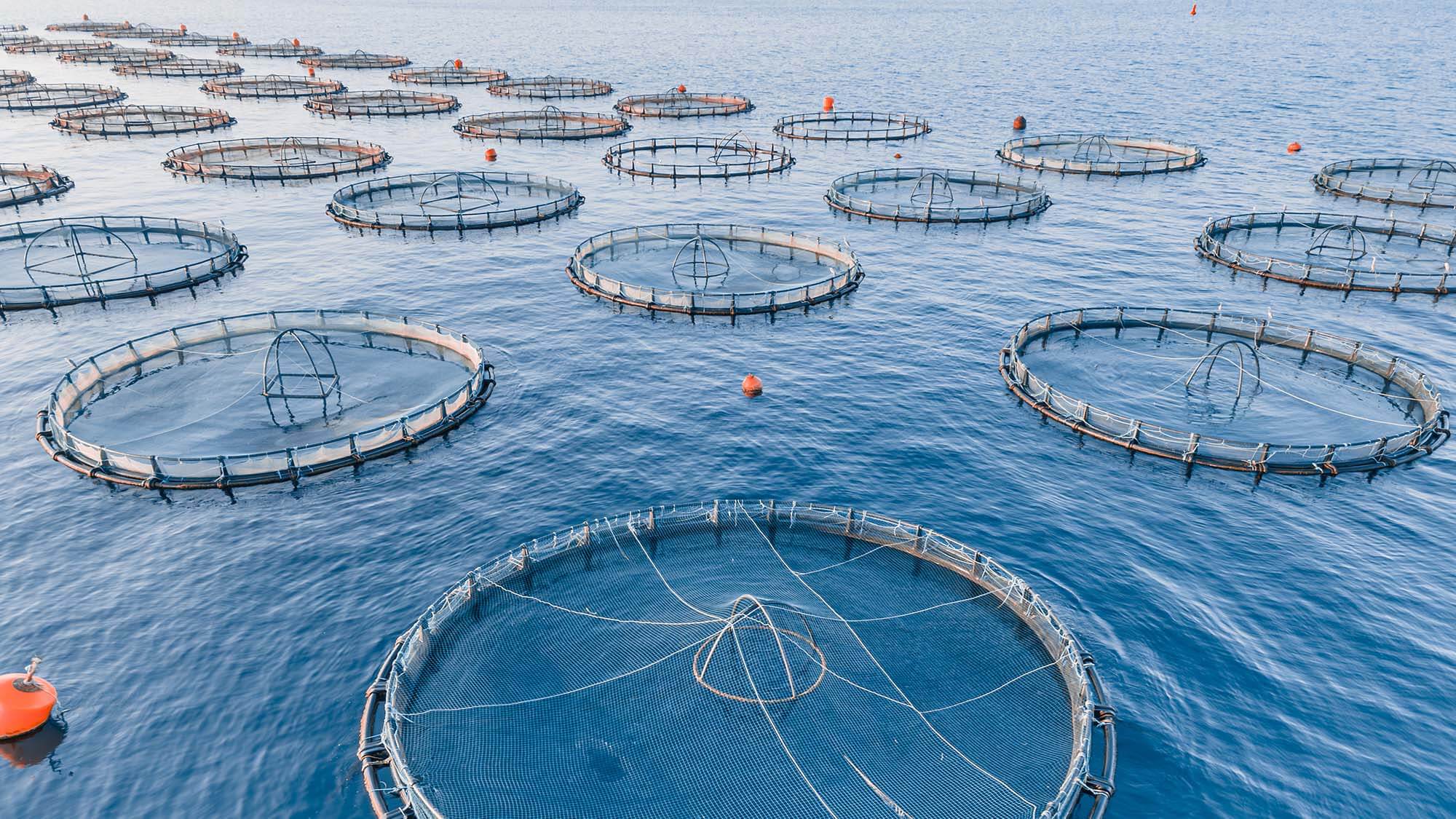
Shrimp and shellfish operations face a specific and serious visibility challenge. Offshore cages, longlines, and grow-out structures occupy significant stretches of water, often in busy coastal shipping lanes or exposed offshore zones where vessel traffic is unpredictable and weather conditions deteriorate quickly. Poor marking is not an inconvenience — it is a direct cause of collisions, stock loss, and regulatory non-compliance. Selecting the right aquaculture lights for your operation requires matching the light’s performance characteristics to the actual demands of your site: the range required for vessel collision prevention, the power source available, the sea state your equipment must endure, and the monitoring capability your team needs to manage the installation remotely. The five lanterns below represent purpose-built solutions for offshore aquaculture lighting, each addressing a distinct operational requirement.
What Separates Reliable Aquaculture Lights from the Rest
Not every marine lantern is suited to the demands of an aquaculture installation. General-purpose buoy lanterns are designed for fixed navigation channels where the marking geometry is simple and maintenance access is relatively straightforward. Aquaculture safety lighting must perform across a more complex set of conditions: marking irregular cage perimeters, operating continuously through extended periods of low solar insolation, surviving saltwater immersion and storm-force seas, and remaining visible to approaching vessels at the ranges required by maritime authorities.
The criteria that distinguish reliable marine aquaculture LED lights from inadequate alternatives include IALA-compliant light output in the correct colour for the marking function, a verified service life under continuous marine exposure, a power solution matched to the site’s energy availability, and a flash character that meets the requirements of the relevant national maritime authority. For shrimp and shellfish operations specifically, the IALA yellow standard used for special marks is frequently required to identify aquaculture boundaries, and any lantern deployed for this purpose must meet the chromaticity and intensity requirements that define that standard.
Remote monitoring capability is increasingly a practical requirement rather than an optional feature. When a lantern fails on an offshore structure, the failure may go undetected until a vessel incident or a compliance inspection — both outcomes with serious consequences. The five options reviewed here address these requirements at different scales and price points, providing a reference framework for procurement decisions across a range of shellfish operation lighting and shrimp farming contexts.
1: Sabik WB-10 — All-Weather Perimeter Marking Light
The Sabik SBFL 160 Marker Light is purpose-built for aquaculture farm boundary marking, making it the most directly relevant option for operators who need a compliant, self-contained solution that installs directly onto existing floats. Unlike general marine lanterns adapted for aquaculture use, the SBFL 160 is specifically designed to meet both daytime and nighttime visibility requirements, and incorporates an internal radar reflector to ensure detection by vessel traffic management systems and onboard radar — a critical feature in areas with commercial shipping traffic.
The lantern’s yellow buoy tube housing integrates an alkaline battery, LED lantern, light reflectors, and the radar reflector into a single compact unit. GNSS synchronisation is standard, enabling multiple lanterns across a cage perimeter to flash in coordinated sequence — a significant operational advantage when marking extended shellfish longlines or large cage arrays where unsynchronised flashing creates visual confusion for approaching vessels. The Sabik Easy Programmer provides field configuration via Bluetooth, and low power consumption extends battery service life across the demanding duty cycles of continuous offshore operation.
The SBFL 160 is best suited to operators marking defined aquaculture boundaries in accordance with IALA special mark requirements, particularly where direct float-mounting is the preferred installation method. Its integrated radar reflector addresses the dual visibility requirement — optical and radar — that many national maritime authorities now specify for offshore aquaculture installations. For operations requiring a single lantern type that covers both the regulatory and practical marking requirements of a shrimp or shellfish farm, this is the most operationally complete solution in the range.
2: Sabik ML-300 — Low-Power LED Lantern for Cage Arrays
For cage array marking where multiple lanterns must operate from a shared or limited power budget, the VLB-5X-SA LED Lantern for Buoys and Minor Beacons delivers up to 25.5 nautical miles of nominal range from an externally powered, non-solar, self-contained configuration. The VLB-5X-SA’s automatic intensity adjustment using the Schmidt-Clausen method ensures that light output scales appropriately with ambient conditions — reducing power draw during daylight hours and delivering full intensity when vessel collision risk is highest, during darkness and reduced visibility periods.
The lantern supports more than 256 flash characters, providing the configuration flexibility needed to assign distinct flash patterns to different structural elements within a large cage array — a practical requirement when marking entry points, corner structures, and intermediate floats with differentiated signals. Calendar control of beacon operation allows operators to schedule off-season deactivation without site visits, and the alarm output provides system notification capability that integrates with shore-based monitoring infrastructure. Five IALA-compliant colours cover the full range of marking functions required across a mixed shellfish and navigation marking installation.
This lantern is well suited to cage array configurations where a centralised power supply is available and where the operational priority is consistent, low-maintenance performance across a large number of marking points. The 12 configurable day-to-night transition levels give operators precise control over power consumption across the full 24-hour duty cycle, making it a practical choice for fish farm navigation lights on high-density installations where energy management is a significant operational concern.
3: Sabik SL-75 — Solar Lantern for Remote Shellfish Beds
Remote shellfish bed operations — particularly those located away from established port infrastructure — require a marking solution that operates entirely without external power. The VLB-5X-SS Self-Contained LED Lantern for Buoys and Beacons addresses this requirement directly, incorporating solar charging, advanced battery technology, and an optimised charging algorithm that maintains reliable performance even through extended periods of overcast conditions. With a nominal range of 25.5 nautical miles, the VLB-5X-SS provides the visibility required for offshore shellfish bed marking without grid dependency.
The lantern shares the VLB-5X-SA’s full feature set — Schmidt-Clausen automatic intensity adjustment, more than 256 flash characters, 12 day-to-night transition levels, calendar control, and alarm output — while adding solar autonomy that eliminates the need for external power infrastructure. This is operationally significant for remote shellfish operations where running power to marking buoys would require substantial infrastructure investment. The advanced charging algorithm is specifically engineered to manage battery performance in extreme weather conditions, addressing the degraded solar input that characterises high-latitude shellfish farming locations during winter months.
The VLB-5X-SS is the appropriate choice for offshore aquaculture lighting on remote or exposed shellfish beds where grid power is unavailable and where the marking installation must operate autonomously between maintenance visits. Its combination of solar self-sufficiency and full IALA compliance makes it a reliable option for operators who need to demonstrate regulatory compliance to maritime authorities without the operational complexity of managing an external power supply across a distributed marking installation.
4: Sabik HL-200 — High-Intensity Light for Vessel Collision Prevention
Where the primary risk driving the aquaculture lighting requirement is vessel collision in high-traffic or low-visibility conditions, the VPL 110 Integrated Buoy Lantern provides a high-performance, solar-powered solution with a 24 nautical mile nominal range and ultra-low power consumption optimised for buoy applications. The VPL 110’s polycarbonate outer cover is engineered for the physical demands of buoy deployment in exposed sea states, and GNSS synchronisation is standard — ensuring that perimeter lanterns flash in coordinated sequence to present a coherent marking pattern to approaching vessels.
Remote monitoring via the optional LightGuard Monitor integration is a significant operational differentiator for high-traffic locations where lantern failure carries the highest consequence. The LightGuard Monitor provides real-time status data — operational condition, battery levels, and positioning — through a web-based interface accessible on any device. For aquaculture operators managing installations in busy coastal shipping lanes, this monitoring capability enables rapid response to lantern failures before they create a safety event or a regulatory compliance issue. Bluetooth programming via Android or iOS provides field configuration without specialist equipment.
The VPL 110 is best suited to high-consequence marking positions on aquaculture installations where vessel collision risk is the primary operational concern: corner markers on large cage arrays, entry point marking in areas with commercial vessel traffic, and perimeter marking on installations located within or adjacent to established shipping routes. Its combination of solar autonomy, GNSS synchronisation, and optional remote monitoring addresses the full set of requirements for aquaculture safety lighting in demanding traffic environments.
5: Sabik RC-Link — Smart Light with Remote Monitoring
The M850 Self-Contained LED Lantern represents the integration of high-performance solar operation with remote monitoring capability through Sabik LightGuard Bluetooth, providing operators with real-time visibility into lantern status across a distributed aquaculture marking installation. With a nominal range of up to 36 nautical miles and GPS synchronisation as a standard option, the M850 is engineered for installations where both marking performance and operational oversight are critical requirements. Satcom connectivity extends monitoring capability to installations beyond Bluetooth range, enabling remote status checks without site visits.
The M850’s powder-coated aluminium chassis and UV-resistant polycarbonate lens are designed for long service life in the corrosive marine environment that characterises offshore shrimp and shellfish operations. Multiple battery pack options allow configuration for the specific solar insolation conditions of the deployment site, and a built-in calendar supports off-season deactivation for seasonal aquaculture operations. The tap-to-activate four-character LED display enables rapid status checks during maintenance visits without requiring a separate programming device. GPS sync flash coordination ensures that all lanterns in a multi-point marking installation present a coherent, identifiable pattern to vessel traffic.
For aquaculture operators managing large or geographically distributed installations — multiple shellfish bed locations, extended cage lines, or multi-site operations — the M850’s combination of high-range performance, GPS synchronisation, and LightGuard monitoring capability provides the operational control needed to manage a complex marking infrastructure efficiently. The Satcom connectivity option is particularly relevant for remote offshore installations where Bluetooth range is insufficient for shore-based monitoring, making this the most capable option for operators prioritising marine aquaculture LED lights with integrated remote management.
Choosing the Right Light for Your Operation
Selecting the appropriate aquaculture lights for a shrimp or shellfish operation is a decision that should be driven by three primary variables: the regulatory requirements of the relevant maritime authority, the power infrastructure available at the installation site, and the consequence of lantern failure given the vessel traffic density around the operation.
For operators marking aquaculture boundaries in direct compliance with IALA special mark requirements, the SBFL 160 Marker Light provides the most complete out-of-the-box solution, with integrated radar reflectivity and direct float mounting. For cage arrays operating from a shared power supply, the VLB-5X-SA’s configurable flash management and low power draw make it the practical choice for multi-point installations. Remote shellfish bed operations without grid power should prioritise the VLB-5X-SS’s solar autonomy and advanced charging algorithm. High-traffic locations where vessel collision prevention is the primary concern are best served by the VPL 110’s GNSS synchronisation and optional LightGuard Monitor integration. Operations requiring the broadest monitoring capability across distributed sites should evaluate the M850 with its Satcom connectivity and GPS sync.
The following considerations should inform the final selection decision:
- Confirm the specific flash character, colour, and intensity requirements mandated by your national maritime authority for aquaculture installation marking.
- Assess the solar insolation conditions at your site, particularly for high-latitude or winter-season operations where reduced daylight affects solar charging performance.
- Evaluate the vessel traffic density around your installation to determine whether GNSS synchronisation and remote monitoring are operational necessities rather than optional features.
- Consider the maintenance access frequency you can realistically achieve, and select battery technology and service life accordingly — longer intervals between maintenance visits require more conservative power budgets.
- Verify that any lantern selected meets the IALA chromaticity requirements for the specific marking function it will perform.
Sabik has been designing and supplying aquaculture lighting solutions for offshore operations for more than two decades, with a product range engineered specifically for the corrosive, high-load conditions that define this environment. Every lantern in the range is built to the same manufacturing standards that coast guards and maritime authorities rely on for critical aids-to-navigation infrastructure — because the consequences of marking failure are equally serious whether the structure being marked is a navigation buoy or an offshore cage array.
Contact Sabik’s technical team to discuss the specific marking requirements of your aquaculture installation and identify the configuration best suited to your site conditions, regulatory obligations, and operational constraints.