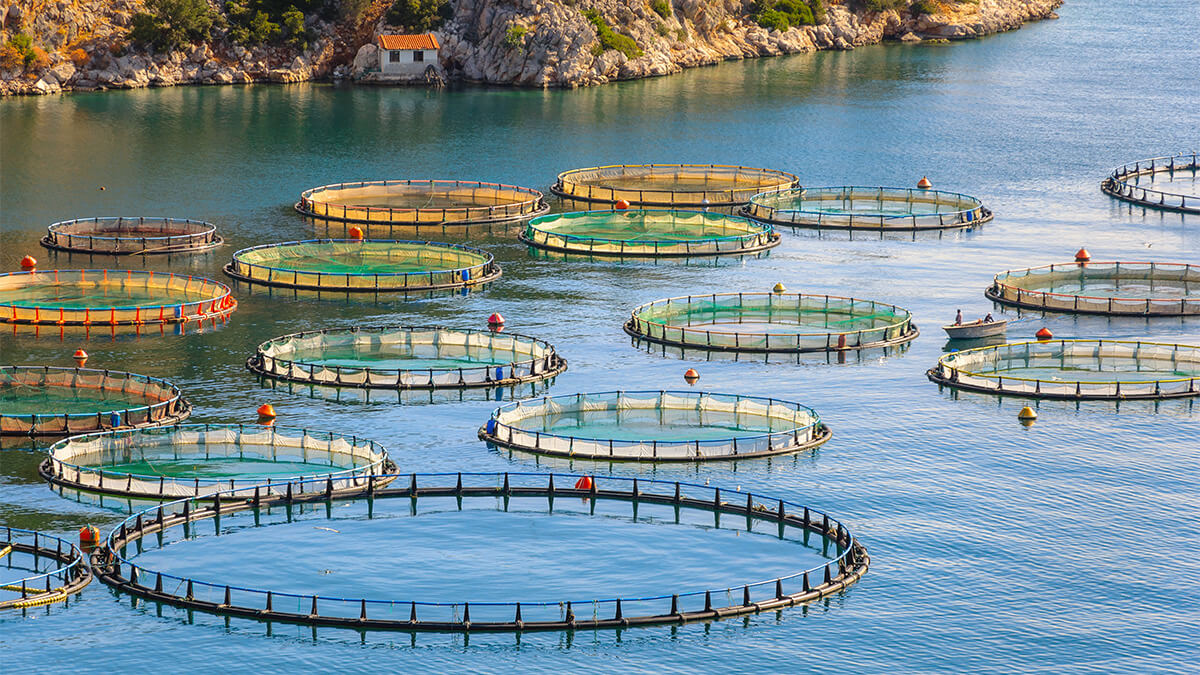

How adaptive lighting control systems are transforming energy management in large-scale farms
Managing energy across a large-scale offshore fish farm is rarely straightforward. Dozens of lights must operate continuously across exposed, remote locations where maintenance access is costly and conditions change without warning. For farm operators, the question is not simply whether lights are on — it is whether they are consuming power efficiently, performing reliably, and meeting regulatory requirements at every hour of the day and night. Adaptive lighting control systems address all three concerns within a single, coherent framework.
This article builds knowledge progressively: from a clear definition of what adaptive lighting control systems are, through the mechanics of how they reduce energy consumption, to practical guidance on applying these principles across different operational zones on a working offshore farm. Each section builds on the last, so by the end you will have both the conceptual foundation and the applied understanding needed to evaluate and implement smarter lighting strategies at scale.
What are adaptive lighting control systems in aquaculture?
An adaptive lighting control system is a technology framework that automatically adjusts the output, timing, and behaviour of marine lanterns in response to real-time environmental and operational inputs — rather than operating at a fixed, pre-set level regardless of conditions.
In conventional lighting setups, a lantern is programmed to emit light at a defined intensity and flash character, and it continues doing so whether the sky is pitch dark or fully lit by a summer sun, whether a vessel is approaching or the surrounding sea is empty. Adaptive systems break from this static model. They monitor inputs such as ambient light levels, time of day, battery state, and — in more advanced configurations — GPS-derived timing signals, then adjust output accordingly. The lantern does only what the situation demands, no more and no less.
For offshore aquaculture operations specifically, this distinction carries real operational weight. A farm may span several hectares of open water, with cage perimeters, mooring lines, and working platforms all requiring visible marking. Running every light at maximum intensity around the clock is both energy-wasteful and unnecessary — ambient daylight already provides visibility during much of the operating day. An adaptive system reduces intensity during daylight hours, ramps up at dusk, and can synchronise flash patterns across an entire installation so that the boundary of the farm reads as a coherent, unambiguous signal to approaching vessels. Sabik’s aquaculture lighting range is built around precisely this kind of responsive, intelligent operation.
How adaptive control transforms energy consumption on offshore farms
The core energy benefit of adaptive lighting control systems is straightforward: power is consumed only when and at the level that conditions require. Understanding how this works in practice requires examining three distinct mechanisms — automatic intensity adjustment, calendar-based scheduling, and GNSS synchronisation.
Automatic intensity adjustment
Many adaptive marine lanterns incorporate ambient light sensing that applies the Schmidt-Clausen method — a photometric approach that scales light intensity proportionally to background luminance. During daylight, when a lantern must compete with sunlight to remain visible, higher intensity is appropriate. After dark, when background light levels drop, the same intensity would be excessive and power-draining. Automatic adjustment means the lantern always operates at the minimum effective intensity for the prevailing conditions, rather than the maximum possible output.
Calendar-based scheduling and off-season deactivation
For farms that operate seasonally, a built-in calendar function allows specific lanterns to be deactivated entirely during periods when the installation is not in use. This eliminates standby consumption across an entire network of lights for weeks or months at a time — a significant saving on solar-charged systems where battery longevity directly determines maintenance intervals.
GNSS synchronisation
GNSS (Global Navigation Satellite System) synchronisation allows all lanterns across a farm to flash in coordinated unison, referenced to a precise time signal. Beyond the navigational clarity this provides to approaching vessels, synchronisation eliminates the energy losses associated with unsynchronised systems where individual lanterns may be running competing flash cycles. When every light in a network operates from the same timing reference, the system as a whole becomes measurably more efficient.
Key features that drive smarter energy management
Building on the three mechanisms described above, it is useful to identify the specific technical features that translate adaptive control principles into measurable energy management outcomes on large-scale farms.
Not every feature is relevant to every installation. The appropriate combination depends on the farm’s scale, geographic location, regulatory environment, and existing infrastructure. The following features represent the most operationally significant capabilities available in current IALA-compliant aquaculture lighting systems:
- Adjustable intensity and range: Allows output to be calibrated to the minimum range required for regulatory compliance at each specific marking point, rather than applying maximum range uniformly across the installation.
- Day/night automatic switching: Integrated sensors trigger transitions between daytime and nighttime operating modes without manual intervention, ensuring consistent compliance while avoiding unnecessary power draw during daylight hours.
- GNSS synchronisation: Coordinates flash timing across all lanterns from a satellite-derived reference, ensuring navigational clarity and eliminating redundant flash cycles.
- Low power consumption LED technology: Modern LED lanterns deliver the required photometric output at a fraction of the energy demand of older lamp technologies, extending battery autonomy and reducing solar panel sizing requirements.
- Replaceable and recyclable battery systems: Systems designed with serviceable battery packs extend operational life without full unit replacement, reducing both maintenance cost and material waste over the installation’s service life.
- Remote monitoring via LightGuard: Real-time status data — including battery levels and operational status — accessible through a web-based interface, enabling maintenance teams to identify and respond to issues before they result in unlit lanterns.
- Bluetooth programming: On-site configuration via the Sabik Bluetooth® Control App eliminates the need for specialist equipment for routine programming tasks, reducing the time and cost of maintenance visits.
Each of these features contributes to energy management not in isolation, but as part of an integrated approach where the lantern responds intelligently to its environment rather than consuming power at a fixed rate regardless of need.
Applying adaptive lighting to your farm’s operational zones
With the technical principles established, the practical challenge is mapping adaptive lighting capabilities to the distinct functional zones of a large-scale offshore farm. Different zones present different visibility requirements, regulatory obligations, and energy management priorities.
Perimeter marking lights
The outermost boundary of a farm installation carries the highest regulatory and safety priority. These lights must be visible to approaching vessels at sufficient range to allow course correction, and they must meet IALA chromaticity requirements — typically IALA yellow for aquaculture markers. For perimeter lights, GNSS synchronisation is particularly valuable: a coordinated flash pattern across all boundary markers creates an unambiguous visual signal that reads as a coherent farm boundary rather than a confusing scatter of individual lights. The Sabik SBFL 160 Marker Light is purpose-built for this application, combining IALA yellow output, an integrated radar reflector for daytime detection, and direct float-mounting capability.
Working area and platform lighting
Lights marking working platforms, access points, and equipment areas serve a different function from perimeter markers. Here, the priority is operational visibility for personnel and service vessels rather than long-range navigation signals. Adaptive intensity control is especially useful in this zone: lower output during daylight working hours, higher output after dark, with calendar scheduling to align active periods with operational seasons.
Underwater structure marking
Submerged cage structures and mooring lines present collision risks that surface lighting alone cannot fully address. Dedicated subsurface marking, integrated with the farm’s broader lighting network, ensures that the full three-dimensional footprint of the installation is adequately indicated. In these applications, long service life and minimal maintenance requirements take priority — access to subsurface equipment is significantly more demanding than surface lantern servicing.
Common energy management mistakes in farm lighting setups
Understanding what adaptive lighting control systems can achieve is most useful when set against the common errors that undermine energy management in farms that have not yet adopted these approaches. Several patterns recur consistently in large-scale installations.
The first and most widespread mistake is uniform intensity across all zones. Operators who configure every lantern on a farm to the same output level — typically set to the maximum required at the most demanding point — waste significant energy on lights that could operate at lower intensity without compromising compliance or safety. A perimeter marker at the outer boundary of a farm has different range requirements from a working platform light ten metres from a service vessel berth. Treating them identically is both inefficient and unnecessary.
The second common error is neglecting off-season deactivation. Farms that operate seasonally but leave all lighting active year-round drain solar battery reserves during periods of no operational benefit. Calendar control functions exist precisely to address this — but they must be configured, not simply installed. A lantern with a built-in calendar that has never been programmed provides none of the energy savings it is capable of delivering.
The third mistake is underestimating the cumulative cost of unsynchronised systems. When lanterns across a large farm operate on independent flash cycles without GNSS coordination, the navigational signal they collectively produce is less clear to approaching vessels — and the system as a whole operates less efficiently than a coordinated network. Synchronisation is not a luxury feature; it is a foundational element of effective multi-lantern energy management.
Finally, many operators underestimate the value of remote monitoring as an energy management tool. An undetected battery failure in a remote lantern does not just create a compliance gap — it means that when the lantern is eventually serviced, the battery may have discharged to a state that requires full replacement rather than recharging. LightGuard remote monitoring enables proactive intervention, protecting battery assets and avoiding the energy and material cost of premature replacements.
Building a future-ready lighting strategy for large-scale farms
The concepts covered in this article — adaptive intensity control, GNSS synchronisation, calendar scheduling, zone-based configuration, and remote monitoring — are not independent features to be adopted selectively. They form a coherent strategy when applied together across a large-scale installation.
A future-ready lighting strategy begins with a zone audit: mapping every light point on the farm against its specific function, regulatory requirement, and energy profile. This audit reveals where uniform intensity is being applied unnecessarily, where calendar control would eliminate off-season consumption, and where synchronisation would improve both navigational clarity and system efficiency. The audit output becomes the specification for a configured, adaptive system rather than a collection of individually programmed lanterns.
The second element of a future-ready strategy is selecting hardware that supports the full range of adaptive capabilities — not just the features needed today, but those that will be needed as the farm scales or as regulatory requirements evolve. IALA standards continue to develop, and lanterns that support Bluetooth programming, GNSS synchronisation, and remote monitoring connectivity provide the configurability to adapt to changing requirements without hardware replacement.
The third element is integrating remote monitoring from the outset. A distributed network of adaptive lanterns across a large farm generates operational data — battery status, operational hours, fault alerts — that is only useful if it is monitored. LightGuard remote monitoring converts this data into actionable intelligence, enabling maintenance teams to manage the entire installation proactively rather than reactively. For farms operating in remote offshore locations where maintenance access requires vessel deployment, this capability directly reduces operational costs and the associated environmental footprint of service voyages.
With over 20 years of experience designing aquaculture lighting for offshore environments, Sabik has developed a product range that addresses each of these strategic layers — from purpose-built perimeter markers to solar-powered lanterns with full remote monitoring capability. The progression from a static, uniform lighting setup to a fully adaptive, zone-configured system is achievable in stages, and the energy management benefits compound at each step.
Contact Sabik’s technical team to discuss the lighting requirements of your offshore farm and receive a configuration recommendation tailored to your installation.