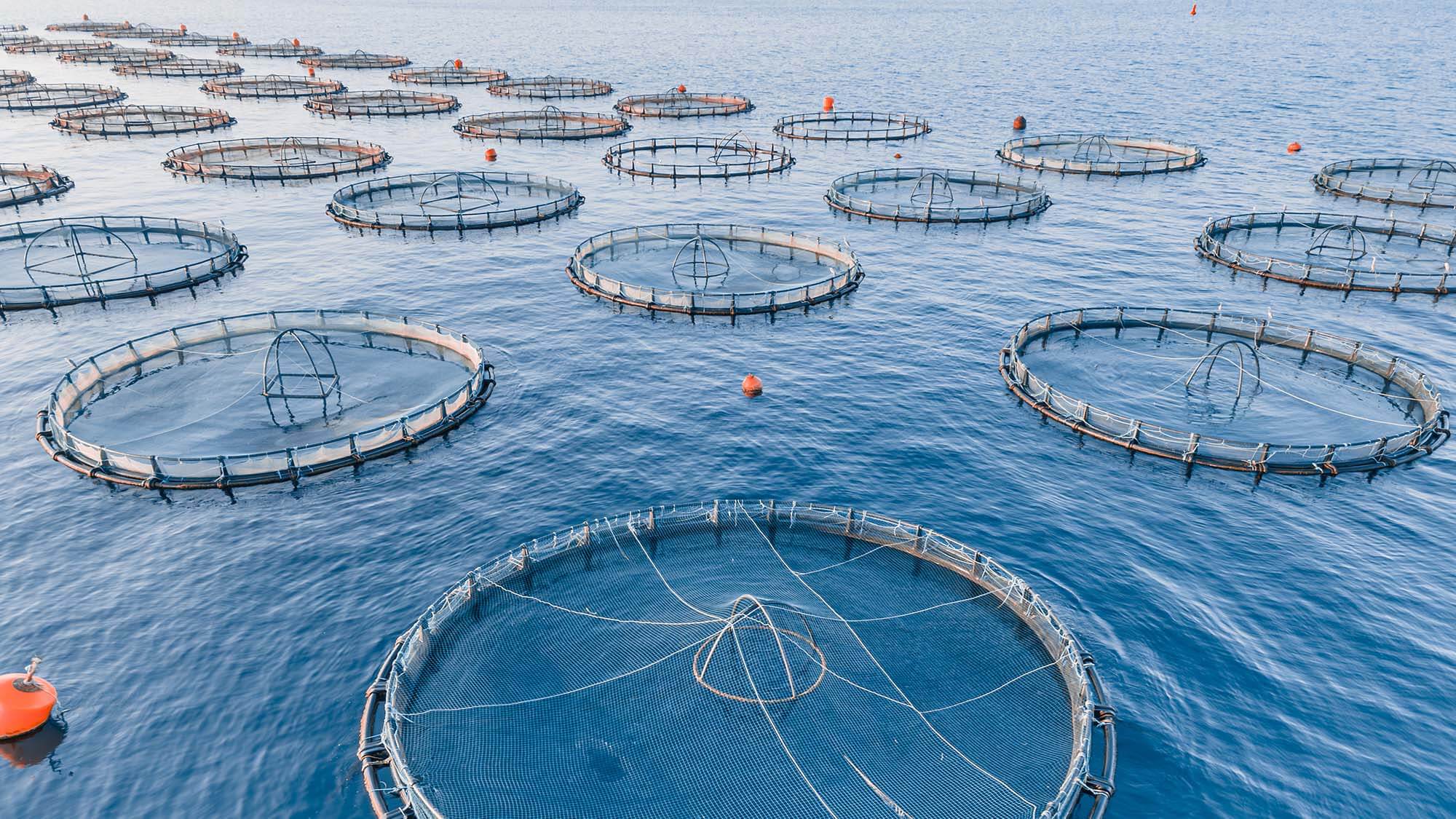

11 aquaculture lighting features worth paying more for in 2026
Not all aquaculture lighting features are created equal. Offshore fish farm operators increasingly face pressure from maritime authorities, insurers, and their own operational experience to move beyond minimum-spec lighting toward solutions that genuinely protect infrastructure, crew, and stock. The difference between a compliant installation and a resilient one often comes down to a handful of specific technical capabilities. The eleven aquaculture lighting features below represent the characteristics that separate equipment worth specifying from equipment that merely passes inspection. Each has direct consequences for safety, regulatory standing, and the total cost of operating an offshore installation in 2026.
What separates premium aquaculture lights from standard ones
Standard aquaculture lights meet the minimum threshold for visibility. Premium aquaculture lighting features are engineered to maintain that visibility across years of continuous offshore operation, through storms, biofouling, battery degradation, and the full range of conditions that remote marine environments produce. The gap between the two categories is rarely visible at the point of purchase — it becomes apparent during the first winter, or the first maintenance inspection, or the first incident report.
The features that follow are not aspirational additions. They are the characteristics that determine whether a lighting installation continues to perform when it matters most. For offshore fish farm operators managing regulatory compliance, crew safety, and significant capital assets, each one carries operational weight.
IP68-rated full submersibility for underwater structures
IP68-rated submersibility ensures that aquaculture lights continue to function when partially or fully submerged — a condition that occurs routinely on cage anchor lines, submerged net frames, and tidal structures. Standard IP66 or IP67 ratings protect against water ingress under controlled test conditions, but offshore marine environments are not controlled. Pressure, wave action, and prolonged immersion demand a higher standard.
For fish farm safety lighting installed at or below the waterline, IP68 certification means the housing seals are tested to withstand continuous submersion at defined depths and durations. This directly reduces the risk of water ingress leading to electrical failure, corrosion of internal components, or total lantern loss during storm events.
Fish farm operators marking submerged cage structures or anchor systems should treat IP68 as a non-negotiable baseline, not a premium upgrade. The cost of replacing a failed underwater lantern — including vessel time, diver access, and regulatory notification — significantly exceeds any initial savings from a lower-rated product.
IALA-compliant light characteristics
IALA-compliant aquaculture lighting is the foundation of any installation that will survive regulatory scrutiny. The International Association of Marine Aids to Navigation and Lighthouse Authorities (IALA) sets the chromaticity, intensity, and flash character requirements that maritime authorities use to evaluate whether an offshore installation is adequately marked. Non-compliant lights do not simply fail inspections — they create legal liability in the event of a vessel collision.
For aquaculture farms, IALA compliance means specifying lights that meet the correct colour standards (typically yellow for aquaculture markers), produce the required intensity at the specified range, and flash in a character that is recognisable and consistent across the installation. Sabik’s aquaculture lights are designed to IALA standards, with the SBFL 160 Marker Light specifically engineered for aquaculture farms and featuring standard IALA yellow output with an internal radar reflector for both visual and radar detection.
Operators in multiple jurisdictions should verify that their chosen lights meet the specific regional implementation of IALA recommendations applicable to their waters. IALA compliance is the baseline; the features listed below determine how reliably that compliance is maintained over time.
GPS synchronization across all site lights
GPS synchronization — also referred to as GNSS synchronization — ensures that every lantern on an aquaculture site flashes in precise coordination, regardless of when each unit was individually installed or programmed. Without synchronization, lights drift out of phase over time, producing a chaotic visual pattern that confuses approaching vessels and undermines the clarity of the installation’s perimeter marking.
For offshore fish farms with multiple cages, long perimeter lines, or complex site layouts, synchronized flashing is a direct navigation safety measure. A vessel approaching in reduced visibility reads the pattern of lights as a coherent boundary. Unsynchronized lights read as noise. Sabik’s VPL 110 Integrated Buoy Lantern includes GNSS sync as a standard feature, and the SBFL 160 Marker Light supports GNSS synchronization for consistent multi-point installations.
GPS synchronization also simplifies compliance documentation. When an authority requires evidence that the installation’s light characteristics meet specified parameters, synchronized lanterns provide a verifiable, consistent pattern that is straightforward to demonstrate. This feature is particularly valuable for large or expanding installations where lights are added incrementally over multiple seasons.
Remote monitoring and real-time status alerts
Remote monitoring transforms aquaculture lighting from a passive infrastructure element into an actively managed safety system. Rather than discovering a failed lantern during a routine site visit — or, worse, after a vessel incident — remote monitoring delivers real-time status data on battery levels, operational hours, and lantern function to shore-based teams through a web-accessible interface.
Sabik’s LightGuard Monitor provides this capability for compatible marine lanterns, delivering automatic alerts when anomalies are detected. For offshore fish farm operators managing installations in remote or exposed locations, this means maintenance teams can respond to a developing fault before it becomes a failure — and before a vessel enters an unmarked approach. The operational cost reduction is significant: fewer unplanned maintenance voyages, faster response times, and documented evidence of continuous compliance.
Remote monitoring is especially valuable during winter months or periods of severe weather when site access is restricted and the risk of equipment stress is highest. Operators who have experienced the cost of an emergency maintenance call to a remote offshore installation understand why real-time status visibility is worth specifying from the outset.
Automatic daylight and ambient brightness adjustment
Automatic brightness adjustment ensures that aquaculture lights operate at the correct intensity for prevailing conditions — full intensity at night or in fog, reduced intensity in daylight to conserve energy — without manual intervention. This is not a convenience feature; it is an energy management and battery life mechanism that directly affects how long a light remains operational between service intervals.
The Schmidt-Clausen method, used in several Sabik lanterns including the VLB-5X-SA and VLB-5X-SS, automatically adjusts light intensity based on the flash character setting, ensuring that intensity and range remain consistent with IALA requirements regardless of ambient conditions. Lanterns with multiple day-to-night transition levels — the VLB series offers twelve — provide fine-grained control over this adjustment, extending battery autonomy without compromising visibility at critical transition periods such as dusk and dawn.
For offshore fish farm lighting operating on battery or solar power, automatic adjustment is one of the most effective means of extending service intervals. Every unnecessary lumen produced during daylight hours is energy that could otherwise extend the operational window during extended periods of poor solar charging.
Solar self-sufficiency with oversized panel capacity
Solar self-sufficiency is the defining operational advantage of modern marine aquaculture lighting. A solar-powered lantern eliminates grid dependency entirely, enabling deployment at any offshore location regardless of distance from shore infrastructure. The critical distinction between adequate and premium solar capability lies in panel capacity relative to the installation’s energy demand and the solar resource available at the deployment latitude.
Oversized panel capacity — panels rated above the minimum required to maintain battery charge under average conditions — provides a buffer against extended periods of overcast weather, high-latitude winter deployments, and panel efficiency degradation over time. Sabik’s M850 and M860 self-contained LED lanterns are engineered with this principle in mind: the M860 features a large-format solar engine specifically designed for reliable performance in remote and low-insolation locations where standard panels would underperform.
Fish farm operators in northern latitudes or regions with variable solar resources should specify lanterns with demonstrated low-insolation performance data, not just peak-condition specifications. A lantern that charges efficiently in summer but depletes its battery reserve during a winter storm period is not delivering the operational reliability that offshore aquaculture lighting demands.
Corrosion-resistant housing materials
Corrosion resistance is among the most consequential aquaculture lighting features for long-term operational cost. Offshore marine environments expose lantern housings to continuous salt spray, biofouling organisms, UV radiation, and mechanical stress from wave action and handling. Housing materials that degrade under these conditions lead to seal failure, internal corrosion, and ultimately premature lantern replacement.
UV-resistant polycarbonate and polysiloxane bodies, powder-coated aluminium chassis, and UV-resistant polycarbonate lenses are the materials used across Sabik’s marine lantern range for precisely this reason. The M660 and M850 lanterns feature UV-resistant polycarbonate and polysiloxane bodies; the M850 and M860 use durable powder-coated aluminium chassis designed for long service life in demanding sea states. These are not marketing descriptors — they are engineering choices that determine whether a lantern reaches its design life of ten or more years in offshore conditions.
When evaluating offshore fish farm lighting, request specific material specifications and ask suppliers to confirm performance data for salt fog and UV exposure. A housing that meets IEC 60068 environmental test standards for marine conditions provides a verifiable baseline for corrosion resistance that general-purpose outdoor lanterns cannot match.
360-degree all-round light visibility
360-degree omnidirectional visibility ensures that an aquaculture installation is visible from every approach bearing — not just from the directions the operator anticipates vessel traffic. Vessels approaching offshore farms do so from variable headings, in conditions ranging from calm to heavy weather, and at speeds that leave limited time for course correction. A light that produces a restricted visibility arc creates blind spots that directly increase collision risk.
Omnidirectional marine lanterns achieve full 360-degree horizontal coverage through lens optics designed to distribute light uniformly around the full azimuth. Sabik’s VPL 110 Integrated Buoy Lantern is designed for omnidirectional output with IALA standard colours, making it well-suited to perimeter marking applications where all-round visibility is essential. The vertical divergence specification — 8 degrees at 50% intensity across several Sabik products — ensures adequate vertical spread for visibility from vessels at varying distances and sea states.
Operators should verify that claimed omnidirectional performance is supported by photometric test data, not just product descriptions. Sabik conducts in-line photometric testing on every lantern it manufactures, providing documented evidence of actual light distribution rather than nominal specifications.
Integrated anti-theft and tamper-proof mounting
Anti-theft and tamper-proof mounting addresses a practical operational risk that is often overlooked in lighting specifications: the removal or displacement of lanterns from remote offshore installations. Aquaculture sites are frequently unattended, and lanterns installed on buoys, cage frames, or perimeter markers are accessible to passing vessels. A missing or displaced lantern creates an immediate compliance failure and a direct navigation hazard.
Tamper-resistant mounting mechanisms — fastener designs that require specialist tools to remove, locking collar systems, and integrated cable retention — significantly reduce opportunistic removal. Customisable mounting mechanisms, such as those available on the SBFL 160 Marker Light, allow operators to configure installations that are both secure and compatible with the structural elements of their specific cage or buoy systems.
For high-value or remote installations, tamper-proof mounting should be considered alongside remote monitoring: the LightGuard Monitor can detect a lantern that has gone dark, but tamper-resistant hardware reduces the frequency with which that alert is triggered by theft rather than equipment failure. Both measures together provide a more complete security posture for offshore aquaculture lighting infrastructure.
Extended battery autonomy beyond minimum requirements
Battery autonomy — the duration a lantern can operate without solar recharging — determines how an installation performs during extended periods of adverse weather, high-latitude winter conditions, or unexpected panel shading. Specifying autonomy at the minimum required level leaves no margin for these conditions. Extended autonomy, typically achieved through higher-capacity battery packs or dual-battery configurations, is the engineering equivalent of a safety buffer.
Sabik’s M650H self-contained LED lantern features a replaceable battery pack designed to extend service life beyond five years, while the M660 offers an optional dual battery pack for extended autonomy in demanding deployments. Replaceable battery architectures are particularly valuable for offshore fish farm lighting: rather than replacing an entire lantern when the battery reaches end of life, operators can replace only the battery pack, reducing both cost and waste.
When specifying battery autonomy for marine aquaculture lighting, calculate requirements based on worst-case solar conditions for the deployment latitude and season, not average annual insolation. A lantern that maintains full operation through the worst two weeks of the year at a given site will reliably cover every other period. Specifying to average conditions creates a system that fails precisely when conditions are most demanding.
Modular design for field-serviceable components
Modular design enables maintenance personnel to replace individual components — batteries, lenses, circuit boards, mounting hardware — in the field without returning the entire lantern to a service facility. For offshore aquaculture operations where vessel time is a significant cost and weather windows for site access are limited, field serviceability directly reduces maintenance expenditure and minimises the duration of any unplanned outage.
Lanterns with integrated, non-serviceable designs require complete unit replacement when any single component fails. Modular designs, by contrast, allow a technician to carry a set of spare components and address most failure modes during a single site visit. Sabik’s M550 lantern, for example, uses replaceable and recyclable NiMH AA batteries — a straightforward field replacement that any trained technician can complete without specialist equipment.
Modular design also extends the operational life of an installation beyond the service life of any single component. A lantern chassis with a ten-year design life can continue operating well beyond that point if batteries, optics, and electronics are renewed as needed. For offshore fish farm operators managing long-term infrastructure investments, this approach to aquaculture LED lights reduces total lifecycle cost and defers capital replacement expenditure.
Building a compliant and future-ready lighting specification
A lighting specification built around these eleven aquaculture lighting features is not simply a procurement checklist — it is a framework for managing risk across the full operational life of an offshore installation. Each feature addresses a specific failure mode, compliance requirement, or operational cost driver that standard-specification lighting leaves unresolved.
The most effective specifications combine features that work together: solar self-sufficiency extended by automatic brightness adjustment and high-capacity batteries; remote monitoring supported by GPS synchronization that makes status data meaningful; IALA-compliant characteristics delivered through housings engineered to maintain optical performance over years of offshore exposure. The interaction between these features determines the actual reliability of the installation, not the individual specification of any single component.
For operators reviewing their current installations or specifying new offshore fish farm lighting in 2026, the practical starting point is an audit against these eleven criteria. Installations that meet all eleven are positioned to maintain compliance, minimise maintenance costs, and protect the people and assets that depend on reliable marking. Installations that fall short on multiple criteria carry operational and regulatory risk that compounds over time.
Sabik has been designing and supplying aquaculture lighting for offshore environments for over two decades, with a product range that addresses each of the features described above. To discuss the specific requirements of your installation or request technical specifications for any product in the range, contact the Sabik technical team with your site details and compliance requirements.