
11 questions your lighting supplier should answer before you commit
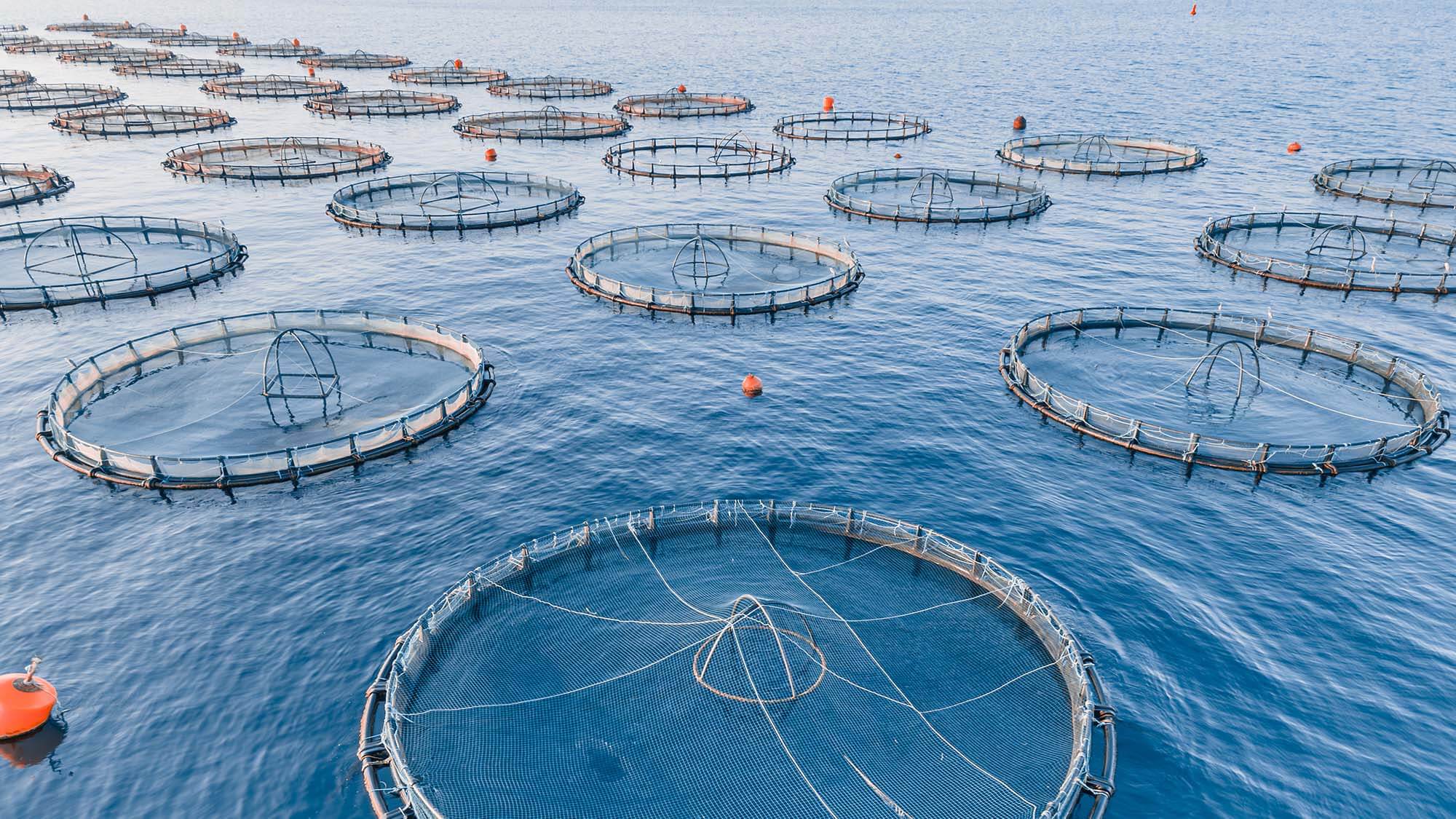
Selecting the wrong aquaculture lighting supplier carries real consequences. Unmarked offshore fish farm structures create collision risks for passing vessels, expose operators to regulatory liability, and put crew members working in low-visibility conditions at genuine risk. Before committing to any supplier, there are eleven questions every offshore fish farm operator should ask. The answers will reveal whether a supplier understands the specific demands of aquaculture environments or is simply adapting general marine lighting products to fit a specialised application.
What Separates a Qualified Marine Lighting Supplier
The offshore aquaculture environment places demands on lighting equipment that most standard marine applications never encounter: continuous submersion risk, aggressive biofouling, constant mechanical stress from mooring lines and wave action, and the operational reality that maintenance access is costly and infrequent. A qualified aquaculture lighting supplier designs for these conditions from the outset, not as an afterthought.
The questions below are not theoretical. They address the specific technical, regulatory, and operational requirements that offshore fish farm operators face when selecting fish farm safety lighting. A supplier who cannot answer them precisely, with reference to certifications, product specifications, and deployment experience, is not equipped for this environment.
1: Are Your Lights IALA-Compliant for Aquaculture?
IALA compliance is the non-negotiable baseline for any aquaculture navigation lights deployed in navigable waters. Maritime authorities in most jurisdictions require that lights marking offshore fish farm structures meet IALA chromaticity and intensity requirements, and a supplier who cannot confirm this directly should not be on your shortlist.
Specifically, ask whether the lights are available in IALA-standard colours, including yellow, which is the required colour for aquaculture marker lights in most regulatory frameworks. Purpose-built aquaculture lighting, such as the Sabik SBFL 160 Marker Light, is designed specifically to meet both daytime and nighttime visibility requirements alongside radar detection standards. Confirm that IALA compliance is built into the product design, not achieved through post-manufacture modifications.
Operators should also ask whether the supplier participates in IALA working groups or standards development. A supplier who helps write the standards, rather than simply responding to them, provides a level of regulatory confidence that procurement professionals managing compliance obligations will recognise as a meaningful differentiator.
2: What IP and Corrosion Ratings Do You Offer?
Offshore fish farm lighting must withstand continuous exposure to salt spray, wave immersion, and the accelerated corrosion that characterises marine environments. IP ratings define ingress protection against water and particulates; corrosion resistance depends on the materials and coatings used in construction.
Ask your supplier to specify the IP rating of each product and the materials used in the housing, lens, and mounting hardware. UV-resistant polycarbonate and polysiloxane housings, powder-coated aluminium chassis, and UV-resistant polycarbonate lenses are the appropriate material standards for offshore aquaculture deployments. Products built to these specifications are designed to maintain structural and optical integrity over multi-year service periods without degradation from sun exposure or salt corrosion.
A supplier who cannot provide specific IP ratings or material specifications for offshore environments is offering products that may perform adequately in protected harbour conditions but will not deliver a reliable long service life in exposed offshore locations.
3: How Long Does the Product Last in Offshore Conditions?
Service life is one of the most operationally significant specifications for offshore fish farm lighting. Every maintenance visit to an offshore installation requires vessel time, crew deployment, and operational disruption. Products with short service lives or components requiring frequent replacement increase total cost of ownership substantially.
Ask for the design life of the lantern and the service life of the battery independently, as these are different figures. Some solar-powered LED lanterns offer battery service lives of eight years or more, with overall design lives extending to ten years, which fundamentally changes the maintenance economics of an offshore deployment. Replaceable battery packs that extend service life beyond the initial battery cycle are a feature worth confirming, as they allow the lantern housing to remain in place while only the consumable component is serviced.
Verify that service life claims are based on offshore deployment conditions, not laboratory benchmarks. A supplier with documented deployment history in comparable marine environments can substantiate these figures in a way that a supplier relying solely on manufacturer specifications cannot.
4: Can the Lights Be Synced via GPS?
GPS synchronisation allows multiple lights across an aquaculture installation to flash in coordinated patterns, which significantly improves the clarity and recognisability of the marked area for approaching vessels. Unsynchronised lights on adjacent structures create visual confusion that reduces the effectiveness of the marking system as a whole.
Ask whether GNSS synchronisation is a standard feature or an optional add-on, and whether it requires additional hardware or is integrated into the lantern. Some aquaculture lighting products include GNSS sync as a standard capability, enabling all lights across a farm perimeter to operate in coordinated flash patterns without manual calibration. This is particularly important for large offshore installations where the perimeter may extend over significant distances.
GPS sync also supports regulatory compliance in jurisdictions where coordinated flashing patterns are required for offshore structure marking. Confirm that the synchronisation method meets the applicable requirements for your operating area before committing to a product.
5: What Remote Monitoring Capabilities Are Available?
Remote monitoring is not a convenience feature for offshore aquaculture lighting; it is an operational necessity. Detecting a failed light through a scheduled maintenance visit or, worse, through a near-miss incident involving a vessel, is not an acceptable approach to managing safety-critical infrastructure.
Ask your supplier whether their lights are compatible with a remote monitoring platform and what parameters are monitored. Battery status, operational hours, and alarm outputs for system anomalies are the minimum requirements. Sabik’s LightGuard Monitor provides web-based access to real-time status data across a distributed network of marine lanterns, enabling maintenance teams to identify and respond to issues before they become safety events.
Confirm whether the monitoring platform requires dedicated hardware at each light or whether it integrates with existing connectivity infrastructure. Also ask about alarm notification methods and response time expectations. A monitoring system that generates alerts but requires manual checking of a web interface provides less operational value than one that pushes notifications directly to maintenance personnel.
6: Does the System Support Solar Power Offshore?
Grid power is rarely available at offshore aquaculture installations, which makes solar capability a fundamental requirement rather than an optional feature. The question is not simply whether a supplier offers solar products, but whether their solar systems are engineered for the specific challenges of offshore deployment, including low-insolation periods, temperature extremes, and the charging demands of continuous 24/7 operation.
Ask about the solar charging algorithm and battery technology used. Advanced charging algorithms that optimise battery performance across seasonal insolation variation ensure consistent light output through winter months in high-latitude locations. Battery options matter too: lithium-ion batteries offer longer service lives and better performance in temperature extremes compared to sealed lead-acid alternatives, and some products offer dual battery pack configurations for extended autonomy in low-insolation environments.
For installations in locations with particularly challenging solar conditions, ask whether the supplier offers large-format solar engine configurations designed specifically for remote and low-insolation deployments. Autonomous operation without grid dependency is achievable, but only with solar systems designed for the actual conditions of the deployment site, not average insolation figures.
7: How Is Automatic Brightness Adjustment Handled?
Effective aquaculture LED lights must be visible in daylight conditions without creating excessive light pollution at night. Automatic brightness adjustment, controlled by ambient light sensing, ensures that lights operate at appropriate intensity levels across the full 24-hour cycle without manual intervention.
Ask specifically about the day-to-night transition method and how many transition levels the system supports. The Schmidt-Clausen method is the IALA-recognised approach to automatic intensity adjustment, and products implementing this method provide intensity transitions that are calibrated to human visual response rather than simple on/off switching. Systems offering twelve or more day-to-night transition levels provide smooth, appropriate intensity control across the full range of ambient light conditions.
Automatic brightness adjustment also has a direct impact on battery life in solar-powered systems. Running at full intensity through the night when reduced intensity would meet visibility requirements wastes stored energy unnecessarily. Confirm that the adjustment system is integrated with the flash character setting so that intensity scales appropriately with the configured flash pattern.
8: What Is the Installation Process Offshore?
Installation complexity at an offshore aquaculture site is a significant operational cost factor. Every additional hour of vessel time and crew deployment adds to the project cost, and installation processes that require specialist equipment or skills extend the timeline and increase the risk of errors.
Ask your supplier how many mounting options are available and whether the product is compatible with existing float and cage structures. Multiple mounting configurations, including options for direct float installation, reduce the need for custom fabrication work at the installation site. Products that incorporate all components, including the battery, solar charger, and lantern, into a single self-contained unit simplify the installation process and reduce the number of separate components that need to be managed offshore.
Programming requirements are equally important. Ask whether lights can be programmed and configured using a Bluetooth application from a safe working distance, or whether physical access to the unit is required for configuration. The Sabik Bluetooth® Control App enables programming of compatible marine lanterns without direct physical contact, which is a meaningful safety and efficiency advantage in offshore working conditions.
9: What Does the Warranty Actually Cover?
Warranty terms for marine lighting products vary considerably, and the headline warranty period is less informative than the specific terms of what is and is not covered. An offshore fish farm operator needs to understand exactly what recourse is available if a product fails within the warranty period, and what the practical process for claiming warranty service looks like.
Ask for the full warranty terms in writing, including coverage for battery degradation, lens discolouration, and housing integrity. Ask whether the warranty covers replacement of the complete unit or only specific components, and whether it covers labour costs for offshore retrieval and reinstallation. A three-year warranty on a product with an eight-year battery service life tells you something specific about where the manufacturer’s confidence in long-term performance is concentrated.
Also ask about the supplier’s global support network. A warranty that requires returning products to a single manufacturing location for assessment is significantly less useful for an operator in a remote location than one supported by a network of authorised distributors capable of providing local replacement stock and technical assistance.
10: Can You Supply Customised Configurations?
Offshore aquaculture installations vary considerably in scale, geometry, and regulatory environment. A supplier who can only offer standard off-the-shelf configurations may not be able to meet the specific requirements of a large or complex installation without compromise.
Ask whether the supplier offers customised flash character programming, non-standard colour configurations, or bespoke mounting solutions. The ability to configure more than 256 flash characters, combined with calendar control for seasonal operation, provides significant flexibility for installations that need to comply with specific authority requirements or integrate with existing marking systems. Ask whether customisation is handled at the factory or requires field modification, as factory-configured products offer more consistent quality control.
Customisation capability also signals the supplier’s depth of technical expertise. A supplier who can discuss specific flash character requirements, divergence angles, and intensity profiles in the context of your installation geometry is demonstrably more qualified than one offering only catalogue selections.
11: What References from Aquaculture Deployments Exist?
Deployment history in aquaculture environments is the most direct evidence that a supplier’s products perform as specified under real operating conditions. General marine lighting experience is relevant but not sufficient; the specific stresses of aquaculture installations, including biofouling, mooring dynamics, and the proximity of feeding and harvesting operations, create conditions that differ meaningfully from buoy or beacon applications.
Ask for references from aquaculture deployments in comparable geographic and environmental conditions. Ask specifically about product performance over multi-year deployment periods, maintenance frequency, and any failures or warranty claims that occurred. A supplier with more than two decades of documented aquaculture lighting deployment history can provide this information with specificity; a supplier entering the aquaculture market from adjacent sectors cannot.
Reference checks should also cover the supplier’s responsiveness to technical issues and their capacity to support deployments in remote locations. The quality of post-sale technical support is as operationally significant as the quality of the product itself when an issue arises at an offshore installation that requires prompt resolution.
Choosing a Supplier That Protects Your Operation
The eleven questions above are not a checklist to complete for compliance purposes. They are a structured framework for identifying whether a prospective aquaculture lighting supplier has the technical depth, product capability, and deployment experience to protect your installation, your crew, and your stock over the full operational life of the lighting system.
A supplier who answers these questions with specific certifications, named products, documented deployment history, and precise technical specifications is demonstrating the kind of competence that offshore aquaculture environments require. A supplier who responds with generalities, redirects to marketing materials, or cannot confirm IALA compliance for aquaculture-specific applications should not be considered for safety-critical offshore infrastructure.
Sabik has supplied aquaculture lighting solutions for over twenty years, with products designed specifically for the demands of offshore fish farm environments, from the purpose-built SBFL 160 Marker Light to solar-powered LED lanterns engineered for continuous autonomous operation in extreme conditions. The standards that govern marine aids to navigation are standards Sabik has helped develop, which means the products are not simply compliant but designed from the ground up to meet the operational realities of the environments they serve.
Contact Sabik’s technical team to discuss your aquaculture lighting requirements and receive product specifications matched to your installation conditions.