
7 proven ways to compare aquaculture lighting models before buying
Selecting the wrong aquaculture lighting model is not simply a procurement error — it can result in vessel collisions, regulatory penalties, and costly infrastructure damage at offshore fish farms. With a growing range of LED aquaculture lights available in 2026, the evaluation process demands more than a specification comparison. The seven criteria below give offshore fish farm operators a structured, repeatable method for assessing any aquaculture lighting model before committing to purchase.
What Separates Reliable Aquaculture Lights from Costly Mistakes
The difference between a well-chosen aquaculture lighting solution and a costly mistake rarely comes down to a single specification. It comes down to whether the product was evaluated against the full set of operational demands it will face: regulatory requirements, environmental conditions, maintenance logistics, and the real-world consequences of failure at an offshore installation.
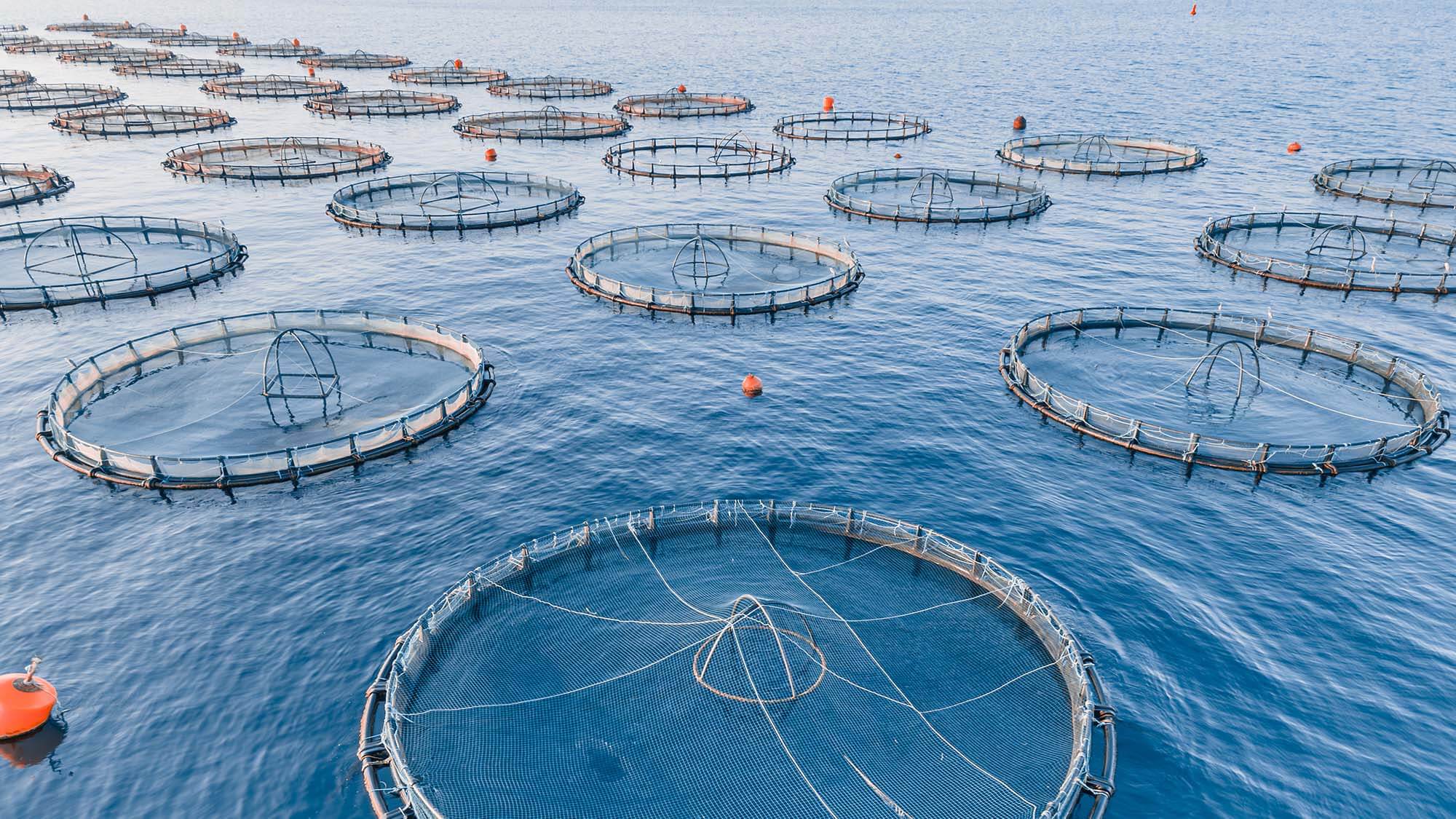
Offshore fish farm lighting serves three non-negotiable functions. It guides vessels away from cages and submerged structures in low visibility. It satisfies the requirements of maritime authorities, which have the authority to revoke operating permits for non-compliant installations. And it reduces the operational burden on farm managers who cannot afford frequent maintenance voyages to remote sites. Any model that fails on one of these dimensions creates exposure — financial, legal, or physical.
The seven criteria below address each of these dimensions directly. Apply them to every model under consideration, and use the scoring approach at the end to make a defensible, auditable procurement decision. For a comprehensive overview of purpose-built solutions, aquaculture lights designed specifically for offshore installations provide a useful reference point throughout this evaluation.
1: Check IALA and Local Regulatory Compliance First
Regulatory compliance is the first filter, not an afterthought. Any aquaculture lighting model that does not meet the requirements of the International Association of Marine Aids to Navigation and Lighthouse Authorities (IALA) and the applicable local maritime authority creates immediate legal and operational risk. Non-compliant lighting can lead to permit suspension, liability exposure in the event of a collision, and forced replacement at full cost.
When evaluating compliance, confirm that the model produces light in IALA-standard colours — typically yellow for aquaculture farm markers — and that intensity levels meet the minimum photometric requirements for your installation’s visibility range. Models that carry documented IALA chromaticity compliance, such as those meeting the five-colour IALA spectrum (red, green, white, yellow, blue), provide a verifiable audit trail for regulators. Check whether the manufacturer participates actively in IALA standards development, as this signals that their products are designed to stay ahead of evolving requirements rather than merely meeting current minimums.
Local requirements vary by jurisdiction. In addition to IALA standards, confirm compliance with any national maritime authority specifications, port authority requirements, and environmental permits that govern your site. Request written compliance documentation from the supplier before proceeding to any other evaluation criterion.
2: Evaluate Photometric Output for Your Site Conditions
Photometric output determines whether your aquaculture lighting will actually be visible to approaching vessels under the conditions that matter most: darkness, rain, sea spray, and fog. A nominal range figure in a product datasheet is only meaningful if it reflects performance under real-world marine conditions at your specific latitude and installation geometry.
Evaluate the nominal range in nautical miles against the approach distances relevant to your site. For offshore aquaculture farms in open water, a minimum range of 2 nautical miles is a practical baseline for smaller installations, while larger or more exposed farms benefit from lanterns capable of 5 nautical miles or more. Confirm whether intensity automatically adjusts with flash character settings — this matters because a lantern operating at full intensity in all conditions will drain power faster and may not sustain performance over a full winter season. The Schmidt-Clausen method for automatic intensity adjustment, used in several professional-grade marine lanterns, ensures that intensity scales appropriately with the selected flash pattern.
Vertical divergence is a frequently overlooked photometric parameter in aquaculture applications. A vertical divergence of 8 degrees is standard for buoy and floating structure applications, ensuring that the light beam remains effective as the installation moves with wave action. Confirm this specification for any model being evaluated on a floating cage or buoy system.
3: Rate Each Model’s Resistance to Marine Corrosion
Marine corrosion is the primary cause of premature failure in offshore aquaculture lighting. Salt spray, biofouling, UV degradation, and continuous immersion in harsh sea conditions will degrade any material that is not specifically engineered for marine deployment. Evaluating material specification is therefore a direct predictor of service life and total maintenance cost.
Assess the housing material first. UV-resistant polycarbonate or polysiloxane bodies offer strong resistance to degradation in saltwater environments and are used in professional-grade marine lanterns designed for long service life. Powder-coated aluminium chassis provide structural durability for larger lanterns in exposed offshore locations. Confirm that lens materials carry UV-resistance certification, as lens yellowing or crazing will degrade photometric output over time even if the LED source remains functional.
Battery compartment design is equally important. Ventilated battery compartments reduce moisture accumulation and extend battery service life in humid marine environments. Confirm whether the model uses sealed, replaceable battery packs that can be serviced without replacing the entire lantern. For offshore aquaculture installations where maintenance access is limited, a design life of ten years or more — supported by replaceable components — is the benchmark against which all models should be measured.
4: Calculate Total Cost of Ownership, Not Just Unit Price
Unit price is the least reliable metric for comparing aquaculture lighting models. The operational cost of a marine lantern over its service life — including battery replacement, maintenance voyages, component failures, and regulatory re-certification following non-compliance events — typically exceeds the purchase price several times over for installations in remote offshore environments.
Build a total cost of ownership (TCO) calculation for each model under evaluation. Key inputs include battery service life (measured in years, not cycles), the cost and logistics of replacement, the frequency of required maintenance visits, and the cost of any monitoring infrastructure required to detect failures before they become safety events. A model with a higher unit price but an eight-year battery service life and a replaceable battery pack may represent significantly lower TCO than a cheaper alternative requiring annual battery replacement and a maintenance vessel call-out each time.
Solar-powered models introduce additional TCO considerations. High-efficiency solar cells reduce or eliminate the need for battery replacement in locations with adequate solar insolation, but performance must be verified for your specific latitude and seasonal light levels. For high-latitude aquaculture sites with limited winter sunlight, confirm that the solar charging algorithm is optimised for low-insolation conditions and that the battery technology maintains performance at low temperatures. Models with built-in calendar controls for off-season deactivation can extend battery service life by preventing unnecessary power draw during periods when the installation is not in operation.
5: Does the Model Support Remote Monitoring and GPS Sync?
Remote monitoring capability is no longer an optional feature for offshore aquaculture lighting — it is an operational necessity for farms managing multiple installations across large areas. Without remote monitoring, the only way to confirm that a lantern is functioning correctly is a physical site visit, which is costly, time-consuming, and impractical in adverse weather conditions. A failed lantern that goes undetected overnight creates direct collision risk and potential regulatory liability.
Evaluate whether the model supports remote monitoring integration. Systems that provide real-time status data — operational status, battery levels, and alarm notifications — through a web-based interface enable maintenance teams to detect and respond to issues before they become safety events. For farms with multiple lanterns, the ability to monitor an entire installation network from a single interface significantly reduces the operational overhead of compliance management.
GPS synchronisation is a distinct but equally valuable capability for multi-lantern aquaculture installations. Synchronised flash patterns across all lanterns on a farm perimeter create a coherent, recognisable light signature that approaching vessel crews can interpret reliably. Without synchronisation, independently flashing lanterns can create visual confusion, particularly in poor visibility conditions. Confirm whether GPS or GNSS synchronisation is standard or an optional add-on, and factor the cost of synchronisation hardware into your TCO calculation. Bluetooth programming capability, available on several professional marine lanterns, also simplifies on-site configuration and reduces the specialist equipment required for installation and adjustment.
6: Test Compatibility with Existing Farm Infrastructure
Aquaculture lighting models must integrate with the physical and operational infrastructure already in place at your farm. A technically superior lantern that requires significant modifications to mounting structures, power systems, or monitoring networks creates installation cost and project risk that can negate its performance advantages.
Assess mounting compatibility first. Confirm that the model’s mounting mechanism is compatible with your existing buoy, cage frame, or float infrastructure. Models offering multiple mounting options — typically four or more configurations — provide the flexibility needed to accommodate different installation points across a farm without requiring custom fabrication. For installations on existing buoys or beacons, confirm that the lantern’s weight and form factor are within the structural limits of the host buoy.
Power system compatibility is relevant for installations with existing grid or battery infrastructure. Most offshore aquaculture applications rely on self-contained solar or primary battery lanterns, but where shore power or platform power is available, confirm that the model supports external power input. For farms already using a remote monitoring platform, confirm that the lantern’s connectivity — Bluetooth, satellite communications, or proprietary protocols — is compatible with the existing system. Introducing a second monitoring platform to accommodate an incompatible lantern model adds complexity and cost to ongoing operations.
7: Request Field Performance Data from Comparable Deployments
Manufacturer specifications describe performance under controlled conditions. Field performance data from comparable deployments describes how a model actually behaves in the sea states, temperatures, and operational cycles that match your installation environment. For offshore aquaculture lighting, where failure consequences are significant, field evidence is the most reliable indicator of long-term reliability.
Request deployment references from the supplier that are genuinely comparable to your site: similar latitude, similar sea state exposure, similar installation type (floating cage, fixed beacon, buoy), and similar operational duration. Ask specifically about battery performance over multiple seasons, any component failures or warranty claims, and the maintenance frequency actually experienced in the field rather than the manufacturer’s theoretical service interval.
Suppliers with more than two decades of aquaculture lighting deployments across diverse offshore environments will have substantive field data to share. Suppliers who cannot provide comparable deployment references, or who rely exclusively on laboratory test data, present higher procurement risk for critical offshore applications. Longevity of the supplier in the marine aids to navigation sector is itself a relevant data point: a manufacturer with a long track record of IALA-compliant marine lantern production brings institutional knowledge of failure modes and design improvements that newer entrants cannot replicate.
Build a Scoring Matrix Before Your Final Decision
Applying these seven criteria individually is necessary but not sufficient. The final procurement decision requires a structured comparison that weights each criterion according to its importance for your specific installation and aggregates scores across all models under evaluation.
A practical scoring matrix assigns each criterion a weight reflecting its relative importance at your site. For a remote offshore farm with limited maintenance access, total cost of ownership and remote monitoring capability may warrant higher weighting than for a near-shore installation with regular vessel access. For farms operating in jurisdictions with active regulatory enforcement, IALA compliance and photometric performance should carry maximum weight.
Score each model against each criterion on a consistent scale, apply the weights, and total the scores. The matrix approach has two practical advantages beyond producing a ranked result: it creates a documented, auditable procurement rationale that supports regulatory and internal governance requirements, and it surfaces trade-offs explicitly — a model that scores highly on corrosion resistance but poorly on remote monitoring capability may be acceptable for a near-shore site but unsuitable for a remote offshore installation. The seven criteria above are designed to cover every dimension of offshore aquaculture lighting performance that affects safety, compliance, and operational cost. A model that scores well across all seven is a model that will perform reliably, comply with regulatory requirements, and deliver genuine long-term value.
To discuss your specific offshore aquaculture lighting requirements with Sabik’s technical team, contact our technical specialists for a project-specific assessment.