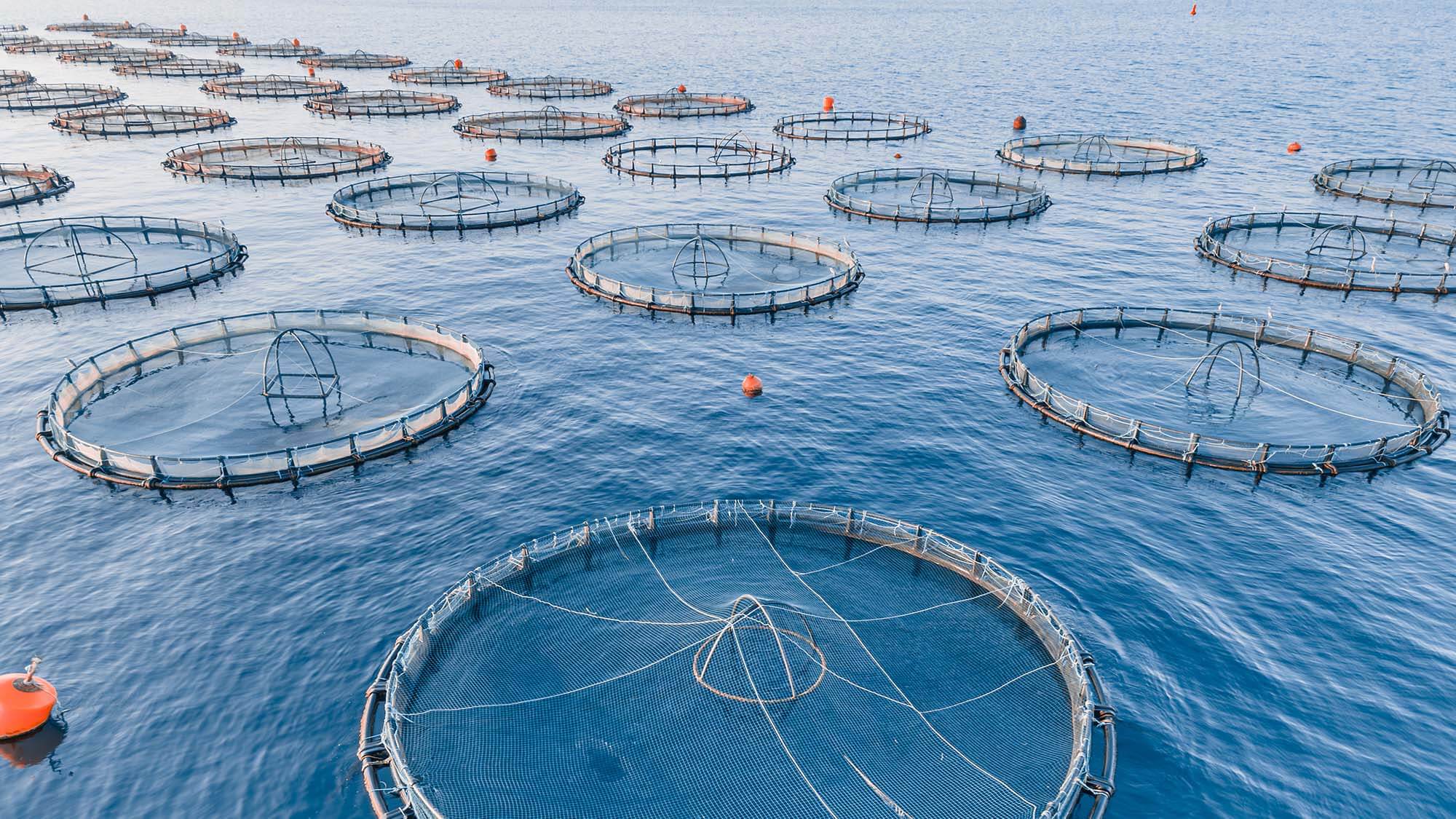

7 things experienced fish farmers check before replacing their lights
Replacing aquaculture lighting on an offshore fish farm is rarely as straightforward as ordering new units and swapping them out. The conditions that degrade marine lanterns — sustained salt exposure, storm loading, UV degradation, and continuous 24/7 operation — also affect the infrastructure around them, the regulatory environment governing them, and the power systems supporting them. Experienced operators know that a poorly planned replacement can introduce new compliance gaps, incompatible hardware, or higher lifecycle costs than the original installation. Before any purchase order is raised, seven checks consistently separate well-executed replacements from costly mistakes.
What Most Fish Farmers Miss Before Swapping Lights
The instinct to replace a failing light quickly is understandable. An unlit or degraded aquaculture safety lighting installation creates an immediate vessel collision risk and potential regulatory exposure. But rushing the replacement decision without a structured audit often results in equipment that meets only part of the operational requirement. The seven checks below address the full scope of what experienced offshore fish farmers evaluate before committing to new LED aquaculture lights — from compliance status to lifecycle cost.
1: Verify Current Regulatory Compliance Status
Regulatory requirements for offshore fish farm lights are not static. Maritime authorities update their marking requirements periodically, and what was fully compliant at installation may no longer satisfy current standards. Before specifying replacement units, verify the current requirements with your national maritime authority and cross-reference against IALA recommendations, which govern light colour, intensity, flash character, and visibility range for aquaculture installations.
This check matters most when the original installation is more than five years old. Requirements for IALA yellow marking lights on aquaculture cages, radar reflector specifications, and synchronisation requirements between adjacent lights have all evolved across multiple jurisdictions. A replacement that simply replicates the original specification may still leave the operation non-compliant.
Products designed specifically for aquaculture safety lighting, such as the Sabik SBFL 160 Marker Light, are built to IALA standards with integrated radar reflectors and GNSS synchronisation — features that directly address the most common compliance gaps found during audits of older installations.
2: Audit the Actual Failure Mode of Each Light
Not all light failures have the same root cause, and replacing hardware without understanding why it failed will produce the same outcome within the same timeframe. A systematic failure mode audit across every position in the installation identifies whether the issue is battery chemistry degradation, optical fouling, housing seal failure, solar panel delamination, or LED driver failure.
The distinction matters for replacement specification. If battery service life is the primary failure driver, the replacement decision should centre on battery technology and capacity — for example, whether a lithium-ion battery pack with an eight-year service life is appropriate for the deployment cycle, or whether a sealed lead-acid configuration better suits the maintenance schedule already in place. If housing seal failure is the dominant mode, the replacement specification should prioritise ingress protection rating and UV-resistant materials rather than simply matching the original optical output.
Documenting failure modes across all positions also reveals whether failures are clustered at specific locations, which points to site-specific factors such as wave exposure, biofouling rates, or shading from cage superstructure. This information directly informs product selection and mounting configuration for the replacement installation.
3: Check if Your Mounting Infrastructure Is Still Sound
Fish farm light replacement decisions frequently focus on the lantern itself while the mounting hardware receives no scrutiny. In offshore aquaculture environments, mounting brackets, poles, cable conduits, and fasteners are exposed to the same corrosive conditions as the lanterns — and in many cases, they degrade faster because they are fabricated from lower-specification materials than the lantern housing.
Before specifying replacement lanterns, physically inspect every mounting point for corrosion, fatigue cracking, and fastener integrity. Check cable entry points for seal degradation and assess whether the mounting geometry still positions the lantern correctly for the required visibility arc. A lantern mounted on a corroded bracket that shifts under storm loading will not maintain the consistent visibility that aquaculture safety lighting demands.
Where mounting infrastructure requires replacement, the opportunity exists to standardise on a configuration that is compatible with the chosen replacement lantern’s mounting options. Several marine lanterns designed for aquaculture applications offer multiple mounting configurations, which allows the replacement to adapt to existing infrastructure where it remains serviceable rather than requiring complete reinstallation.
4: What Visibility Range Does Your Site Actually Need?
Visibility range requirements for offshore fish farm lights depend on site-specific factors: the volume and type of vessel traffic in the area, the proximity of established shipping lanes, local weather patterns affecting visibility, and the physical scale of the installation. A small inshore farm in a sheltered bay has materially different requirements from a large offshore cage system in an exposed tidal channel with regular commercial traffic.
Specifying more range than the site requires adds unnecessary cost and power consumption. Specifying less creates a genuine safety gap. The practical check is to review the original site risk assessment, consult the relevant maritime authority’s marking requirements for the installation category, and assess whether vessel traffic patterns have changed since the original installation was designed.
Marine lanterns designed for aquaculture applications are available across a wide range of visibility outputs. Compact solar-powered units deliver reliable performance at shorter ranges, while higher-output lanterns with adjustable intensity settings can be configured to match the precise visibility requirement of the site. Adjustable intensity also provides operational flexibility — the ability to increase output during periods of reduced visibility or heightened traffic without replacing hardware.
5: Assess Your Power Supply and Energy Budget
Power supply compatibility is one of the most frequently underestimated factors in fish farm light replacement. Offshore aquaculture installations typically operate without grid connection, making solar-powered lanterns the default solution — but not all solar configurations are appropriate for all locations. High-latitude farms with extended low-insolation periods require a different solar engine and battery capacity specification than installations in equatorial or mid-latitude locations.
Before specifying replacement units, calculate the energy budget for each position: the required flash character and intensity, the expected daily operating hours across the worst-case seasonal period, and the number of consecutive overcast days the battery must bridge. This calculation determines the minimum solar panel output and battery capacity required to maintain reliable operation year-round without maintenance intervention.
Battery technology selection also affects the energy budget assessment. Lithium-ion battery packs offer higher energy density and longer service life than sealed lead-acid alternatives but have different temperature performance characteristics that matter in cold-water aquaculture environments. Replaceable battery pack designs extend the service life of the lantern beyond the battery’s own service life, which changes the long-term cost calculation significantly.
6: Evaluate Remote Monitoring Compatibility
Remote monitoring capability has become a standard expectation for offshore aquaculture lighting, and the replacement decision is the right moment to assess whether the existing monitoring setup remains fit for purpose — or whether it should be upgraded alongside the hardware. For farms managing multiple cage positions across a wide area, the operational value of real-time status data on battery levels, lantern operation, and fault conditions is substantial: it eliminates unnecessary inspection voyages and ensures that compliance failures are detected and corrected before they create regulatory exposure.
The key compatibility check is whether the replacement lanterns support the monitoring protocol already in use across the installation. Where the existing system uses a specific remote monitoring platform, the replacement specification should confirm compatibility before procurement. Where no monitoring capability currently exists, the replacement is an opportunity to introduce it — modern marine lanterns designed for aquaculture applications support Bluetooth programming and, in some configurations, satellite connectivity for installations beyond cellular range.
GNSS synchronisation is a related capability worth verifying during this check. Synchronised flash patterns across multiple lanterns marking the perimeter of an aquaculture installation improve the recognisability of the installation to approaching vessels, particularly in conditions where multiple light sources are visible simultaneously. This is an IALA-recommended practice for larger installations and should be confirmed as a feature of any replacement specification.
7: Factor in Total Lifecycle Cost, Not Just Unit Price
Unit price comparison between replacement options is a necessary but insufficient basis for the procurement decision. The total lifecycle cost of an offshore fish farm light installation includes the unit cost, installation cost, battery replacement intervals, maintenance visit frequency, and the cost of any unplanned interventions caused by premature failure. In remote offshore environments, a single unplanned maintenance voyage can exceed the unit cost of the lantern itself.
A structured lifecycle cost comparison should account for the battery service life of each option, the availability and cost of replacement components, the warranty terms, and the expected design life of the housing and optical components. A lantern with a ten-year design life and a five-year battery service life has a fundamentally different cost profile from one with a five-year design life requiring full replacement at the same interval, even if the unit prices are comparable.
Energy consumption is a lifecycle cost factor that is often overlooked in aquaculture lighting procurement. LED aquaculture lights with efficient flash character management and automatic day-to-night intensity adjustment consume significantly less power than fixed-output alternatives, which extends battery service intervals and reduces the frequency of solar panel maintenance. Over a ten-year installation life, these differences accumulate into material cost savings.
A Smarter Replacement Process Starts Before the Purchase Order
The seven checks above share a common characteristic: they all require information that is gathered before, not after, the replacement specification is written. Experienced offshore fish farmers treat the pre-replacement audit as a distinct phase of the project, separate from procurement, because the audit findings directly determine what the replacement specification should contain.
The most effective approach is to treat each replacement as a site review rather than a hardware swap. Compliance status, failure mode analysis, infrastructure condition, visibility requirements, power budget, monitoring capability, and lifecycle cost are interdependent factors — a change in one affects the optimal answer for the others. A replacement specification built on a complete audit of all seven factors will consistently outperform one based on unit price alone, both in operational reliability and in long-term cost.
Sabik has supplied purpose-built aquaculture lighting to offshore fish farms across demanding marine environments for more than two decades. The product range spans compact solar-powered marker lights through to high-output omnidirectional lanterns with GNSS synchronisation and remote monitoring capability, covering the full range of visibility and compliance requirements encountered in offshore aquaculture operations. For farms operating at scale, the aquaculture lighting range includes options designed specifically for cage perimeter marking, with IALA-compliant yellow light output, integrated radar reflectors, and Bluetooth programming compatibility.
Contact Sabik’s technical team to discuss your aquaculture lighting replacement requirements and receive a specification recommendation matched to your site conditions, compliance obligations, and operational priorities.