
9 questions to ask before switching aquaculture lighting brands
Switching aquaculture lighting brands is not a routine procurement decision. The marine lanterns marking your offshore fish farm are safety-critical infrastructure: they protect your stock, your crew, and every vessel operating in the vicinity of your installation. A wrong choice can mean regulatory non-compliance, equipment failure in severe weather, or a collision that causes losses running into millions. Before committing to a new supplier, these nine questions will help you evaluate any aquaculture lighting brand with the rigour the decision demands.
What’s Really at Stake When Changing Aquaculture Lights
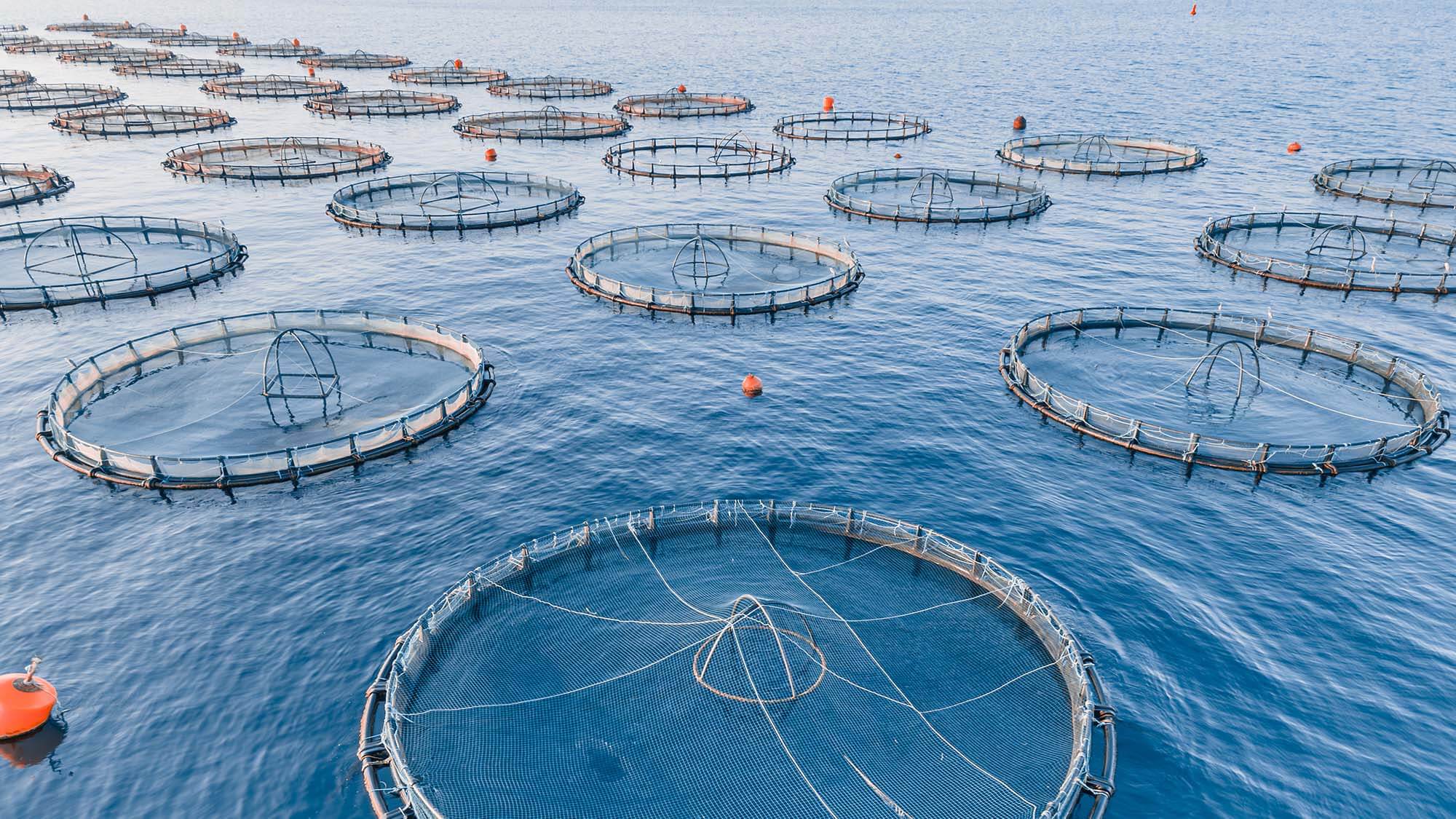
Offshore aquaculture installations present a specific and demanding set of lighting requirements that differ significantly from standard port or coastal AtoN applications. Your cages, mooring lines, and perimeter structures must be clearly visible to approaching vessels at all times, in all weather conditions, and in compliance with the maritime authority requirements governing your operating area. The consequences of inadequate fish farm lighting are direct and measurable: vessel collisions, stock escapes, infrastructure damage, regulatory penalties, and potential liability for harm to third parties.
The decision to switch aquaculture lighting brands introduces a period of transition risk. Existing installations may need to be reconfigured, programming tools may differ between manufacturers, and the regulatory compliance status of your installation must be maintained without interruption throughout any changeover. Understanding precisely what you are moving to, and what you are moving away from, is the foundation of a responsible procurement process. The nine questions below address the criteria that experienced offshore aquaculture operators identify as most consequential when evaluating marine lighting brands.
Question 1: Does the Brand Have Offshore-Rated Certifications?
Certification is the baseline, not a differentiator. Any aquaculture lighting brand operating in the professional marine sector should hold verifiable certifications that confirm its products have been independently tested against recognised standards. For aquaculture LED lights specifically, look for IALA-compliant designs, IP ratings appropriate for continuous saltwater exposure, and evidence of in-house quality assurance processes such as ISO 9001 certification.
Certifications matter because they represent an external verification of claims the manufacturer makes about its own products. A brand that has invested in ISO 9001 quality management and subjects its marine lanterns to in-line photometric testing before shipment is demonstrating a fundamentally different level of commitment to product integrity than one relying on self-reported specifications. Ask specifically for test documentation, not just the certification number.
For offshore aquaculture environments, also verify whether the brand participates actively in standards development through bodies such as IALA. Brands that help write the standards governing marine aids to navigation are typically better positioned to ensure their products remain ahead of regulatory requirements, rather than scrambling to meet them after the fact.
Question 2: What Is the Light’s Proven Saltwater Lifespan?
Claimed service life and proven service life are not the same figure. Offshore fish farm lighting operates in conditions that accelerate degradation: continuous saltwater exposure, UV radiation, temperature cycling, and the mechanical stress of wave action and tidal movement. A lantern rated for five years in a controlled test environment may perform very differently on a cage float in exposed offshore waters.
Ask the brand for field data from comparable deployments, not just laboratory specifications. Specifically request information on battery service life under real operating conditions, the UV resistance of enclosure materials, and whether the product has been deployed in environments with comparable salinity, temperature range, and wave exposure to your own installation. Products using UV-resistant polycarbonate or polysiloxane housings and sealed battery compartments ventilated to prevent moisture ingress are better engineered for long-term offshore performance than those using standard enclosure materials.
Also ask about the design philosophy behind the product’s service life. Brands that offer replaceable battery packs, for example, allow service life to be extended beyond the initial battery cycle without replacing the entire unit, which reduces both operational cost and waste over the installation’s lifetime.
Question 3: Does It Meet Local Maritime Authority Requirements?
Regulatory compliance for offshore aquaculture lighting is not uniform across jurisdictions. The specific requirements governing the marking of fish farm installations vary between national maritime authorities, and in many cases include both the technical specification of the lights themselves and the approved installation configurations. Failing to meet these requirements can result in permit conditions being breached, operating licences being reviewed, or direct liability in the event of a collision.
Before switching fish farm lighting brands, confirm that the new supplier’s products are recognised and accepted by the maritime authority responsible for your operating area. This is not simply a matter of IALA compliance, although IALA-compliant designs provide a strong foundation. Some authorities maintain approved product lists or require specific documentation from manufacturers. Others require that lights meet particular visibility ranges, flash characters, or colour specifications that go beyond the IALA minimum.
A brand with a genuinely global distribution network and a track record of deployments across multiple regulatory jurisdictions is better placed to provide this assurance than one whose reference installations are concentrated in a single market. Verify the brand’s experience in your specific region before committing.
Question 4: How Does the Light Perform in Extreme Weather?
Offshore aquaculture installations are not protected environments. North Atlantic fish farms experience storm-force winds, breaking seas, and sub-zero temperatures. Tropical offshore installations face intense solar radiation, high humidity, and cyclonic weather events. The marine lighting you deploy must maintain reliable, consistent performance through all of these conditions without requiring intervention.
Evaluate how the brand addresses extreme weather performance at the design level. Solar-powered marine lanterns intended for high-latitude deployments must incorporate advanced battery management to maintain adequate charge through extended periods of low insolation. Products using optimised charging algorithms and premium battery technology are better suited to these conditions than those relying on standard solar charging configurations. For installations in regions with significant ice risk, the mechanical design of the lantern and its mounting system must be capable of withstanding ice loading without structural failure.
Ask for documented evidence of deployments in conditions comparable to your operating environment. A brand with manufacturing facilities and field experience in high-latitude markets such as Finland, the United States, and Australia draws on a substantially broader range of environmental operating data than one whose installations are concentrated in temperate coastal waters.
Question 5: What Are the Real Energy Consumption Figures?
Energy consumption directly determines battery autonomy and, for solar-powered installations, the adequacy of the solar charging system for your location’s insolation profile. Headline lumen figures are less useful than a detailed power budget that accounts for flash character, operating intensity, day-to-night transition behaviour, and the efficiency of the battery charging system under realistic field conditions.
Request the full power budget documentation for the specific product and flash configuration you intend to deploy. Verify that the stated figures account for temperature-related performance variation in the LED drivers and battery system, since both degrade in cold conditions. Products with temperature-corrected LED drivers maintain consistent intensity and power consumption across a wider operating temperature range, which is directly relevant to battery autonomy calculations in cold-water aquaculture environments.
Also evaluate the total cost of ownership, not just the unit price. Aquaculture LED lights with longer battery service lives, replaceable battery packs, and low self-discharge rates reduce the frequency and cost of maintenance interventions over the installation’s operational life. In offshore environments where every maintenance visit requires a vessel deployment, this calculation is significant.
Question 6: Is Remote Monitoring and Control Available?
Managing marine lighting across a distributed offshore aquaculture installation without remote monitoring capability means that equipment failures are discovered reactively, typically when a vessel crew reports an unlit marker or when an authority inspection identifies a non-compliant installation. Both scenarios carry operational and regulatory consequences that remote monitoring is specifically designed to prevent.
Evaluate whether the brand offers a credible remote monitoring platform that provides real-time operational status data for deployed lanterns. A system such as Sabik’s LightGuard Monitor, which delivers battery levels, operational status, and alarm notifications through a web-based interface accessible on any device, enables maintenance teams to identify and respond to issues before they affect the safety of the installation. This is particularly valuable for offshore aquaculture operations where the distance between the management office and the installation makes physical inspection costly and time-consuming.
Also assess the programming and configuration capability available. Brands offering Bluetooth-enabled programming tools allow lantern configuration to be adjusted without physical contact with the unit, which reduces the time and cost of routine parameter changes. GNSS synchronisation capability, which ensures that multiple lanterns across a large installation flash in coordinated sequence, is a further operational advantage for large offshore fish farm perimeters.
Question 7: How Compatible Is It with Existing Infrastructure?
Switching aquaculture lighting brands does not always mean replacing every component of an existing installation simultaneously. In many cases, a phased transition is more practical and cost-effective, which means the new brand’s products must be capable of operating alongside existing equipment without creating compliance gaps or operational inconsistencies across the installation.
Assess the mounting compatibility of the new brand’s marine lanterns with your existing buoy and float infrastructure. Non-standard mounting interfaces may require additional hardware or structural modifications that add cost and complexity to the installation process. Similarly, if your existing installation uses a remote monitoring platform, evaluate whether the new brand’s products can integrate with that system or whether a parallel monitoring infrastructure will be required during the transition period.
Flash character compatibility is also relevant for installations where visual consistency across the perimeter marking is a regulatory requirement. Confirm that the new brand’s lanterns support the specific flash characters required by your maritime authority, and that these can be programmed to match the existing installation’s configuration precisely. Brands offering more than 256 programmable flash characters provide the flexibility required to match virtually any existing configuration.
Question 8: What Does Post-Sale Support Actually Look Like?
The quality of post-sale support for offshore aquaculture lighting is not a secondary consideration. When a marine lantern fails on an exposed offshore installation, the speed and effectiveness of the manufacturer’s response directly affects the duration of the compliance gap and the risk exposure of the operation. A brand that is difficult to reach, slow to supply replacement components, or unable to provide technical guidance for field troubleshooting creates operational risk that the purchase price does not reflect.
Evaluate the brand’s support infrastructure concretely. Verify whether it maintains authorised distributors in your region who carry stock of the specific products and components you are deploying. Ask about warranty terms in detail, including what is covered, what documentation is required to make a claim, and what the typical resolution timeline looks like. A three-year warranty on a product with a ten-year design life is only valuable if the process for exercising that warranty is practical for an offshore operator.
Also assess the availability of technical documentation. Brands that provide comprehensive installation guides, programming documentation, and troubleshooting resources in accessible formats enable your own maintenance teams to resolve issues without waiting for manufacturer intervention. This is particularly relevant for remote aquaculture installations where the logistics of bringing in external technical support are complex and costly.
Question 9: Does the Brand Have Aquaculture-Specific References?
General marine lighting experience and aquaculture lighting experience are not equivalent. The operational demands of offshore fish farm lighting differ from port marking, buoy systems, and coastal AtoN applications in ways that matter to the product design and the brand’s understanding of your requirements. A brand with a dedicated aquaculture lighting product range and a documented history of offshore fish farm deployments is demonstrably better qualified than one adapting a general marine product to an aquaculture application.
Ask for specific references from aquaculture deployments in comparable operating environments. A brand that has been supplying purpose-built aquaculture lighting for more than two decades, across multiple offshore environments and regulatory jurisdictions, has accumulated field knowledge that directly informs product development, installation guidance, and support capability. Products such as the Sabik SBFL 160 Marker Light, designed specifically for aquaculture farms with integrated radar reflectors and IALA yellow marking, represent the kind of application-specific engineering that general marine lighting brands rarely develop.
Verify that the brand’s aquaculture references include installations in conditions comparable to your own, not just a single reference deployment in a sheltered coastal environment. Offshore aquaculture in exposed waters demands a fundamentally different level of product robustness and installation engineering than nearshore applications, and the brand’s reference portfolio should reflect that range of experience.
Make the Switch with Confidence, Not Guesswork
A structured evaluation process based on these nine questions transforms a high-stakes procurement decision into a defensible, evidence-based selection. The right aquaculture lighting brand will be able to answer each question with specific documentation, verifiable references, and technical clarity, not general assurances or marketing materials. Any brand that cannot provide concrete answers to questions about certification, saltwater service life, regulatory compliance, and post-sale support is signalling a level of preparation that is inconsistent with the demands of offshore fish farm operations.
The evaluation criteria outlined above reflect the operational realities that offshore aquaculture operators face daily: regulatory scrutiny, severe weather exposure, remote maintenance logistics, and the safety consequences of inadequate installation marking. Brands that have invested in purpose-built aquaculture lighting solutions, long-service-life product engineering, and credible remote monitoring capability are the ones equipped to support your installation through its full operational life, not just through the initial deployment.
Sabik has been designing and supplying aquaculture lighting for offshore fish farms for over 20 years, with products engineered to perform in the world’s most demanding marine environments. If you are evaluating your current aquaculture lighting setup and want to discuss your specific installation requirements, contact Sabik’s technical team to request product specifications and reference documentation relevant to your operating environment.