
9 reasons fish farmers switch from HID to LED aquaculture lights
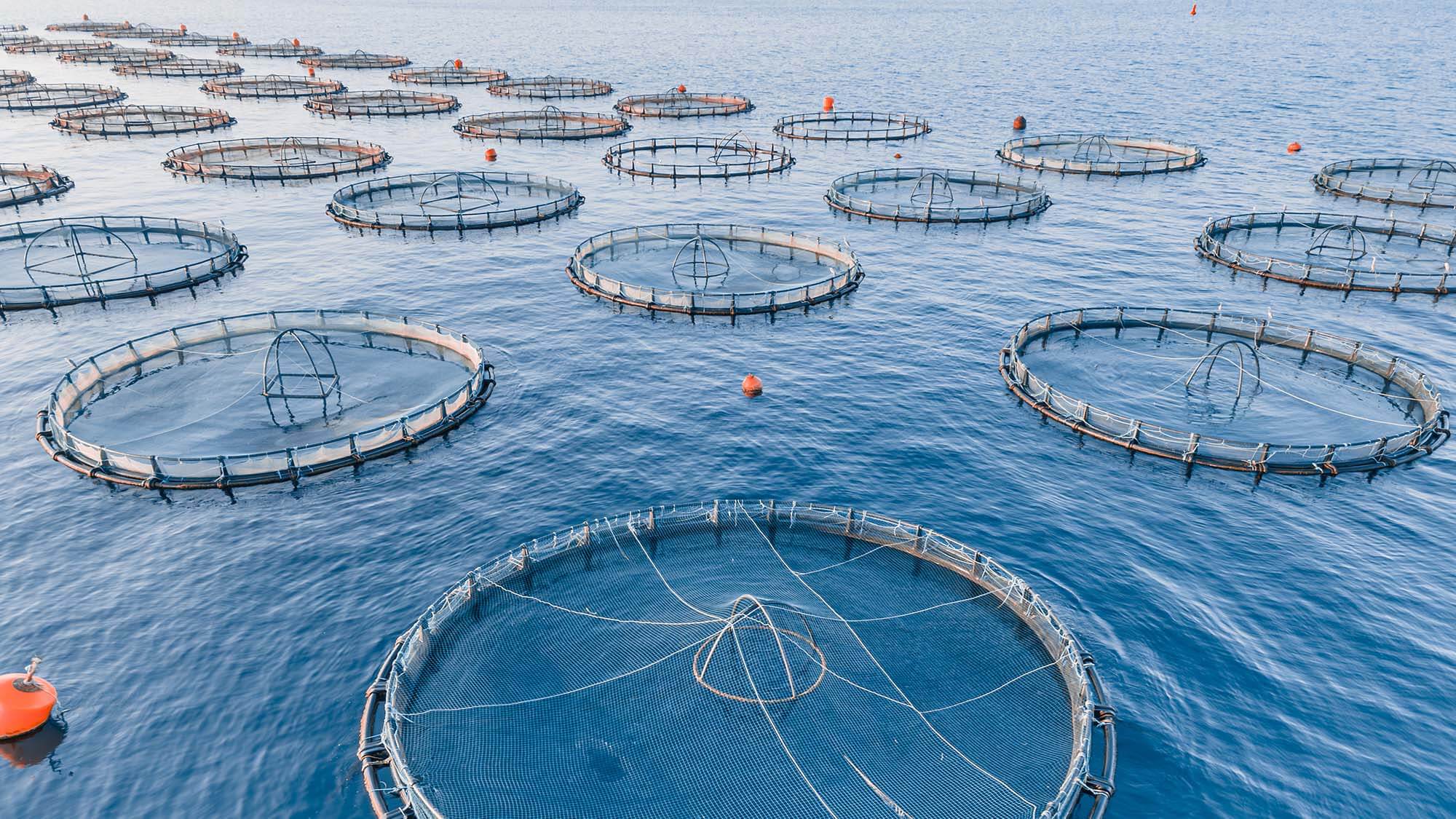
The transition from high-intensity discharge (HID) lighting to LED aquaculture lights is accelerating across offshore fish farming operations worldwide. What was once a gradual shift has become a deliberate operational decision, driven by mounting pressure on energy costs, maintenance logistics, regulatory compliance, and the real financial consequences of vessel collisions with inadequately marked offshore cages. For fish farmers managing infrastructure in exposed, demanding sea conditions, the case for an aquaculture lighting upgrade is no longer marginal. These nine reasons explain why operators are making the switch.
What Drives Fish Farmers Away from HID Lighting
HID technology served offshore aquaculture operations for decades, but it was never purpose-built for the demands of the marine environment. The fundamental limitations of HID lighting, including high energy consumption, short lamp life, sensitivity to vibration and saltwater ingress, and the absence of any remote monitoring capability, create compounding operational problems that become increasingly difficult to justify as LED alternatives mature.
The offshore context amplifies every weakness. A lamp failure at a land-based facility is an inconvenience. A lamp failure on an offshore aquaculture cage, in low visibility, on a busy shipping approach, is a collision risk. Maintenance that requires a vessel deployment costs significantly more than the replacement component. Regulatory non-compliance, even when caused by equipment failure rather than operator negligence, can trigger licence consequences. These are the pressures that make the HID-to-LED switch a safety and business imperative, not merely an efficiency preference.
1: Cut Energy Consumption by Up to 70%
LED aquaculture lights deliver equivalent or superior photometric output at a fraction of the power draw of HID sources. The efficiency gains stem from the fundamental physics of solid-state lighting: LEDs convert electrical energy directly into light, whereas HID sources generate significant heat as a byproduct of their arc discharge process. For offshore installations where power is generated on-site or supplied by battery systems, this difference has direct operational consequences.
Solar-powered LED marine lanterns, such as those in Sabik’s aquaculture lighting range, take this further by eliminating grid dependency entirely. The combination of high-efficiency solar cells, advanced battery management, and low-draw LED emitters means that installations in locations with adequate solar exposure can operate autonomously, without shore power or generator supply. This is particularly relevant for remote offshore cages where running power cables is either impractical or prohibitively expensive.
For operations with multiple marked structures across a large farm perimeter, the cumulative energy savings across an entire installation are substantial. Reduced power consumption also extends battery autonomy during periods of low solar insolation, which is critical for maintaining continuous visibility through the winter months at higher latitudes.
2: Eliminate Frequent Bulb Replacements Offshore
HID lamps have rated service lives typically measured in hundreds to low thousands of operating hours, after which light output degrades and eventual failure becomes unpredictable. In an offshore aquaculture context, each replacement requires a vessel deployment, crew time, and the logistical complexity of working on floating structures in conditions that are rarely ideal. The cumulative maintenance burden across a multi-cage installation is significant.
LED light sources operate on a fundamentally different degradation curve. Rather than abrupt failure, LEDs exhibit gradual lumen depreciation over tens of thousands of operating hours. Purpose-built aquaculture LED lanterns are designed with service life targets measured in years, not months, with battery service lives on advanced lithium-ion systems extending to eight years or more before intervention is required.
The practical outcome is a dramatic reduction in the number of maintenance voyages required to keep an installation fully operational. In remote or exposed locations where vessel deployments carry both cost and weather-window constraints, this reduction directly lowers operational expenditure and reduces the risk of extended periods of unlit or degraded marking.
3: Survive Saltwater, Storms, and Constant Exposure
Offshore aquaculture environments subject lighting equipment to conditions that eliminate poorly engineered products within a single season. Continuous saltwater exposure, storm-force winds, wave impact on floating structures, and the thermal cycling of marine environments all attack materials, seals, and electrical connections. HID fixtures were designed for static, sheltered installations and typically require additional protective housing to survive offshore deployment.
Purpose-built LED aquaculture lanterns are engineered from the outset for marine exposure. UV-resistant polycarbonate and polysiloxane housings resist photodegradation and impact. Sealed battery compartments and ventilated designs manage thermal load without compromising ingress protection. Powder-coated aluminium chassis provide structural integrity where weight and corrosion resistance must be balanced. These are not adaptations of terrestrial products; they are designs developed specifically for the demands that offshore fish farmers face daily.
Sabik’s aquaculture lighting solutions reflect more than two decades of product development in offshore marine environments, including Arctic deployments where ice loading, freeze-thaw cycles, and extended darkness periods test equipment beyond what most manufacturers design for. The result is a product family that treats long service life in harsh conditions as a baseline requirement, not a premium feature.
4: Meet IALA and Maritime Authority Standards
Offshore aquaculture installations are required to meet specific visibility and marking standards set by national maritime authorities and aligned with International Association of Marine Aids to Navigation and Lighthouse Authorities (IALA) recommendations. These requirements cover light intensity, colour chromaticity, flash character, and the reliability of the marking system itself. Non-compliant or failed lighting exposes operators to regulatory action, licence conditions, and potential liability in the event of a collision.
IALA-compliant LED aquaculture lanterns are designed to meet these requirements precisely. Colour output is verified against IALA chromaticity standards across the full operating temperature range. Flash characters are programmable from libraries of more than 256 options, allowing operators to configure marking exactly as specified by their maritime authority. Automatic intensity adjustment using the Schmidt-Clausen method ensures that light output remains within the required range as ambient conditions change between day and night.
Sabik’s position as an active IALA participant means that its aquaculture lighting products are not merely designed to comply with current standards; they are developed with direct knowledge of how those standards are evolving. For fish farmers operating under permit conditions that reference specific IALA recommendations, this provides a level of regulatory certainty that generic marine lighting products cannot offer.
5: Reduce Collision Risk with Consistent Visibility
Vessel collisions with aquaculture cages and farm infrastructure represent one of the most serious operational risks in offshore fish farming. The consequences extend beyond structural damage: stock escapes, pollution incidents, crew injuries, and the financial exposure of recovery operations can threaten the viability of an entire farm. Inadequate or unreliable lighting is a primary contributing factor in many collision events, particularly in low visibility conditions, at night, or during adverse weather.
LED aquaculture lights deliver consistent, predictable visibility that HID sources cannot match. LED output does not degrade gradually in the way that an aging HID lamp does; the photometric performance of a well-maintained LED lantern on day one of its service life is comparable to its performance years later. GNSS synchronisation, available on selected lanterns, ensures that all lights on a farm perimeter flash in a coordinated sequence, making the installation’s boundaries immediately recognisable to approaching vessels even when individual lights are partially obscured.
The SBFL 160 Marker Light, specifically designed for aquaculture farms, illustrates this approach directly. It meets requirements for both daytime and nighttime visibility and incorporates an internal radar reflector, ensuring that the installation is detectable not only visually but also on vessel radar systems. This layered approach to marking reduces collision risk across the full range of conditions that offshore vessels encounter.
6: Enable Remote Monitoring and GPS Sync
One of the most operationally significant advantages of LED aquaculture lighting over HID systems is the availability of remote monitoring capability. HID installations provide no feedback on their operational status; a failed lamp is discovered either during a scheduled inspection or, in the worst case, following a navigation incident. LED lanterns with integrated remote monitoring change this completely, providing real-time visibility into the status of every light on a farm installation from any location with internet access.
Sabik’s LightGuard Monitor delivers web-based access to operational data including battery levels, lantern status, and positioning information. Automatic alarms trigger when anomalies are detected, enabling maintenance teams to respond to potential failures before they result in unlit marking. For farm managers overseeing installations across multiple sites, or for operations where the nearest service vessel is hours away, this capability fundamentally changes the economics and safety profile of the installation.
GPS synchronisation, available on lanterns including the VPL 110 Integrated Buoy Lantern, adds a further layer of operational value. Synchronised flash patterns across a farm perimeter make the installation’s extent immediately legible to approaching vessels, and the synchronisation is maintained autonomously without requiring manual coordination. Bluetooth programming via the Sabik Bluetooth® Control App enables configuration adjustments without requiring physical access to individual lanterns, reducing the number of on-site interventions needed during the operational life of the installation.
7: Minimize Environmental Light Pollution
Offshore aquaculture operations are increasingly subject to environmental scrutiny, and light pollution is a recognised concern in marine ecosystems. Excessive or poorly directed artificial light at sea can affect fish behaviour, disrupt local marine fauna, and attract unwanted species to cage areas. Regulatory frameworks in several jurisdictions now include conditions on artificial lighting as part of aquaculture operating permits.
LED aquaculture lights offer precise control over light output that HID sources cannot match. Adjustable intensity settings allow operators to use only the light output required for safe marking, rather than operating at maximum output regardless of conditions. Automatic day-to-night transition with up to 12 configurable levels means that intensity is modulated in proportion to ambient light rather than remaining constant across all conditions. Built-in calendar control on selected lanterns allows off-season deactivation of non-essential marking, reducing the total light hours imposed on the surrounding environment.
Sabik’s ISO 14001 environmental certification reflects a design philosophy that treats environmental performance as an engineering requirement, not an afterthought. Solar-powered operation eliminates the emissions associated with generator power or frequent maintenance vessel deployments, and the long service life of LED components reduces the volume of waste materials generated over the operational life of an installation.
8: Lower Total Cost of Ownership Over Time
The initial capital cost of LED aquaculture lighting is typically higher than equivalent HID equipment. This comparison, however, captures only one element of the total cost picture. When maintenance costs, energy costs, lamp replacement frequency, and the operational disruption associated with equipment failures are factored into a whole-life cost analysis, LED systems consistently deliver lower total cost of ownership over a five-to-ten-year horizon.
The maintenance cost reduction is particularly significant in offshore contexts. Each service visit to a remote aquaculture installation requires vessel time, crew deployment, and weather-window planning. Reducing the frequency of these visits from multiple times per season to once every several years, as LED technology enables, generates savings that dwarf the initial price differential between HID and LED equipment. Battery service lives of eight years or more on lithium-ion systems, and replaceable battery pack designs that extend total service life beyond five years on other models, further reduce the intervention frequency over the product’s operational life.
Energy cost savings compound over time, particularly for grid-connected installations where HID systems draw continuous power. For solar-powered LED installations, the elimination of energy cost entirely represents a permanent operational saving from the point of commissioning. When these factors are modelled across a full farm installation with multiple marked structures, the financial case for an aquaculture lighting upgrade is typically clear within the first two to three years of operation.
9: Integrate Seamlessly with Existing Farm Systems
A common concern among fish farmers evaluating an LED upgrade is the complexity of transitioning from existing infrastructure. Modern LED aquaculture lanterns are designed to address this directly, with mounting configurations, power interfaces, and programming options that accommodate a wide range of existing installation types without requiring wholesale infrastructure replacement.
Multiple mounting options, available on lanterns including the M660 Self-Contained LED Lantern with four distinct mounting configurations, allow direct installation on existing floats, buoy tubes, and structural supports without fabricating custom brackets. Programmable flash characters, colour options covering the full IALA palette, and adjustable intensity ranges mean that a replacement LED lantern can be configured to match the exact specification of the HID unit it replaces, maintaining continuity of marking character without requiring a new permit application.
For farms looking to expand monitoring capability without replacing their entire installation at once, the modular approach to remote monitoring available through LightGuard Monitor allows incremental integration. Lanterns equipped with Bluetooth connectivity can be programmed and monitored using the Sabik Bluetooth® Control App, providing immediate operational visibility without requiring a full network infrastructure investment. This flexibility allows farm operators to phase their upgrade programme in line with capital budgets while progressively improving the safety and efficiency profile of their installation.
Making the Switch: What to Evaluate Before Upgrading
The decision to upgrade from HID to LED aquaculture lighting involves more than selecting a product. A structured evaluation process ensures that the chosen solution delivers the operational and regulatory outcomes the installation requires.
Before specifying replacement lanterns, operators should assess the following:
- Regulatory requirements: Confirm the specific IALA flash character, colour, and intensity requirements specified by the relevant maritime authority for the farm’s location and classification. Ensure that any replacement lantern can be programmed to meet these requirements exactly.
- Power availability: Determine whether shore power, battery systems, or solar operation is most appropriate for each marked structure. Remote or exposed structures with adequate solar exposure are strong candidates for self-contained solar lanterns; structures with existing power connections may be better served by externally powered LED units.
- Visibility range: Assess the required nominal range for each marked position, accounting for the vessel traffic in the area and the visibility conditions typical of the location. Lanterns are available across a range from compact short-range units to high-performance lanterns with ranges exceeding 25 nautical miles.
- Monitoring requirements: Evaluate whether remote monitoring is required for regulatory compliance, operational management, or both. Identify which structures require real-time status data and select lanterns with appropriate connectivity for those positions.
- Environmental conditions: Account for the specific environmental challenges of the installation site, including latitude, winter insolation levels, ice exposure, wave loading, and corrosive conditions, when selecting housing materials and battery technology.
With over two decades of experience delivering aquaculture lighting to offshore fish farming operations across demanding maritime environments, Sabik’s technical team is equipped to support this evaluation process from initial specification through to commissioning. The right LED solution, correctly specified for the installation’s regulatory, environmental, and operational requirements, will deliver reliable marking performance for years without the maintenance burden and safety risks that HID technology imposes.
Contact Sabik’s technical team to discuss your aquaculture lighting requirements and receive a specification recommendation for your offshore installation.