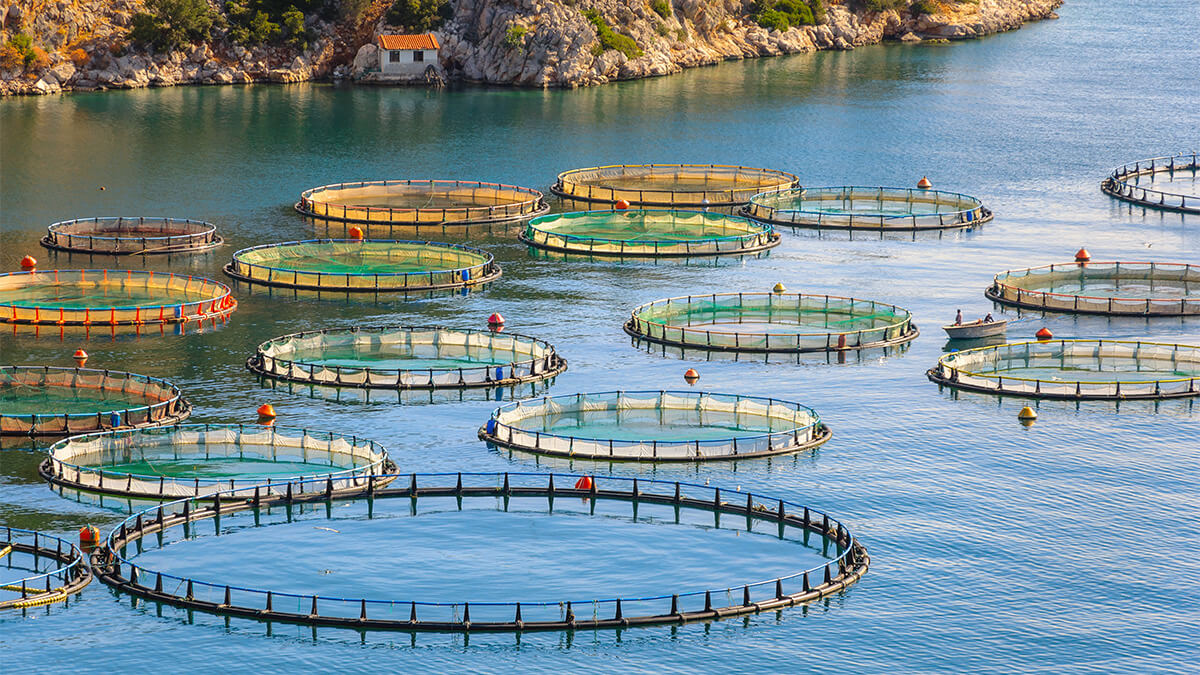

How photoperiod manipulation is reshaping growth cycles in modern fish farming
Fish biology does not operate on a fixed calendar. The mechanisms that govern when salmon mature, when trout spawn, and how quickly juvenile fish accumulate body mass are deeply sensitive to light. Offshore fish farmers who understand this relationship can use it deliberately, extending growth windows, suppressing premature sexual maturation, and improving feed conversion across an entire production cycle. Those who do not account for it often find themselves managing biology they did not intend to trigger.
This article builds a complete understanding of photoperiod manipulation in fish farming, starting with the biological foundations and progressing through the practical strategies, equipment requirements, and operational considerations that define modern aquaculture light management. Each section introduces one layer of the subject before the next builds on it.
What is photoperiod manipulation in fish farming?
Photoperiod manipulation is the deliberate control of the light-to-dark ratio experienced by farmed fish in order to influence specific biological processes. In practical terms, it means using artificial lighting to extend, shorten, or maintain a particular day length, overriding the natural seasonal light cycle to produce a targeted physiological response in the fish.
The concept is grounded in a well-established biological principle: many fish species use the length of the daily light period, rather than temperature or other environmental cues, as the primary signal for triggering seasonal events. These events include sexual maturation, smoltification in salmonids, and shifts in growth rate. By controlling what the fish perceives as day length, farmers gain meaningful influence over the timing of these events.
Photoperiod manipulation is not a new concept, but its application has become far more precise as LED aquaculture lights have replaced older lamp technologies. The ability to programme specific light intensities, flash patterns, and photoperiod schedules accurately has made consistent, reliable photoperiod control achievable at commercial offshore scale in a way that was not previously practical.
How light cycles control fish biology and behaviour
To understand why photoperiod manipulation works, it is necessary to understand how fish perceive and process light signals. Fish detect light through multiple pathways: the eyes, the pineal gland (a light-sensitive structure in the brain), and in some species, deep-brain photoreceptors. These pathways feed into the neuroendocrine system, where light signals are translated into hormonal responses.
The role of melatonin in photoperiod signalling
The primary mechanism linking light to biology is melatonin secretion. Melatonin is produced in darkness and suppressed by light. The duration of the nightly melatonin peak effectively tells the fish how long the night was, which the brain interprets as a measure of season. A long melatonin peak signals winter; a short peak signals summer. This is how a fish raised in an enclosed sea cage can detect the approach of autumn without any direct temperature cue.
When artificial lighting extends the perceived day length, it shortens the melatonin peak, mimicking the hormonal environment of summer or spring. This suppresses the hormonal cascades associated with maturation in many salmonid species, and maintains the elevated growth hormone activity associated with long-day conditions. The fish, in biological terms, does not experience winter.
Growth hormones and feeding behaviour
Beyond maturation control, photoperiod directly influences growth hormone (GH) secretion and insulin-like growth factor (IGF-1) levels, both of which regulate protein synthesis and somatic growth. Fish maintained under long-day photoperiods consistently show elevated GH and IGF-1 activity compared to those exposed to natural short-day conditions. This translates into measurably higher growth rates and improved feed conversion ratios during what would otherwise be a seasonal growth trough.
Feeding behaviour is also affected. Fish under extended photoperiods tend to feed more actively and for longer periods, which compounds the growth advantage. For offshore fish farming operations managing large cage volumes, this behavioural response has direct implications for feed scheduling and stock management.
Core photoperiod strategies used in modern aquaculture
Building on the biological mechanisms described above, there are three primary photoperiod strategies applied in commercial fish farming. Each targets a different stage of the production cycle or a different biological objective.
Continuous light
Continuous light (LL) involves maintaining artificial illumination throughout the 24-hour cycle, eliminating the dark period entirely. This is most commonly applied to Atlantic salmon during the parr and early smolt stages to accelerate smoltification and prevent early maturation. The absence of a melatonin peak disrupts the seasonal signal completely, holding the fish in a physiological state associated with long summer days.
Continuous light is effective but requires careful management. Prolonged exposure can cause cataract development in some salmonid populations, and the energy demand of round-the-clock illumination must be weighed against the biological return. In offshore environments where power supply is a constraint, this strategy requires robust and energy-efficient LED aquaculture lights to remain operationally viable.
Photoperiod extension
Photoperiod extension involves supplementing natural daylight with artificial light to maintain a target day length, typically 18 to 24 hours, through the autumn and winter months when natural day length shortens. Rather than eliminating the dark period entirely, it ensures the fish never experiences the short days that would trigger maturation-associated hormonal changes.
This is the most widely applied strategy in Atlantic salmon farming, particularly at high-latitude sites where natural winter day length may fall below eight hours. Extension lighting is typically applied at low to moderate intensities, as the biological response is triggered by the presence of light rather than its absolute brightness. The threshold intensity required to suppress melatonin in salmon is relatively low, which makes energy-efficient LED systems particularly well-suited to this application.
Simulated long-day photoperiod
A third approach involves programming a fixed artificial day length throughout the year, regardless of natural seasonal variation. This is common in land-based recirculating aquaculture systems (RAS) and is increasingly applied in enclosed or semi-enclosed offshore installations. By removing natural light variation from the equation entirely, farmers achieve consistent, predictable growth rates and maturation timing that can be aligned precisely with production and market schedules.
Choosing the right lighting equipment for photoperiod control
Photoperiod control is only as reliable as the lighting equipment delivering it. In offshore fish farming, where conditions include saltwater corrosion, storm-force seas, and continuous 24-hour operation, equipment selection directly determines whether a photoperiod programme performs as designed or fails at a critical point in the production cycle.
Several equipment characteristics are essential for effective aquaculture light management in offshore environments:
- Submersible depth rating and corrosion resistance: Underwater cage lighting must maintain optical and electrical integrity at the operational depth of the installation, with materials rated for long-term saltwater immersion.
- Consistent light output over service life: LED systems that maintain stable lumen output across their operational lifespan ensure the photoperiod programme delivers the intended biological effect throughout the production cycle, not only in the first months after installation.
- Programmable intensity and timing control: The ability to set precise on/off schedules and adjust light intensity allows operators to implement specific photoperiod protocols and adapt them as the production cycle progresses.
- Remote monitoring capability: In offshore deployments, verifying that lighting systems are operating as programmed without physical inspection is a significant operational advantage. Remote monitoring enables rapid detection of equipment issues before they affect the photoperiod programme.
- Energy efficiency: Continuous or extended photoperiod programmes run for months at a time. LED technology’s superior energy efficiency relative to earlier lamp types reduces the operational cost of sustained aquaculture lighting programmes substantially.
Sabik’s aquaculture lighting solutions are engineered specifically for offshore fish farming environments, combining long service life, programmable control, and the structural durability required to maintain consistent photoperiod delivery in demanding sea conditions.
Common photoperiod mistakes that compromise growth outcomes
Understanding the correct application of photoperiod manipulation also requires recognising where programmes commonly fail. Several recurring errors undermine the biological effectiveness of photoperiod control in commercial aquaculture operations.
Insufficient light intensity at depth
A common misconception is that any light source positioned in or near a cage will deliver effective photoperiod control. In practice, light intensity attenuates rapidly with depth in seawater, particularly in turbid or high-chlorophyll conditions. If the light reaching the fish falls below the melatonin-suppression threshold, the photoperiod programme has no biological effect regardless of how precisely the on/off schedule is programmed. Equipment selection must account for the actual light distribution required at the stocking depth of the cage, not simply the surface output of the lantern.
Inconsistent programme delivery due to equipment failure
Photoperiod manipulation depends on consistent, uninterrupted light exposure over extended periods. A lighting system that fails mid-programme, even briefly, can allow a melatonin peak to re-establish, potentially triggering the maturation cascade the programme was designed to prevent. In offshore environments, equipment failure is an operational reality that must be managed through robust product selection, regular inspection protocols, and where possible, remote monitoring that alerts operators to anomalies before they affect the biological programme.
Applying the wrong strategy for the species or life stage
Photoperiod responses are species-specific and life-stage-specific. The continuous light protocol that suppresses early maturation in Atlantic salmon parr is not directly transferable to rainbow trout, Arctic char, or sea bass, each of which has a distinct photoperiod sensitivity profile. Applying a strategy designed for one species or production stage to a different context can produce neutral results or, in some cases, counterproductive ones. Programme design should be grounded in species-specific research, not generalised assumptions about fish responses to light.
Ignoring the transition period
Abrupt changes in photoperiod, whether at programme initiation or termination, can cause stress responses and disrupt feeding behaviour. Gradual transitions that mimic natural day-length changes are generally better tolerated by fish and produce smoother biological responses. This is particularly relevant when terminating a continuous light programme before harvest, where an unmanaged transition can trigger rapid maturation in a proportion of the stock.
Integrating photoperiod control into offshore farm operations
Effective photoperiod control does not exist in isolation. It is one component of an integrated production management approach, and its outcomes depend on how well it is coordinated with feeding, stocking density, water quality monitoring, and veterinary health management.
For offshore fish farming operations, the practical integration of a photoperiod programme requires attention to several operational dimensions:
- Programme scheduling aligned with production targets: Photoperiod protocols should be planned at the start of the production cycle, with clear objectives tied to target harvest dates, weight targets, and maturation windows. Retrofitting a photoperiod programme mid-cycle is less effective than designing it into the production plan from the outset.
- Coordination with feed management: Fish under extended photoperiod programmes feed more actively and for longer periods. Feed delivery schedules should be adjusted to capture this increased appetite, otherwise the growth potential created by the photoperiod programme is not fully realised.
- Monitoring biological response indicators: Photoperiod effectiveness should be tracked through observable indicators including growth rate, feed conversion ratio, and where relevant, the proportion of early-maturing individuals in the population. These metrics allow operators to identify whether the programme is delivering the intended biological effect and to adjust if necessary.
- Equipment maintenance and verification: In offshore environments, lighting systems must be inspected and verified at regular intervals to confirm they are operating as programmed. Remote monitoring capability reduces the frequency of physical inspections required while maintaining confidence that the programme is being delivered consistently.
- Regulatory compliance: Offshore aquaculture operations are subject to environmental and operational regulations that vary by jurisdiction. Lighting systems used for photoperiod control must meet applicable standards, and operators should confirm that their equipment and programme design comply with the requirements of the relevant maritime and aquaculture authorities.
The offshore environment introduces operational challenges that land-based or nearshore operations do not face to the same degree. Storm exposure, remote location, and the difficulty of routine maintenance all place a premium on equipment reliability. A photoperiod programme that depends on lighting systems that require frequent servicing is a programme that will not be consistently delivered. Selecting equipment engineered for long service life and minimal maintenance in demanding sea conditions is not a secondary consideration; it is a prerequisite for programme integrity.
Photoperiod manipulation has become one of the most powerful tools available to offshore fish farmers, precisely because it addresses biology that cannot be managed through nutrition or husbandry alone. Understanding the mechanisms, choosing appropriate strategies for the species and production stage, and deploying reliable aquaculture lighting equipment are the three pillars on which effective growth cycle management rests.
Contact Sabik’s technical team to discuss aquaculture lighting requirements for your offshore installation.