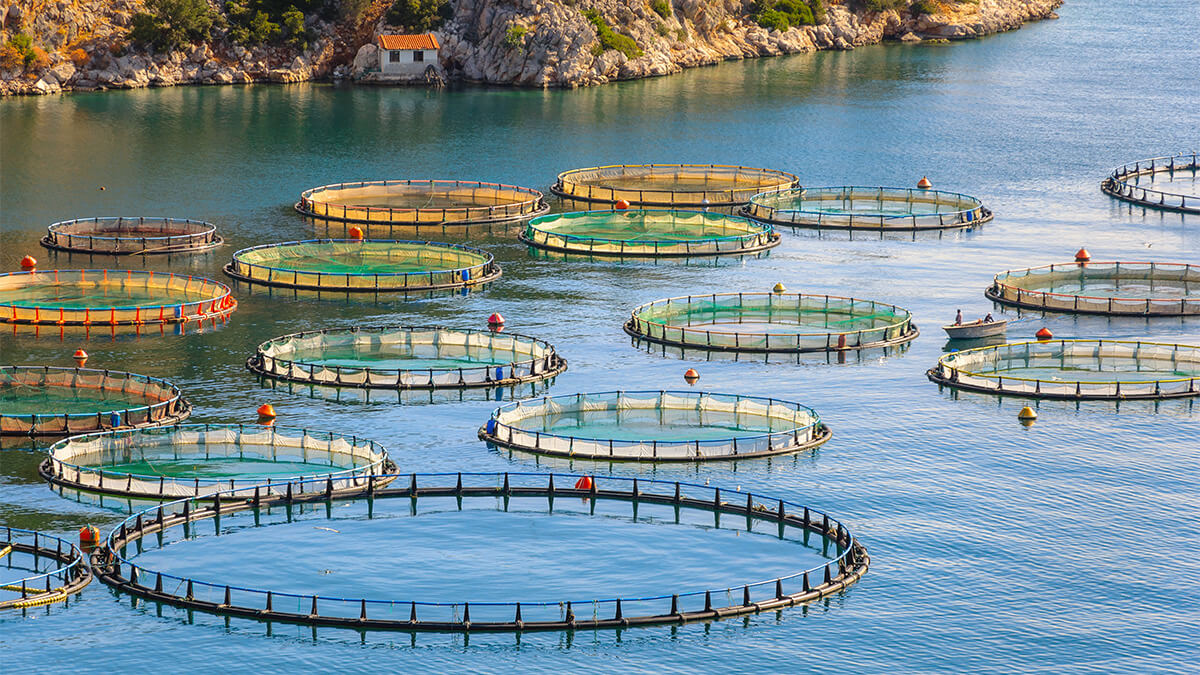

What corrosion data from offshore farms reveals about fixture longevity in practice
Offshore aquaculture lighting does not fail randomly. When fixtures degrade ahead of schedule, the cause is almost always traceable to the same source: corrosion working through materials, joints, and seals in ways that were either underestimated during procurement or misunderstood during installation. For operators managing offshore fish farms, understanding how corrosion actually behaves in marine environments is not an academic exercise. It is the difference between a lighting system that delivers its rated service life and one that fails mid-winter, in heavy weather, when replacement is neither quick nor cheap.
This article builds that understanding progressively, starting with what corrosion does at the material level, moving through the specific conditions that accelerate it offshore, and arriving at the practical decisions that determine whether a fixture lasts two seasons or ten. Each section adds a layer to the same core argument: fixture longevity in aquaculture is primarily a corrosion management problem, and the operators who understand that make better procurement and maintenance decisions.
What Corrosion Actually Does to Offshore Lighting Fixtures
Corrosion is an electrochemical process in which metals revert to more stable oxidised states through reaction with their environment. In marine lighting fixtures, this process attacks structural integrity, electrical continuity, and optical performance simultaneously, often in ways that are not visible until significant damage has already occurred.
The three most consequential failure pathways in offshore fixture corrosion are material loss, galvanic coupling, and seal degradation. Material loss reduces the structural strength of housings and mounting hardware. Galvanic corrosion accelerates when dissimilar metals are in contact in the presence of a saltwater electrolyte, creating an electrochemical cell that rapidly consumes the less noble metal. Seal degradation is often the most insidious pathway: once a gasket or O-ring fails, saltwater ingress reaches internal electronics, LED drivers, and battery compartments, causing failures that present as electrical faults rather than visible corrosion.
For example, a fixture with an aluminium housing and stainless steel fasteners may appear robust on paper. In practice, the junction between these two metals in a saltwater environment creates a galvanic couple that preferentially corrodes the aluminium around the fastener points, loosening the fixture from its mount and compromising the housing seal before the LED itself shows any sign of degradation. The visible failure is a loose fixture; the root cause is galvanic corrosion at the fastener interface.
How Offshore Conditions Accelerate Fixture Degradation
The offshore aquaculture environment combines several corrosion-accelerating factors that do not occur with the same intensity in nearshore or terrestrial installations. Understanding which factors dominate at a given site is the foundation of accurate service life prediction.
Saltwater chloride concentration is the primary driver. Chloride ions penetrate passive oxide layers on metals, including stainless steel and aluminium alloys, initiating pitting corrosion that progresses rapidly once established. Offshore sites, particularly those exposed to open ocean conditions, sustain higher chloride concentrations in both the water column and the salt-laden aerosol above the surface. Fixtures that perform reliably in harbour environments can degrade significantly faster when deployed at exposed offshore sites.
Three additional environmental factors compound the chloride effect in offshore aquaculture specifically:
- Continuous immersion and splash cycling: Fixtures mounted on cage collars and mooring lines cycle between submersion, splash exposure, and air drying with each wave. This wet-dry cycling concentrates chlorides on surfaces and accelerates electrochemical reactions.
- Biological fouling: Biofilm, barnacles, and algae growth traps moisture against fixture surfaces, maintaining a corrosive microenvironment even during periods when the fixture would otherwise dry. Fouling also physically damages coatings when removed during maintenance.
- Mechanical stress: Wave action, mooring loads, and current drag impose cyclic mechanical stress on fixtures and their mounting hardware. Stress corrosion cracking can develop in susceptible alloys under sustained load in a chloride environment, causing sudden structural failure with minimal prior visible degradation.
The combined effect of these factors means that the offshore aquaculture environment is among the most demanding in which marine lighting is deployed. Fixtures rated for general marine use but not specifically engineered for continuous offshore exposure often reach the limits of their corrosion resistance within the first two to three years of service.
What Field Data from Operating Farms Reveals About Failure Patterns
Operational experience from offshore fish farms reveals consistent failure patterns that inform both procurement decisions and maintenance planning. These patterns are not unique to any single product category; they reflect the predictable interaction of offshore conditions with fixture design choices.
The most frequently observed failure sequence begins not with the LED or the optical system, but with mounting hardware and external fasteners. Corrosion at fastener points is typically the first visible sign of degradation, appearing within twelve to eighteen months on fixtures using inadequately specified hardware. Once fastener corrosion compromises the mounting, fixture movement under wave loading accelerates seal wear and introduces water ingress pathways that were not present in the original installation.
A second consistent pattern involves battery and power system failures that are actually corrosion-driven. In fixtures where the battery compartment seal has degraded, saltwater ingress causes battery terminal corrosion, connector oxidation, and ultimately circuit board damage. These failures present as power faults or erratic flash behaviour, and they are frequently misdiagnosed as component failures rather than the seal degradation that caused them. Operators who replace batteries without addressing the underlying ingress pathway experience repeat failures on the same cycle.
The third pattern involves UV and thermal degradation of polymer components working in combination with corrosion. Polycarbonate lenses and housing components that are not UV-stabilised become brittle and micro-cracked over two to three years of offshore exposure. These micro-cracks do not immediately admit water, but they provide pathways for chloride concentration and eventual seal failure at housing joints. Fixtures using UV-resistant polycarbonate or polysiloxane materials maintain their dimensional stability and sealing integrity significantly longer under the same conditions.
How Material and Design Choices Determine Longevity Outcomes
The field failure patterns described above are not inevitable. They are the predictable outcomes of material and design choices that either account for the offshore corrosion environment or do not. Understanding which choices matter most allows operators to evaluate fixtures with greater precision than surface-level specifications suggest.
Housing and Structural Materials
Polymer housings using UV-resistant polycarbonate or polysiloxane compounds outperform unprotected polymers and most metal housings in continuous offshore exposure. They eliminate galvanic corrosion pathways entirely and maintain structural integrity under the UV and thermal cycling that degrades standard polycarbonate. Where metal components are necessary, powder-coated aluminium with appropriate surface treatment provides a practical balance of weight, strength, and corrosion resistance, provided the coating is maintained and fastener interfaces are correctly specified.
Fastener and Hardware Specification
Fastener specification is disproportionately important relative to its cost. Marine-grade A4 stainless steel fasteners, used consistently throughout the fixture and mounting system, eliminate the most common galvanic failure pathway. The critical discipline is consistency: mixing hardware grades or metals at any interface in a saltwater environment creates a corrosion site. Fixtures designed with this discipline from the outset do not require operators to make these judgements during installation.
Sealing System Design
Sealing performance over a multi-year service life depends on seal geometry, material selection, and the degree to which the housing design protects seals from direct mechanical loading. Fixtures with ventilated battery compartments manage the pressure differentials that cause seal wear in sealed housings, extending gasket service life. Designs that allow seal inspection and replacement without full fixture disassembly reduce the maintenance burden of keeping sealing systems effective throughout the fixture’s operational life.
Build a Corrosion-Informed Maintenance and Replacement Strategy
Building on the material and design principles established above, a corrosion-informed maintenance strategy treats fixture longevity as a managed outcome rather than a fixed product specification. The same fixture will deliver different service lives depending on how systematically its corrosion vulnerabilities are monitored and addressed.
The foundation of an effective strategy is inspection scheduling that targets the failure sequences identified from field data. Rather than general visual inspections, corrosion-informed inspections focus on the specific sites where degradation initiates: fastener points, housing joints, battery compartment seals, and cable entry glands. Early-stage corrosion at these points is addressable; advanced corrosion at the same points typically means the fixture has already experienced water ingress and internal damage that inspection alone cannot reverse.
A practical maintenance framework for offshore aquaculture lighting includes the following priorities:
- Annual fastener inspection and torque check: Fastener corrosion and loosening under wave loading are the earliest indicators of mounting system degradation. Addressing them before housing movement develops prevents the cascade of seal failures that follow.
- Seal condition assessment at each service visit: Gaskets and O-rings should be inspected for compression set, cracking, and dimensional change. Replacing seals on a scheduled basis, rather than waiting for visible failure, is substantially less costly than addressing the water ingress damage that follows seal failure.
- Battery terminal and connector inspection: Oxidation at terminals is an early indicator of compartment seal degradation. Terminal corrosion that is caught and cleaned before it progresses to circuit board contamination is a minor maintenance item; the same corrosion left unaddressed typically requires fixture replacement.
- Lens and housing surface assessment: Micro-cracking and surface hazing in polymer components signal UV degradation that will eventually compromise housing integrity. Fixtures showing significant surface degradation at inspection should be scheduled for replacement before seal failure occurs.
Replacement decisions should be driven by the same corrosion logic. A fixture that has reached the end of its seal service life in an offshore environment does not benefit from component-level repair; the corrosion exposure history of the housing and mounting system means that further failures are probable within a short timeframe. Planned replacement at the end of a defined service interval, based on the environmental conditions of the specific site, is more operationally reliable and cost-effective than reactive replacement after failure.
Sabik’s aquaculture lighting portfolio is engineered with these corrosion realities as design constraints, not afterthoughts. UV-resistant polycarbonate and polysiloxane housings, ventilated battery compartments, and consistent material specification across fixture components address the failure pathways that field experience identifies as most consequential for offshore fish farm operators. For operators reviewing their current fixture specifications or planning new installations, Sabik’s technical team can provide guidance aligned to your specific site conditions and regulatory requirements.