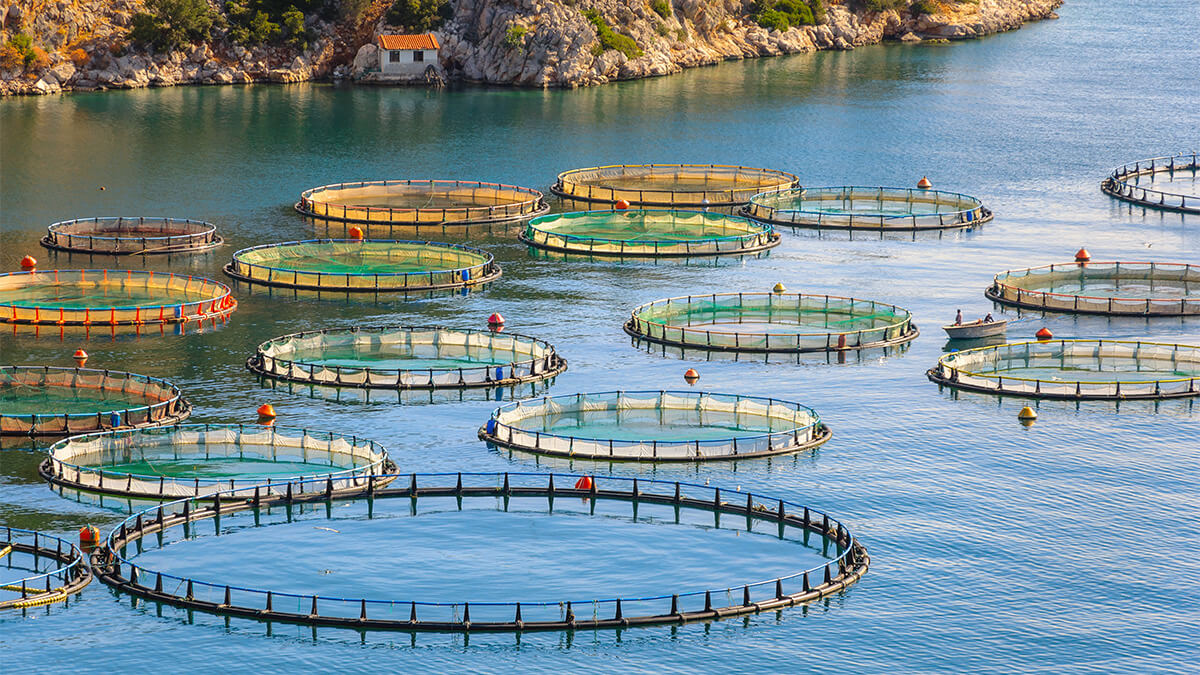

Why the shift to smart lighting infrastructure is accelerating among top-tier salmon producers
The offshore aquaculture sector is undergoing a quiet but consequential shift in how it approaches lighting infrastructure. Salmon producers operating at scale are no longer treating marine lanterns as a compliance checkbox — they are treating them as operational assets that directly affect safety outcomes, regulatory standing, and the long-term economics of running an offshore installation. Understanding why this shift is happening, and what it means in practice, requires building from the ground up: what smart lighting infrastructure actually is, how it functions in offshore environments, and what decisions producers need to make to implement it effectively.
This article works through those questions in sequence, moving from foundational definitions to practical application. Whether you are evaluating your first upgrade or reviewing the performance of an existing lighting network, the goal is to give you a clear, technically grounded framework for making better decisions about aquaculture lighting infrastructure.
What is smart lighting infrastructure in salmon farming?
Smart lighting infrastructure in salmon farming refers to an integrated system of marine lanterns, power management components, and monitoring capabilities that operate autonomously and communicate status data in real time. The word “smart” here has a precise meaning: these systems do not simply emit light on a fixed schedule — they adapt to environmental conditions, report operational status remotely, and synchronise across an installation to maintain consistent, IALA-compliant visibility.
The contrast with conventional aquaculture lighting is instructive. A traditional marker light performs one function: it flashes. When its battery depletes, or a component fails, the failure is discovered only during a physical inspection visit or, worse, after a vessel collision. Smart lighting infrastructure replaces that reactive model with a proactive one. Lanterns equipped with remote monitoring capabilities continuously report battery levels, flash character status, and positional data to a web-based interface that farm operators can access from any device.
For offshore salmon producers, this distinction carries direct operational weight. A farm covering several hectares of open water, marked by a network of buoy lanterns and cage perimeter lights, cannot be physically inspected after every storm. Smart lighting infrastructure is the mechanism that makes continuous, reliable visibility achievable at scale — without proportional increases in maintenance effort or vessel usage.
How smart lighting systems work in offshore environments
Understanding the mechanics of smart aquaculture lighting requires looking at three interconnected components: the power system, the flash control and synchronisation logic, and the monitoring and communication layer. Each component addresses a specific operational challenge that offshore environments create.
Power systems designed for autonomous operation
Most smart marine lanterns deployed in aquaculture use solar-powered energy systems with high-capacity battery packs. High-efficiency solar cells charge the battery during daylight hours, while temperature-corrected LED drivers maintain consistent light output regardless of ambient conditions. In high-latitude salmon farming regions — Norway, Scotland, Chile, Canada — the power system must be engineered to sustain operation through extended periods of low solar insolation and winter darkness. Lanterns designed for these conditions incorporate advanced charging algorithms and battery technologies with service lives of five years or more, reducing the frequency of battery replacement visits to remote installations.
Flash control, synchronisation, and IALA compliance
Smart lanterns do not simply flash at a fixed rate — they execute programmable flash characters that comply with IALA standards, the international framework governing aids-to-navigation visibility requirements. GNSS synchronisation, now standard on many purpose-built aquaculture lanterns, ensures that all lights across a farm installation flash in a coordinated sequence. This matters because a vessel approaching an offshore cage system at night needs to read the perimeter as a coherent boundary, not a random scatter of lights. Synchronised flash patterns make the farm’s extent immediately legible to vessel operators, reducing collision risk in low-visibility conditions.
Remote monitoring and alarm systems
The monitoring layer is what transforms a network of individual lanterns into a managed infrastructure system. Through platforms such as the LightGuard Monitor, farm operators receive real-time data on every lantern in the network: battery status, operational hours, flash character confirmation, and buoy positioning. Automatic alarms trigger when anomalies are detected — a lantern that has stopped operating, a battery voltage below threshold, or a buoy that has drifted outside its expected position. This capability shifts the maintenance model from scheduled inspection voyages to condition-based responses, reducing both operational costs and the risk of an undetected failure creating a navigation hazard.
Why top-tier salmon producers are upgrading now
The acceleration in smart lighting adoption among leading salmon producers is driven by three converging pressures: tightening regulatory enforcement, the increasing scale of offshore operations, and a recalculation of the true cost of conventional lighting systems.
Regulatory requirements for aquaculture lighting have become more stringent in most major producing regions. Maritime authorities increasingly require that offshore installations maintain IALA-compliant lighting with documented evidence of operational status. Conventional systems cannot provide that evidence without physical inspection records. Smart systems generate continuous operational logs that satisfy audit requirements and protect operators from liability in the event of a vessel incident near the installation.
Scale is the second driver. As salmon producers expand into deeper, more exposed offshore locations, the number of marker lights and perimeter lanterns required grows substantially. Managing a network of forty or sixty lanterns across a large offshore site using physical inspection alone becomes operationally unsustainable. The economics of smart infrastructure improve with scale: the monitoring overhead is largely fixed, while the safety and compliance benefit scales with every additional lantern brought into the network.
The third driver is a more accurate accounting of total cost of ownership. Conventional lighting appears inexpensive at the point of purchase, but the ongoing cost of maintenance voyages to remote offshore sites — vessel hire, crew time, fuel, and weather-dependent scheduling — accumulates quickly. Producers who have conducted honest lifecycle cost analyses consistently find that smart, low-maintenance lighting infrastructure delivers a lower total cost over a five to ten year operational period, while simultaneously delivering better safety outcomes.
Matching lighting specifications to farm conditions
Selecting the right lanterns for a specific offshore salmon farm requires matching product specifications to the actual environmental and operational conditions of the site. There is no single specification that suits every deployment — the relevant variables include geographic latitude, prevailing sea conditions, the regulatory requirements of the relevant maritime authority, and the physical configuration of the farm itself.
Visibility range is the starting point. Offshore cage perimeters and approach markers require sufficient range to be detected by vessels in the sea conditions typical of the site. Lanterns designed for aquaculture applications, such as the Sabik SBFL 160 Marker Light, are purpose-built for this environment: they combine IALA-standard yellow light output, an integrated radar reflector for daytime and low-visibility detection, and GNSS synchronisation in a housing engineered for direct installation on farm floats. For buoy applications requiring omnidirectional coverage, integrated buoy lanterns with remote monitoring capability provide a complementary solution.
Power system selection follows from the site’s solar resource. High-latitude farms with limited winter insolation require lanterns with large-format solar engines and extended battery autonomy. Farms in lower latitudes with more consistent solar exposure can operate effectively with compact self-contained solar lanterns. The key principle is that the power system must sustain operation through the worst-case solar conditions the site experiences — not average conditions.
Consider also the physical mounting requirements of the installation. Cage perimeter lights, approach markers, and boundary buoys each present different mounting geometries and structural loads. Purpose-built aquaculture lanterns with customisable mounting mechanisms accommodate these variations without requiring bespoke engineering for each deployment point.
Common integration challenges and how to overcome them
Upgrading to smart lighting infrastructure is not simply a matter of replacing one lantern with another. Producers who approach the transition without a structured plan encounter predictable challenges — most of which are avoidable with the right preparation.
The most common integration challenge is configuration consistency across a mixed fleet. Farms that have accumulated lanterns from different manufacturers, or different product generations, often find that flash characters, synchronisation protocols, and programming interfaces are incompatible. The practical solution is to standardise on a single product family with a common programming interface. Lanterns programmable via the Sabik Easy Programmer or Bluetooth-enabled programming tools allow configuration to be set consistently across an entire installation, with documented flash characters that can be verified against IALA requirements.
A second challenge is establishing reliable remote monitoring coverage in offshore locations where cellular connectivity is limited or intermittent. Not all monitoring solutions depend on continuous cellular connectivity — some systems use Bluetooth-based local data collection during maintenance visits, while others support satellite communication for truly remote deployments. Matching the monitoring architecture to the connectivity reality of the site is essential before committing to a specific system configuration.
Physical installation in offshore conditions presents a third set of challenges. Lanterns must be secured against the mechanical loads imposed by wave action, tidal movement, and storm conditions without compromising their optical performance or power system integrity. Products engineered specifically for aquaculture deployment — with UV-resistant housings, corrosion-resistant materials, and ventilated battery compartments — perform significantly more reliably over multi-year service periods than general-purpose marine lights adapted for farm use.
- Audit existing lantern inventory before procurement to identify compatibility gaps and standardisation opportunities.
- Map the connectivity environment of the site to select an appropriate monitoring architecture.
- Specify lanterns with aquaculture-rated housings and mounting systems, not general marine products adapted to the application.
- Document flash character configurations and IALA compliance evidence at installation to support future regulatory audits.
Building a future-ready lighting strategy for your farm
Building on the technical and operational principles covered in the preceding sections, the final step is translating them into a coherent, long-term lighting strategy. A future-ready strategy is one that delivers regulatory compliance and safety performance today, while remaining adaptable as the farm expands, as regulatory requirements evolve, and as monitoring technology continues to develop.
The strategic foundation is a site-wide lighting plan that maps every required marking point — cage perimeters, approach markers, boundary buoys, and working area lights — against the applicable regulatory requirements and the visibility conditions of the site. This plan establishes the minimum specification for each position and identifies where smart monitoring capability adds the greatest operational value. Positions that are difficult to inspect physically, or that represent the highest collision risk, are the priority candidates for remote monitoring integration.
Standardisation is the second strategic principle. A farm that operates a single, consistently configured product family across all marking positions is easier to maintain, easier to audit, and easier to expand than one built from a patchwork of incompatible systems. Standardisation also simplifies spare parts management and reduces the training burden on maintenance personnel. When evaluating product families, consider not only current specifications but the manufacturer’s track record of product continuity and long-term support — a lighting infrastructure investment has a ten-year horizon, and supplier reliability matters across that full period.
The third principle is to treat monitoring data as an operational asset, not a compliance tool. The real-time status data generated by a smart lighting network tells farm operators not just whether lights are functioning, but how the installation is performing over time — battery degradation trends, seasonal power system behaviour, and the operational history of each lantern. Producers who use this data proactively can schedule maintenance interventions before failures occur, extend service intervals with confidence, and build an evidence base that supports regulatory compliance documentation.
With more than 20 years of experience designing and delivering aquaculture lighting for offshore installations across all latitudes, Sabik supports producers through every stage of this process — from initial site assessment and product specification to installation, configuration, and ongoing monitoring. The infrastructure decisions made today will define the safety and operational performance of an offshore salmon farm for a decade or more. Getting the specification right from the outset is the most effective investment a producer can make.
Contact Sabik’s technical team to discuss the lighting requirements of your offshore installation.