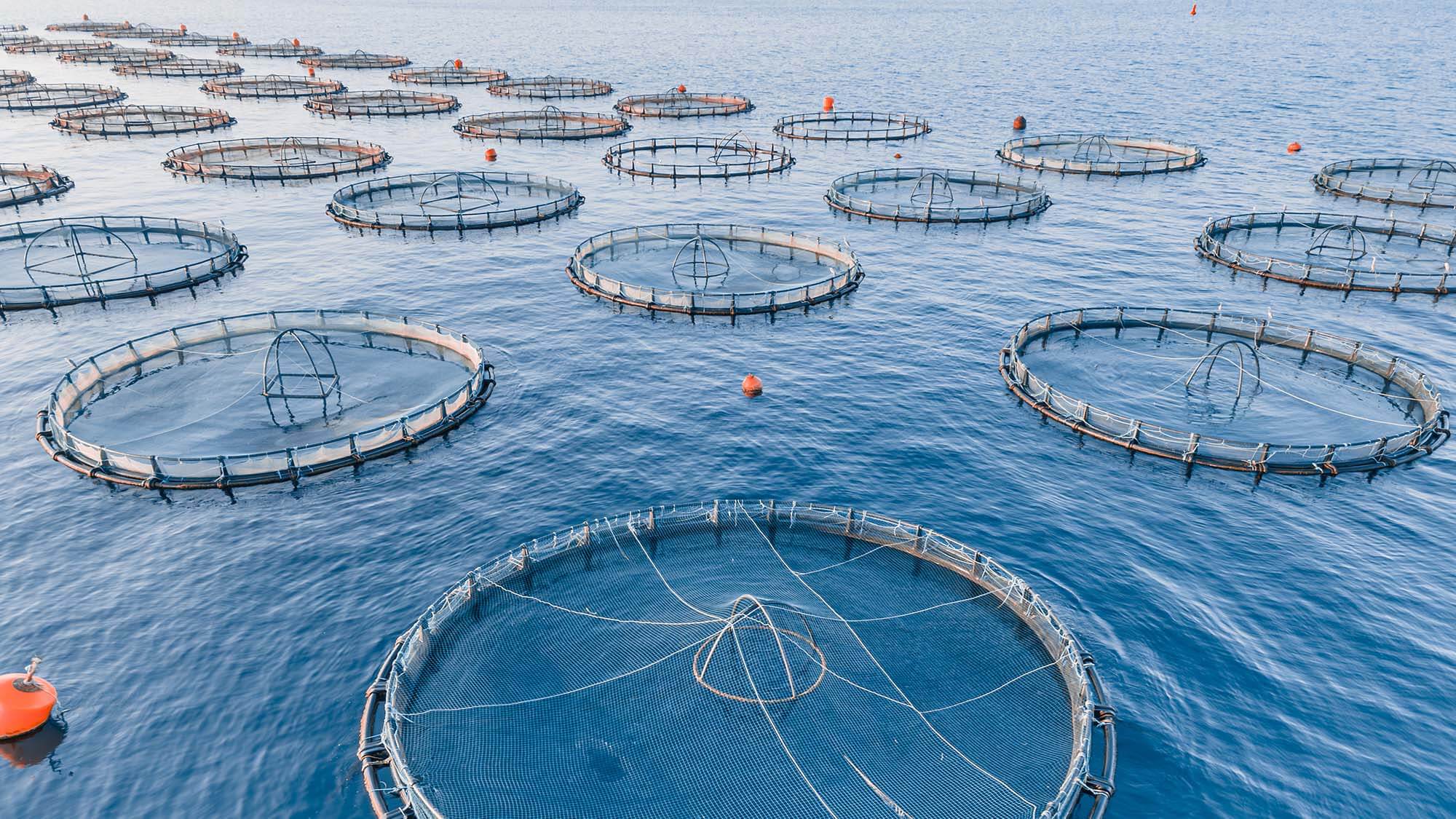

7 hidden costs of switching aquaculture lighting brands mid-season
Switching aquaculture lighting brands mid-season can look like a straightforward cost-saving decision on paper. A lower unit price, a promising product brochure, and the assumption that one marine lantern works much like another can make the case seem compelling. In practice, the true cost of a mid-season lighting change extends far beyond the invoice price of the new equipment. Offshore fish farm operators who have worked through an unplanned transition know that the visible costs are only the beginning. The seven hidden costs below reflect the operational reality of changing aquaculture lighting systems while production is active.
The True Price of a Mid-Season Lighting Swap
The appeal of switching aquaculture lighting brands mid-season typically centres on procurement savings. A competing supplier quotes a lower unit price, the numbers appear straightforward, and the decision moves forward. What this calculation rarely captures is the full operational cost of executing that change during an active production window. Each of the seven cost categories below represents a real financial and operational exposure that procurement decisions must account for before a transition begins.
Offshore fish farm operators manage infrastructure under continuous pressure: tidal movement, vessel traffic, regulatory scrutiny, and the biological demands of livestock. Aquaculture lighting is not peripheral to that operation. It defines the visibility of cage boundaries, the safety of personnel working at night, and the compliance status of the installation. Changing that lighting system mid-season introduces disruption at precisely the moment when operational stability matters most.
1: Unplanned Downtime During Peak Production Windows
Every hour that aquaculture lighting is non-operational during an active production period represents direct exposure: reduced visibility around cage perimeters, increased vessel collision risk, and potential regulatory breach. Mid-season transitions rarely proceed on the schedule projected at the outset. Equipment delivery delays, installation complexity, and compatibility issues between old and new systems routinely extend the window during which lighting coverage is incomplete or absent.
Peak production windows are precisely when offshore fish farm lighting must perform without interruption. Feeding schedules, health monitoring, and net change operations all depend on reliable illumination during low-light and night conditions. An unplanned downtime event during this period does not simply inconvenience operations — it creates measurable risk to stock welfare and crew safety.
The cost of downtime is rarely captured in a procurement comparison. It must include the value of operational disruption, the risk premium associated with reduced visibility around offshore structures, and the management time required to coordinate an unplanned installation. Operators who have experienced this firsthand consistently report that the true downtime cost dwarfs the per-unit savings that motivated the switch.
2: Emergency Mobilization and Offshore Logistics Costs
Offshore logistics for aquaculture installations are expensive under the best conditions. Vessel mobilization, crew time, and the coordination required to reach remote cage systems carry costs that onshore procurement decisions rarely model accurately. When a mid-season lighting transition encounters problems — equipment that does not perform as specified, installation issues requiring specialist support, or components that arrive incomplete — those logistics costs escalate rapidly.
Emergency mobilization to an offshore installation can cost multiples of a standard scheduled service visit. The vessel must be available, the crew must be ready, and the replacement equipment must be on hand. In remote aquaculture locations, none of these conditions can be assumed. A supplier without an established global distribution network and local technical support capability will struggle to respond at the speed that an emergency demands.
Operators evaluating a lighting brand change mid-season should model the worst-case logistics scenario, not the best case. The question is not only what the new equipment costs to install when everything proceeds smoothly. It is what it costs when the installation requires a return visit, a specialist technician, or expedited freight of a missing component to a remote offshore location.
3: Compatibility Gaps with Existing Control Systems
Modern aquaculture lighting systems are rarely standalone units. They integrate with broader monitoring and control infrastructure: remote monitoring platforms, GNSS synchronization networks, Bluetooth programming interfaces, and in some installations, centralized farm management systems. Switching lighting brands mid-season introduces the risk of compatibility gaps that were not identified during the procurement evaluation.
A lantern from a different manufacturer may use a different programming interface, a different synchronization protocol, or a different remote monitoring architecture. The aquaculture lighting systems that have been configured and calibrated over multiple seasons do not automatically accept a new product from a different vendor. Integration work that was not scoped in the original procurement decision adds engineering time, specialist contractor costs, and project delay.
The compatibility risk is particularly acute for installations that rely on GNSS synchronization to coordinate flash patterns across multiple lanterns. A mixed installation — some lanterns from the original supplier, some from the new brand — may produce unsynchronized flash patterns that reduce the navigational clarity of the installation and potentially compromise IALA compliance. Resolving this mid-season requires technical resources that are rarely available at short notice.
4: Regulatory Re-Certification and Compliance Delays
Offshore aquaculture installations operate under maritime authority permits that specify the lighting requirements the installation must meet. These requirements typically reference IALA standards for light characteristics, intensity, and colour. When lighting equipment changes, the compliance status of the installation must be re-evaluated. In many jurisdictions, this requires formal notification to the relevant maritime authority and, in some cases, re-inspection before the new equipment is accepted as compliant.
Regulatory re-certification takes time. Maritime authorities operate on their own schedules, and mid-season requests for compliance review do not receive priority treatment. During the period between the lighting change and formal re-certification, the operator may be in a position of uncertainty regarding their compliance status. The consequences of operating a non-compliant installation range from formal notices to permit suspension — outcomes that represent far greater financial exposure than any procurement saving.
Operators who have built their aquaculture lighting infrastructure around IALA-compliant equipment from an established supplier benefit from a documented compliance baseline. Changing brands mid-season resets that baseline and requires the compliance case to be rebuilt from the new equipment’s certification documentation. This process is manageable when planned in advance; it becomes costly and stressful when executed under production pressure.
5: Accelerated Wear from Mismatched Installation Conditions
Aquaculture lighting equipment is specified for particular environmental conditions: salinity levels, wave exposure, UV intensity, and temperature ranges. Equipment that performs reliably in one offshore environment may degrade faster in another if the specification does not match the actual installation conditions. A mid-season brand switch based primarily on unit price may introduce equipment that is not optimally specified for the site conditions of the installation.
Accelerated wear in offshore aquaculture environments manifests as corrosion of housing materials, degradation of lens optics, battery performance decline, and premature LED driver failure. These failure modes do not present themselves immediately — they develop over months of exposure and become apparent when the equipment is already embedded in the installation and difficult to replace without another costly offshore mobilization.
Equipment designed specifically for aquaculture environments, with UV-resistant polycarbonate housings, corrosion-resistant materials, and battery systems rated for extended offshore service life, will consistently outperform general-purpose marine lanterns deployed in the same conditions. The long-term maintenance cost difference between correctly specified and incorrectly specified equipment is significant, and it is a cost that does not appear in the initial procurement comparison.
6: Staff Retraining and Lost Operational Familiarity
Aquaculture operations depend on farm staff who understand their equipment: how to program flash patterns, how to interpret status indicators, how to perform routine maintenance, and how to identify early signs of equipment malfunction. This operational familiarity is built over time and represents genuine value. It reduces response times to equipment issues, minimizes errors during installation and configuration, and enables maintenance to be performed efficiently without specialist support.
Switching lighting brands mid-season requires staff to learn new programming interfaces, new maintenance procedures, and new fault diagnosis approaches while production is active. The learning curve is not trivial. Different manufacturers use different programming tools — some requiring dedicated IR programmers, others using Bluetooth applications — and the configuration logic for flash patterns, intensity levels, and synchronization varies between systems.
The cost of retraining is partly the direct cost of training time and partly the indirect cost of reduced operational efficiency during the transition period. Errors made by staff unfamiliar with new equipment during an active production season carry real consequences. A misconfigured flash pattern or an incorrectly set intensity level may not be detected until a maritime authority inspection or a vessel incident brings it to attention.
7: Supply Chain Exposure Without an Established Vendor Relationship
An established vendor relationship provides more than a product catalogue. It provides priority access to replacement components, technical support from engineers who understand the installation, and the confidence that comes from a supplier who has delivered reliably across multiple seasons. When an aquaculture operator switches brands mid-season, they exchange that established relationship for an untested one at precisely the moment when the relationship will be most tested.
Supply chain exposure becomes acute when replacement components are needed urgently. A lantern that fails mid-season requires a replacement unit that can be sourced, shipped, and installed before the operational impact becomes critical. A new supplier without an established distribution network in the operator’s region, or without stock of the specific components required, cannot deliver on that timeline. The operator is left managing a supply chain problem at the same time as an operational problem.
Suppliers with manufacturing facilities across multiple countries and an established global distribution network can respond to urgent requirements with a consistency that newer or smaller vendors cannot match. That supply chain resilience is not visible in a unit price comparison, but it represents real operational insurance for offshore aquaculture operators who cannot afford extended equipment downtime during production.
When Stability Outperforms the Savings on Paper
The decision to switch aquaculture lighting brands mid-season is rarely as straightforward as the initial cost comparison suggests. When the seven hidden costs above are modelled against the projected procurement saving, the financial case for switching frequently reverses. Downtime, logistics, compliance delays, compatibility work, accelerated wear, retraining, and supply chain risk collectively represent a cost exposure that can exceed the lifetime savings from a lower unit price.
The more productive evaluation framework asks not only what the new equipment costs, but what the total cost of ownership looks like across a full service cycle. Equipment that is correctly specified for offshore aquaculture conditions, supported by an established global distribution network, and backed by a supplier with decades of experience in marine aids to navigation will consistently deliver lower total cost over time than equipment selected on unit price alone.
For operators who are considering a lighting system review, the appropriate moment is between seasons, with sufficient lead time to conduct proper compatibility assessment, obtain regulatory confirmation, train staff, and establish the vendor relationship before production pressure is at its peak. A planned transition, executed with the right equipment and the right supplier, can deliver genuine operational and financial improvement. A mid-season switch, driven by short-term procurement pressure, rarely does.
Sabik has spent more than two decades developing aquaculture lighting solutions engineered for the demands of offshore fish farm operations. With manufacturing facilities in Finland, the United States, Australia, Estonia, and the United Kingdom, and a network of over 100 authorised distributors, Sabik provides the supply chain resilience and technical support that offshore aquaculture operators require. Contact Sabik’s technical team to discuss your aquaculture lighting requirements before your next season begins.