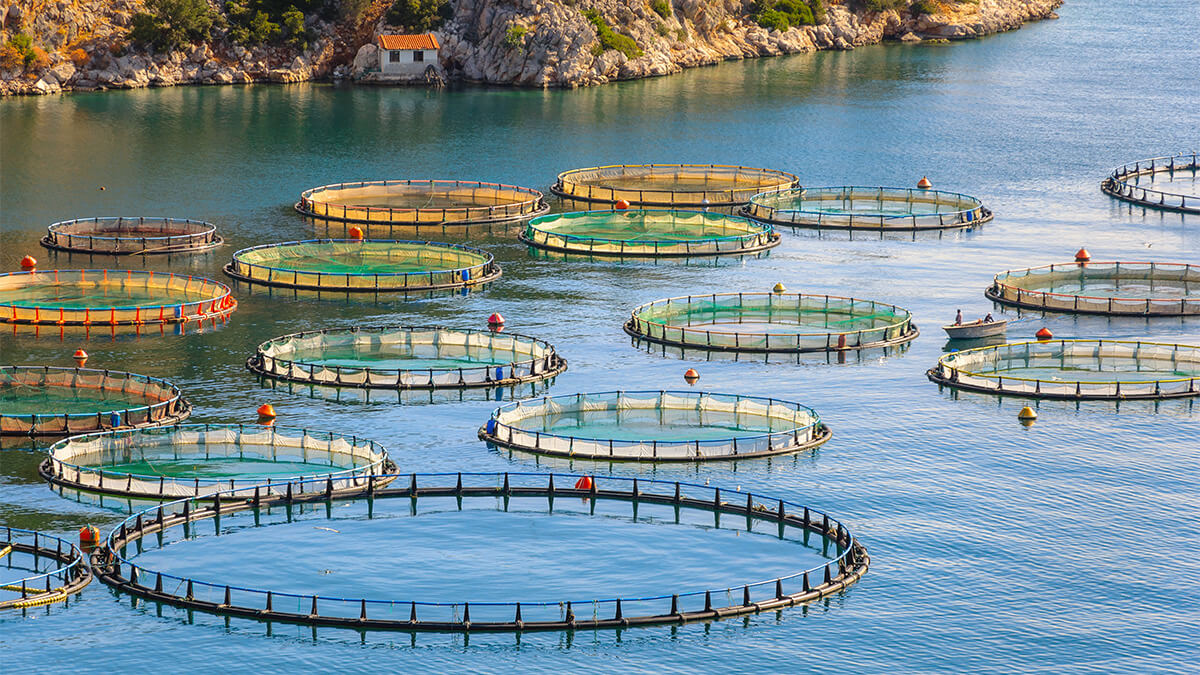

What long-term operational data shows about total cost of ownership in farm lighting systems
Offshore fish farm operators face a purchasing decision that looks straightforward on the surface: buy the lighting system with the lowest price tag, or invest more upfront in a system built to perform in demanding marine conditions. The problem with framing it that way is that purchase price accounts for only a fraction of what a lighting system actually costs over its operational life. Total cost of ownership provides a more honest accounting, and for offshore aquaculture operators, it is the only metric that reflects the true financial reality of running lighting infrastructure at sea.
This article builds a complete understanding of total cost of ownership as it applies to farm lighting systems, moving from core definitions through the specific cost drivers in offshore aquaculture to a practical framework for calculating and comparing TCO across lighting options. Each section builds on the last, so that by the end, you will have the analytical tools to evaluate any aquaculture lighting investment with confidence.
What total cost of ownership means for farm lighting systems
Total cost of ownership (TCO) is the sum of all costs associated with acquiring, operating, maintaining, and eventually replacing an asset over its full service life. For farm lighting systems, this means looking beyond the invoice price to every cost the system generates from the moment it is installed to the moment it is decommissioned.
The distinction between purchase price and TCO is not a subtle one. A marine lantern that costs half the price of a premium alternative might require battery replacement every eighteen months, demand a service vessel visit each time, and need full replacement within five years. A higher-specification unit with a solar-powered design, a long-life battery pack, and remote monitoring capability might operate for a decade with minimal intervention. The cheaper lantern does not remain cheaper for long.
For offshore aquaculture specifically, TCO carries additional weight because every maintenance event involves logistical complexity. Sending a crew to a remote offshore installation to service a failed light is not comparable to replacing a bulb in a warehouse. The cost of access, the weather dependency, the vessel time, and the compliance risk during any period of reduced visibility all compound the true cost of an underperforming system.
How operational lifespan data changes the cost equation
Operational lifespan is the single most powerful variable in any TCO calculation. A system with a ten-year design life does not simply cost twice as much to own over that period as a five-year system – it fundamentally changes every other cost category, because longer-lived systems require fewer replacement cycles, fewer installation events, and fewer periods of operational downtime.
Lifespan data from LED marine lanterns illustrates this clearly. Purpose-built aquaculture lighting products designed for continuous offshore operation are engineered with UV-resistant polycarbonate housings, sealed battery compartments, and temperature-compensated LED drivers that maintain consistent light output across the full range of marine operating conditions. These design choices directly extend service life and reduce the frequency of failure events that trigger unplanned maintenance.
Consider the compounding effect over a ten-year period. A lighting system with a five-year service life requires two full procurement and installation cycles over that period. Each cycle carries its own purchase cost, installation labour, and any associated downtime. A system engineered for a ten-year design life eliminates the second cycle entirely. When those savings are aggregated across a farm with multiple marker points, the financial difference becomes substantial. Battery service life is a specific area where this effect is pronounced: some marine lanterns now offer battery service lives of eight years or more, which significantly reduces the frequency of the most common maintenance intervention in remote offshore deployments.
The key cost drivers in offshore aquaculture lighting
Understanding TCO requires identifying each category of cost that accumulates over a lighting system’s operational life. For offshore fish farm lighting, these fall into five distinct areas:
- Initial procurement cost: The purchase price of the lantern, mounting hardware, and any associated control or monitoring equipment. This is the most visible cost but typically represents a minority of total lifetime expenditure in offshore deployments.
- Installation and commissioning: Vessel time, labour, and any specialised equipment required to install the system on floating or fixed structures at sea. Installation costs are often underestimated and scale with the complexity of the deployment environment.
- Energy consumption: For grid-connected or battery-powered systems, the ongoing cost of energy supply. Solar-powered lanterns eliminate this category for the operational phase, drawing only on renewable solar charging to maintain battery reserves.
- Scheduled maintenance: Planned battery replacements, cleaning, inspection visits, and firmware or configuration updates. The frequency of these events is determined largely by product design and the quality of components.
- Unplanned maintenance and failure response: The cost of emergency service calls, replacement units, and any regulatory or operational consequences of a light being out of service. In offshore aquaculture, this category can be the most expensive and the least predictable.
Remote monitoring capability directly addresses the unplanned maintenance category. Systems equipped with remote monitoring allow farm operators to detect anomalies – declining battery levels, changes in flash character, positional drift – before they result in a complete failure. This shifts maintenance from reactive to planned, which is both cheaper and operationally safer.
How to calculate TCO for your farm’s lighting infrastructure
A practical TCO calculation for aquaculture lighting follows a structured process that assigns a monetary value to each cost driver over a defined analysis period, typically five to ten years aligned with the expected product service life.
Establishing the analysis period
Begin by selecting an analysis period that reflects the realistic operational horizon for your farm’s lighting infrastructure. A ten-year period is generally appropriate for comparing modern LED marine lanterns, as it captures at least one full replacement cycle for lower-specification products while representing a single service life for premium alternatives.
Mapping costs across the analysis period
For each lighting system being evaluated, map the following costs across the analysis period:
- Initial procurement and installation cost (Year 0)
- Annual energy cost, if applicable
- Scheduled maintenance frequency and cost per event, including vessel access
- Expected battery replacement intervals and associated costs
- Estimated probability and cost of unplanned failure events
- Replacement procurement and reinstallation cost at end of service life
Applying a vessel access multiplier
In offshore aquaculture, every maintenance event that requires a vessel visit carries a cost that land-based operations do not face. This includes vessel charter or crew time, fuel, weather delay risk, and the opportunity cost of diverting operational resources. When comparing lighting systems, apply a realistic vessel access cost to every scheduled and unplanned maintenance event. This single adjustment often reverses the apparent cost advantage of lower-specification products.
For example, a lantern requiring annual battery replacement at an offshore site with a vessel access cost of several hundred euros per visit will accumulate significant maintenance expenditure over a ten-year period. A solar-powered lantern with an eight-year battery service life and remote monitoring capability may require only one or two vessel visits over the same period, with the LightGuard Monitor providing continuous status visibility between visits.
Why hidden costs erode savings from low-cost lighting choices
The most common misconception in aquaculture lighting procurement is that a lower purchase price represents a lower cost. This assumption holds only if all other cost variables are equal, and in offshore deployments, they rarely are.
Hidden costs in low-specification lighting systems typically appear in three areas. First, component quality determines how quickly performance degrades in marine conditions. Housings that are not UV-stabilised, batteries not rated for the operating temperature range, and optics not sealed against salt ingress will all degrade faster than their specifications suggest under continuous offshore exposure. Accelerated degradation compresses the effective service life and brings forward replacement costs.
Second, the absence of remote monitoring creates an information gap that generates its own costs. Without visibility into the operational status of each lantern, farm operators must either schedule precautionary inspection visits or accept the risk of discovering a failed light only when a vessel or authority reports it. Neither option is cost-free. Precautionary visits add to scheduled maintenance expenditure; reactive discovery carries compliance risk and the potential for regulatory consequences that dwarf the cost of any lantern.
Third, compatibility and integration costs are often overlooked at the point of purchase. A lighting system that cannot be programmed or configured without specialist equipment, or that uses proprietary mounting systems incompatible with existing farm infrastructure, generates hidden integration costs that only become apparent during installation or the first maintenance cycle.
Building a long-term lighting investment strategy for offshore farms
With a clear understanding of TCO and its component costs, offshore aquaculture operators can approach lighting infrastructure as a long-term investment rather than a series of short-term procurement decisions. This shift in framing has practical implications for how lighting systems are specified, procured, and managed.
A long-term investment strategy begins with specifying systems that are designed for the actual operating environment. Offshore aquaculture installations expose lighting equipment to continuous salt spray, wave loading, UV radiation, and temperature cycling. Products engineered for these conditions, with sealed housings, corrosion-resistant materials, and battery technologies optimised for marine temperature ranges, will consistently outperform general-purpose alternatives over a ten-year horizon.
The strategy should also account for the value of standardisation across a farm’s lighting infrastructure. Operating a consistent product family across all marker points simplifies maintenance logistics, reduces the spare parts inventory required, and allows maintenance crews to develop familiarity with installation and configuration procedures. When all lanterns share a common programming interface, scheduled maintenance becomes faster and less prone to error.
Remote monitoring integration is the final element of a mature long-term strategy. The ability to monitor battery status, confirm flash character, and receive automatic alerts when anomalies are detected transforms lighting management from a periodic physical inspection task into a continuous, data-driven process. This capability is particularly valuable for farms operating multiple offshore sites, where the logistics of physical inspection visits are most costly.
Sabik’s aquaculture lighting portfolio reflects more than two decades of operational experience in offshore environments, with products engineered specifically for the conditions that drive the hidden costs described throughout this article. For farms ready to evaluate their current lighting infrastructure against a full TCO framework, contact Sabik’s technical team to discuss the specific requirements of your installation.