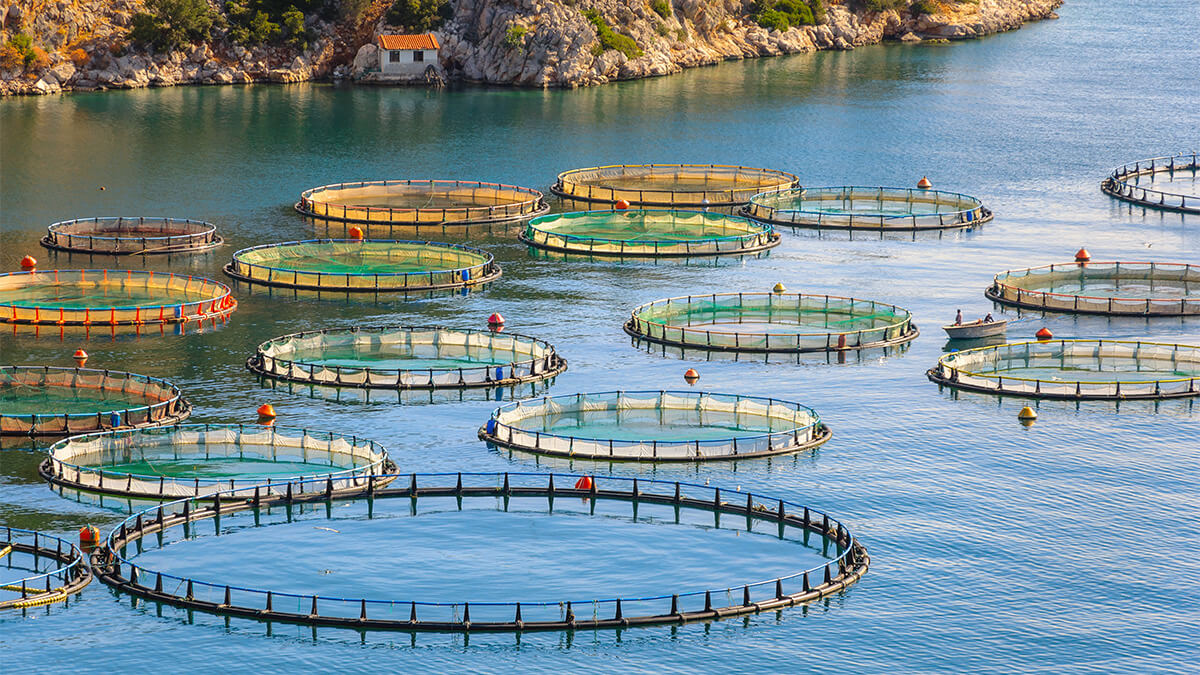

How light-driven feeding behavior research is influencing automation design in 2026
Fish do not feed randomly. Their appetite, activity levels, and willingness to consume feed are governed by internal biological clocks that respond directly to light. For offshore aquaculture operators, understanding this relationship is no longer a matter of academic interest — it is becoming a practical foundation for how automated feeding systems are designed and deployed in 2026. As the aquaculture industry moves toward greater operational autonomy, the science of light-driven feeding behavior is shaping the logic that drives feeding algorithms, sensor configurations, and lighting hardware specifications on offshore farms worldwide.
This article builds from the biological foundations upward: starting with what light-driven feeding behavior actually is, moving through the research findings that have clarified how light cycles regulate appetite, and arriving at the practical question of how offshore operators can design automation strategies informed by this science. Each section builds on the one before it, so readers unfamiliar with the underlying biology will find the operational conclusions well-supported by the time they reach them.
What is light-driven feeding behavior in fish?
Light-driven feeding behavior refers to the phenomenon by which fish regulate their appetite, digestive readiness, and feeding activity in direct response to light signals in their environment. Rather than feeding continuously or on demand, most commercially farmed fish species exhibit predictable peaks and troughs in feeding motivation that align with their exposure to light.
The mechanism behind this behavior is the circadian system — an internal biological clock that synchronizes physiological processes with environmental cycles. In fish, light acts as the primary external signal, known as a zeitgeber, that sets and resets this clock. When light conditions change, the fish’s endocrine system responds by adjusting hormone levels that govern hunger, digestion, and metabolic rate. The result is a predictable rhythm of feeding readiness that operators can, in principle, anticipate and work with.
For example, Atlantic salmon — one of the most widely farmed offshore species — show markedly higher feed intake during specific light phases, with appetite declining significantly outside those windows regardless of whether feed is available. A farm that delivers feed during a period of low feeding motivation will observe poor feed conversion, increased waste, and elevated water quality stress. The fish are not hungry on the operator’s schedule; they are hungry on the light’s schedule.
How light cycles control appetite and feeding rhythms
The connection between light cycles and appetite in fish operates through two interconnected pathways: the regulation of melatonin production and the modulation of appetite-controlling hormones such as ghrelin and leptin.
Melatonin and the biological clock
Melatonin, produced in the pineal gland, is secreted in darkness and suppressed by light. In fish, melatonin serves as the primary signal that communicates time-of-day and seasonal information to the body. When light exposure increases, melatonin suppression triggers a cascade of physiological changes that prepare the fish for active feeding. When darkness falls and melatonin rises, digestive activity slows and feeding motivation decreases.
This is why photoperiod manipulation — deliberately altering the duration of light exposure — has long been used in aquaculture to influence growth rates and reproductive cycles. What is now better understood is that even the intensity and spectral quality of light, not just its duration, can shift the timing and amplitude of these hormonal responses.
Appetite hormones and feeding windows
Beyond melatonin, light cycles influence the secretion of ghrelin, which stimulates appetite, and leptin, which signals satiety. These hormones do not respond to light directly, but they are entrained to the circadian rhythm that light establishes. The practical outcome is that fish have identifiable feeding windows — periods of elevated ghrelin and suppressed leptin — that repeat with predictable timing relative to light onset.
For offshore aquaculture operators, this means that feeding schedules aligned with natural or controlled light cycles will consistently outperform schedules based on fixed time intervals alone. The fish are physiologically prepared to eat, digest, and convert feed efficiently during these windows. Outside them, the same feed quantity produces inferior results.
Key findings from recent feeding behavior research
Research conducted over the past several years has refined the understanding of light-driven feeding behavior from a general biological principle into a set of actionable parameters that automation engineers can work with directly.
Several consistent findings have emerged from studies across commercially important species, including Atlantic salmon, sea bass, and sea bream:
- Feeding motivation peaks within a predictable window following light onset, typically within one to two hours of the start of the light phase in diurnal feeders.
- Light intensity thresholds matter — appetite responses are not binary. Fish respond to gradual increases in light intensity in ways that more closely mirror natural dawn conditions, producing stronger and more consistent feeding motivation than abrupt light switching.
- Spectral composition influences feeding response, with certain wavelengths producing stronger appetite signals than others, a finding with direct implications for the type of lighting deployed around cages.
- Seasonal photoperiod shifts alter the timing and duration of peak feeding windows, meaning that a fixed feeding schedule effective in summer may underperform significantly in winter without adjustment.
- Social facilitation interacts with light-driven cues — when a sufficient proportion of fish in a group are in a feeding-ready state, group feeding activity amplifies, increasing total intake efficiency.
A critical finding for automation design is that the relationship between light and feeding readiness is not static across a production cycle. As fish grow and their metabolic demands change, the optimal light conditions for maximum feed conversion shift. Automation systems that treat light-behavior parameters as fixed inputs will progressively diverge from the biological reality of the fish they are managing.
How automation systems are incorporating light-behavior data
Building on the biological principles established above, automation engineers are now designing feeding systems that treat light conditions as a primary input variable rather than a background constant.
The most significant development is the integration of real-time light monitoring into feeding algorithm logic. Rather than triggering feed delivery at fixed times, next-generation automated feeding systems sample ambient light levels continuously and calculate the probability that fish are within their peak feeding window before initiating a feeding event. This approach reduces feed waste and improves feed conversion ratios by ensuring that delivery coincides with genuine feeding readiness.
Sensor-driven feeding triggers
Underwater optical sensors and surface-mounted light meters now feed data directly into feeding controllers. These sensors track the rate of change in light intensity — the gradient of dawn and dusk — rather than simply recording absolute lux values. The gradient data maps closely to the hormonal trigger sequence that prepares fish for feeding, giving the system a biologically meaningful signal to act on.
For example, a system configured to recognize a specific rate of light increase at the cage surface can initiate a pre-feed preparation sequence — activating feed transport systems, adjusting feed particle size delivery — so that feed arrives at the cage precisely as the fish’s feeding motivation peaks, rather than minutes before or after.
Adaptive scheduling and seasonal adjustment
Automation platforms that incorporate light-behavior models can now adjust feeding schedules dynamically across seasons without manual intervention. By integrating latitude-based photoperiod data with real-time light sensor readings, these systems recalculate the expected feeding window daily and shift delivery times accordingly. This is particularly valuable for offshore farms operating at higher latitudes, where the difference between summer and winter photoperiods can shift peak feeding windows by several hours.
Why lighting hardware choices directly affect automation performance
The research findings and automation architectures described above depend on one foundational assumption: that the light environment around the cage is consistent, controllable, and measurable. This is where lighting hardware becomes a critical variable in automation performance, not merely an infrastructure consideration.
An automated feeding system calibrated to respond to specific light gradients will produce unreliable outputs if the light sources around the farm deliver inconsistent intensity, flicker, or spectral drift. Equally, if navigational marking lights around the cage perimeter produce unintended spill light that interferes with the ambient light sensors used to detect natural dawn conditions, the feeding algorithm receives corrupted input data.
This creates a direct operational requirement: aquaculture lighting hardware must be specified not only for visibility and regulatory compliance, but also for photometric consistency and spectral predictability. LED marine lanterns designed for aquaculture applications — such as those meeting IALA chromaticity standards — offer a level of spectral stability that older light sources cannot match. Their output characteristics remain consistent across temperature ranges and service life, which means the light environment the automation system is calibrated against does not drift over time.
Remote monitoring capability adds a further layer of operational assurance. When a light source on a cage perimeter fails or degrades, an automation system relying on ambient light data for feeding triggers may begin operating on faulty inputs without any visible operational alarm. Aquaculture lighting systems equipped with remote monitoring enable operators to detect and respond to equipment status changes before they propagate into feeding system errors — protecting both the automation investment and the fish performance data it generates.
Building a light-informed automation strategy for offshore farms
Translating the science of light-driven feeding behavior into a coherent automation strategy requires offshore operators to address three interconnected decisions: how to characterize the natural light environment at their specific site, how to specify lighting hardware that supports rather than disrupts automation inputs, and how to configure feeding algorithms that remain accurate across seasons and production stages.
Site light characterization
Before any automation system can be calibrated to light-behavior data, the natural light environment at the farm site must be measured and documented. This means recording seasonal photoperiod data, typical cloud cover patterns, and the rate of light change at the water surface during dawn and dusk transitions. This baseline data becomes the reference against which feeding window calculations are made. Farms that skip this step and use generic photoperiod tables will introduce systematic errors into their feeding schedules from the outset.
Hardware specification for automation compatibility
Lighting hardware around offshore cages should be evaluated for its interaction with automation sensor systems, not only for its navigational and safety functions. Key considerations include:
- Spectral output stability across the operating temperature range, particularly in high-latitude environments where temperature variation is significant.
- Directional control — lights that spill light broadly across the water surface will interfere with ambient light sensors used for feeding trigger calculations.
- GNSS synchronization capability, which ensures that any controlled photoperiod lighting operates with precise timing relative to natural sunrise and sunset data.
- Remote monitoring integration, so that hardware status changes are visible to farm management systems and can trigger alerts if sensor inputs are compromised.
Algorithm configuration and ongoing calibration
Feeding algorithms built on light-behavior data require regular recalibration as fish grow and as seasonal conditions shift. Operators should establish a review cadence — at minimum monthly during high-growth periods — at which feeding window parameters are checked against observed feed conversion performance and adjusted if divergence is detected. An algorithm that was well-calibrated at smolt stage will not remain accurate at harvest weight without deliberate adjustment.
The practical value of this approach is measurable. Farms that align feed delivery with biologically determined feeding windows consistently report improvements in feed conversion ratios and reductions in uneaten feed settling below cages — outcomes that reduce both operational costs and the environmental footprint of the installation. In 2026, as regulatory scrutiny of offshore aquaculture’s environmental impact intensifies, the ability to demonstrate precision feeding management supported by light-behavior science is increasingly a competitive and compliance advantage.
Sabik has spent more than 20 years designing aquaculture lighting solutions for offshore environments, with products engineered to deliver the photometric consistency and operational reliability that precision automation demands. To discuss lighting specifications for your offshore installation, contact Sabik’s technical team with your site and system requirements.