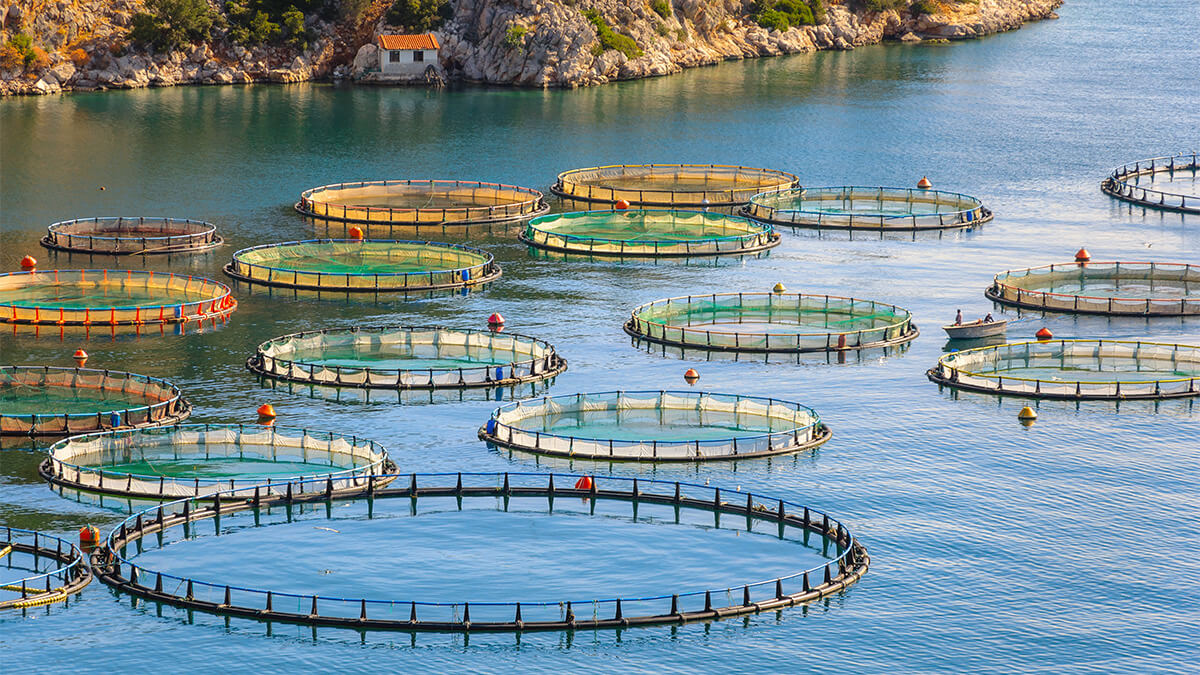

How real-time light monitoring is becoming a critical data layer in precision aquaculture
Precision aquaculture is built on data. Feed rates, water temperature, dissolved oxygen levels, fish biomass estimates — offshore farm operators have grown accustomed to monitoring biological and environmental variables with increasing granularity. Yet one variable has, until recently, received far less systematic attention: light. Not simply whether a lantern is operational, but what the light environment around an offshore installation actually looks like, how it changes across a 24-hour cycle, and what that data reveals about both safety compliance and biological performance.
Real-time light monitoring is emerging as a foundational data layer in precision aquaculture — one that connects regulatory compliance, vessel safety, and fish biology in ways that static lighting installations simply cannot address. This article builds from the ground up, starting with what real-time light monitoring actually means in an offshore aquaculture context, through to how it integrates with farm management workflows and how operators can close the data gaps that most offshore installations still have.
What is real-time light monitoring in aquaculture?
Real-time light monitoring is the continuous, automated measurement and transmission of light-related data from an offshore aquaculture installation — including light intensity, flash status, operational state, and positional data — to a remote interface accessible to farm operators and safety personnel.
The distinction between a monitored lighting system and a conventional one is significant. A standard marine lantern either works or it does not. A monitored system reports whether it is working, at what intensity, for how long, and whether any deviation from expected performance has occurred. That shift from passive to active data collection is what transforms aquaculture lighting from a compliance requirement into a genuine operational tool.
For example, a GNSS-synchronised lantern equipped with remote monitoring capability can confirm, from a shore-based dashboard, that every marker light on a cage perimeter flashed in synchronisation at the correct interval throughout the night — or flag immediately if one unit dropped below its programmed intensity threshold. That is the operational difference real-time monitoring delivers.
How light data influences fish behavior and growth
Light is not merely a safety and navigation variable in aquaculture — it is a biological input. Photoperiod, the duration and intensity of light exposure, directly regulates circadian rhythms, feeding behaviour, and reproductive cycles in many commercially farmed species, particularly salmonids.
Offshore farms that deploy continuous or programmed underwater lighting to extend photoperiod and suppress early sexual maturation in Atlantic salmon are, in effect, using light as a production management tool. When that lighting is monitored in real time, operators gain the ability to correlate light delivery data with biological performance metrics — growth rate, feed conversion, maturation onset — in ways that static installation records cannot support.
The monitoring layer matters here because offshore conditions are dynamic. Storm-driven movement of cage structures, biofouling on lantern housings, and battery performance degradation in solar-powered systems all affect actual light delivery, even when a system appears operationally normal from a compliance standpoint. Real-time data exposes the difference between nominal and actual light exposure, which is precisely the gap that precision aquaculture seeks to close.
Key components of a light monitoring system
A functional real-time light monitoring system in an offshore aquaculture context consists of several integrated components, each serving a distinct role in the data chain from the physical lantern to the operator’s decision-making interface.
- Sensor-equipped marine lanterns: The lantern itself must be capable of reporting operational status data — intensity level, flash character confirmation, battery state, and operational hours. Products designed for aids to navigation (AtoN) with built-in monitoring capability, such as those supporting the LightGuard Monitor remote monitoring platform, provide this data layer directly from the light source.
- GNSS synchronisation: Global Navigation Satellite System synchronisation ensures that all lanterns across a farm installation flash in coordinated timing, which is both an IALA compliance requirement and a prerequisite for reliable monitoring — a desynchronised flash pattern is itself a data signal indicating a system anomaly.
- Wireless connectivity: Data transmission from individual lanterns to a central collection point typically relies on Bluetooth for close-range configuration and status checks, with satellite communication (Satcom) or cellular links for continuous remote transmission from offshore locations beyond coastal network coverage.
- Remote monitoring interface: A web-based dashboard that aggregates status data across all monitored units, displays operational history, and generates automatic alerts when a unit falls outside programmed parameters. This is the operator’s primary interface for light data in a precision aquaculture workflow.
- Data logging and export: Historical light delivery records that can be cross-referenced with biological performance data — the component that elevates monitoring from a safety function to a production management input.
These components function as a system, not a collection of independent tools. The value of each element depends on the integrity of the others: a high-quality lantern with no connectivity delivers no monitoring data; a monitoring interface with no reliable data transmission delivers no operational insight.
Integrating light monitoring with precision aquaculture workflows
Building on the component architecture described above, the next step is understanding how light monitoring data enters and enriches the broader precision aquaculture management workflow — rather than sitting as an isolated compliance record.
Precision aquaculture platforms typically aggregate data from multiple sensor streams: water quality sensors, feed cameras, biomass estimation systems, and environmental monitoring buoys. Light monitoring data integrates most naturally alongside environmental monitoring, but its value extends further when it is connected to biological records. An operator who can overlay actual light delivery data against weekly biomass estimates and maturation assessments is working with a more complete picture of the biological environment than one relying on programmed schedules alone.
The integration pathway for most offshore operations follows a practical sequence:
- Establish a baseline by documenting the programmed light delivery schedule for each installation zone — perimeter marking lights, cage-level lights, and any underwater lighting arrays.
- Configure remote monitoring to log actual operational data against the programmed baseline, generating automatic alerts for deviations above a defined threshold.
- Export light delivery records at regular intervals — weekly or monthly — and incorporate them into the farm’s production data review alongside biological performance metrics.
- Use deviation events (intensity drops, synchronisation failures, extended outages) as triggers for both maintenance response and retrospective biological analysis.
This workflow transforms light monitoring from a passive safety check into an active production management input — which is precisely what the precision aquaculture model demands of every data stream it incorporates.
Common gaps in aquaculture lighting data — and how to close them
Most offshore aquaculture installations have lighting data gaps that operators may not fully recognise until a regulatory inspection, a vessel incident, or a biological performance anomaly prompts a closer review. Understanding these gaps is the first step toward closing them.
The compliance assumption gap
The most common misconception is that a lantern that was functioning at installation will continue to function to specification throughout its service life without verification. Offshore environments are not static. Salt corrosion, UV degradation, biofouling, and battery cycle wear all affect light output over time. An installation that was fully IALA-compliant at commissioning may have drifted below specification without generating any visible failure signal. Real-time monitoring with intensity reporting closes this gap by providing continuous verification rather than point-in-time inspection records.
The coverage mapping gap
Individual lantern status data is necessary but not sufficient. Operators also need to understand whether the collective light pattern across a farm installation provides the coverage required for vessel navigation safety — particularly as cage configurations change, new structures are added, or seasonal operations alter the installation footprint. Regular photometric review of the overall installation, informed by monitoring data from each unit, closes this gap and ensures that coverage mapping reflects the actual operational state of the farm.
The biological correlation gap
As noted earlier, many operators maintain lighting schedules as a production management tool but do not systematically record or verify actual light delivery. The gap between programmed schedule and actual delivery — caused by the environmental factors described above — can introduce uncontrolled variability into biological outcomes. Closing this gap requires both monitoring infrastructure and a deliberate data integration practice that connects light delivery records to biological performance review.
Building light monitoring into long-term farm strategy
The concepts covered in the preceding sections converge on a single strategic conclusion: real-time light monitoring is not an add-on to an existing aquaculture lighting installation. It is a foundational design requirement for any offshore farm operation that takes precision management seriously.
Operationally, this means specifying monitoring capability at the point of equipment selection rather than retrofitting it after installation. Marine lanterns designed for aquaculture applications — built to withstand salt exposure, storm conditions, and continuous 24/7 operation — increasingly incorporate the connectivity and reporting architecture that monitoring requires. Selecting equipment with GNSS synchronisation, Bluetooth configuration capability, and remote monitoring compatibility from the outset is materially easier and more cost-effective than attempting to add these capabilities to a legacy installation.
Strategically, light monitoring data compounds in value over time. A single night’s operational log is a compliance record. Three years of light delivery data, correlated against biological performance records across multiple production cycles, is a production optimisation asset. Farms that begin building this data record now are creating an analytical foundation that will support increasingly sophisticated precision aquaculture decision-making as the industry’s data capabilities mature.
The direction of travel in offshore fish farming technology is clear: every variable that influences safety, compliance, and biological performance will eventually be monitored continuously and integrated into a unified management picture. Light is not an exception to this trend — it is one of the most tractable variables to monitor, and one of the most consequential to get right.