
7 aquaculture lighting models fish farmers keep switching back to
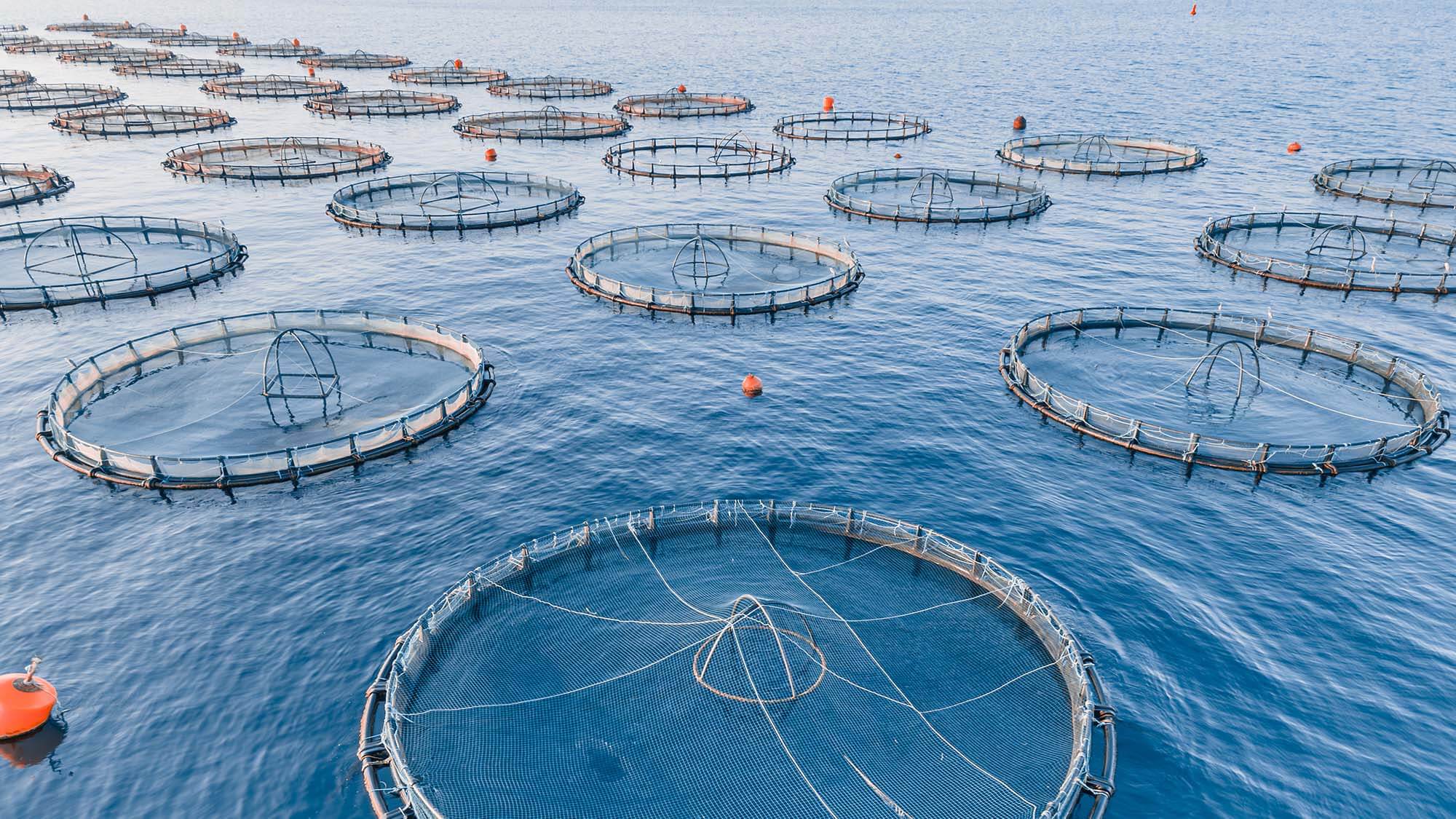
Offshore fish farmers operating in exposed, high-traffic waters cannot afford ambiguity around their installations. Vessels navigating at night, in reduced visibility, or in unfamiliar waters need clear, reliable signals that mark cage perimeters, access channels, and working areas without fail. The aquaculture lighting models that earn repeat business from experienced operators share a common set of qualities: IALA-compliant output, proven durability in salt-laden environments, and the kind of low-maintenance reliability that makes remote farm management viable. The following seven models represent the aquaculture LED lights that offshore fish farmers return to because they consistently deliver on those requirements.
What Keeps Fish Farmers Coming Back to the Same Lights
The offshore aquaculture sector operates under a specific set of pressures that make lighting selection consequential rather than routine. Cage collisions, regulatory non-compliance, and equipment failures in remote locations carry real financial and safety costs. Fish farmers who have experienced those consequences once tend to make very deliberate choices the second time around.
What drives repeat purchasing in aquaculture lighting is a combination of factors: consistent photometric performance across the product’s service life, resistance to the mechanical and chemical stresses of open-water deployment, and compliance with the maritime authority requirements that govern offshore installations in most jurisdictions. Energy efficiency matters too, particularly for farms operating far from shore where grid power is unavailable and solar operation is the only viable option.
The models below address these priorities directly. Each has been selected because it offers a distinct capability that serves a defined aquaculture application, from basic perimeter marking to GPS-synchronised multi-lantern arrays and remote monitoring with real-time alerts.
Sabik WL-1: All-Round Light for Cage Perimeter Marking
The primary task of any aquaculture marking system is to define the boundaries of the installation clearly enough that approaching vessels can identify and avoid them. For cage perimeter marking, an omnidirectional marine lantern with consistent 360-degree output and IALA-standard colour is the baseline requirement. The Sabik SBFL 160 Marker Light is built specifically for this application.
Designed exclusively for aquaculture farms, the SBFL 160 meets requirements for both daytime and nighttime visibility as well as radar detection, addressing the full range of conditions in which a vessel might approach an offshore installation. The integrated alkaline battery powers the lantern directly, while the yellow buoy tube housing incorporates an internal radar reflector, LED lantern, and light reflectors in a single deployable unit. GNSS synchronisation enables flash patterns across multiple lanterns to operate in a coordinated sequence, which simplifies compliance with authority requirements for multi-point installations. Bluetooth connectivity allows configuration via the Sabik Easy Programmer without physical disassembly.
This lantern is best suited to fish farmers who need a compliant, self-contained marker that can be installed directly on floats with minimal additional infrastructure. The adjustable intensity and range settings allow the same unit to serve installations of varying scale, and the internal radar reflector provides a secondary detection layer for vessels equipped with marine radar.
Sabik WL-2: Solar-Powered Marking in Remote Sites
For aquaculture operations located well offshore or in areas without reliable service vessel access, solar-powered operation is not a preference but a practical necessity. The M660 Self-Contained LED Lantern delivers high-performance solar marine lighting with a service profile that matches the operational realities of remote fish farm management.
The M660 operates on an internal solar charger with a lithium-ion battery rated for eight years of service life, with an optional dual-pack configuration for deployments in higher-latitude locations where winter insolation is reduced. The lantern offers five IALA-standard colours, adjustable intensity and range, and 80-degree vertical divergence, ensuring reliable visibility across a wide range of sea states. A built-in calendar function allows operators to programme off-season deactivation, reducing unnecessary battery draw during periods when the installation is not in active use. Four mounting options provide flexibility across different buoy and float configurations.
Fish farmers operating in Nordic waters, remote Pacific locations, or any site where maintenance access is infrequent will find the M660 well suited to their requirements. The combination of long battery service life and solar autonomy means the lantern can operate through extended periods without intervention, and Bluetooth connectivity enables configuration updates without the need for physical access to the unit.
Sabik WL-3: Directional Light for Channel Guidance
Marking the outer perimeter of an aquaculture installation addresses collision risk from approaching vessels, but farms with designated access channels, mooring areas, or service vessel routes require directional guidance that omnidirectional lanterns cannot provide. The VLB-5X-SA LED Lantern for Buoys and Minor Beacons delivers compact, reliable output calibrated for channel marking applications.
The VLB-5X-SA is a non-solar self-contained lantern powered by an external battery source, designed for fixed structures where its small size and low weight are operational advantages. It supports more than 256 flash characters, giving operators the flexibility to programme distinct signals for different navigation points within the same installation. Light intensity adjusts automatically with flash character settings using the Schmidt-Clausen method, maintaining consistent visibility without manual reconfiguration. Calendar control of beacon operation and an alarm output for system notification add operational depth that is particularly useful in managed channel environments.
This lantern suits fish farms where precise, programmable directional signals are required to guide service vessels, feed barges, or harvest craft through designated routes. The twelve options for day-to-night transition light levels ensure the lantern adapts to changing ambient conditions without operator input, maintaining appropriate intensity through dawn and dusk periods when channel navigation demands are often highest.
Sabik WL-4: GPS-Synchronised Multi-Lantern Arrays
Large offshore aquaculture installations with multiple cage groups, perimeter points, and access routes require coordinated flash synchronisation across the entire lighting network. Without synchronisation, the visual pattern presented to an approaching vessel can be confusing rather than clarifying. The VPL 110 Integrated Buoy Lantern addresses this directly with GNSS synchronisation as a standard feature.
The VPL 110 is a durable, high-performance omnidirectional lantern built around a tough polycarbonate outer cover and designed for ultra-low power consumption. GNSS synchronisation ensures that every lantern in a multi-point array flashes in a coordinated sequence, producing a coherent visual pattern that clearly communicates the shape and extent of the installation to approaching vessels. The integrated flasher includes a day/night switch, and the lantern supports IALA-standard colours with 80-degree vertical divergence. Bluetooth programming via Android or iOS enables configuration from a mobile device, and the LightGuard Monitor remote monitoring option provides real-time operational status data for the entire array.
Fish farmers managing large-scale offshore installations with multiple buoy points will find the VPL 110 particularly effective. The combination of GNSS synchronisation and optional remote monitoring via LightGuard Monitor means that both the visual coherence of the array and its operational status can be managed without requiring physical access to individual lanterns, reducing the frequency and cost of maintenance voyages.
Sabik WL-5: Ice-Resistant Light for Nordic Operations
Aquaculture operations in Scandinavian waters, the Baltic, and other high-latitude environments face seasonal ice loading that standard marine lanterns are not designed to withstand. The VLB-5X-SS Self-Contained LED Lantern for Buoys and Beacons is engineered to maintain reliable performance through the extreme weather conditions that define northern offshore operations.
The VLB-5X-SS incorporates advanced battery technology with an optimised charging algorithm that ensures performance is maintained even when temperature extremes would compromise standard battery systems. Solar-powered operation with an internal charger supports autonomous deployment in locations where grid power is unavailable. Like the VLB-5X-SA, it supports more than 256 flash characters, automatic Schmidt-Clausen intensity adjustment, calendar control, and alarm output, delivering the same operational depth in a solar-powered format rated for demanding environmental conditions. Five IALA-standard colours and twelve day-to-night transition levels ensure consistent, compliant output regardless of season or weather.
Nordic fish farmers who have experienced the consequences of equipment failure during winter operations will recognise why a lantern specifically engineered for low-insolation, high-stress environments commands loyalty. The advanced charging algorithm is the critical differentiator here: it ensures the battery management system continues to function correctly when temperatures drop well below the operating range of standard solar marine lanterns, maintaining the reliable output that IALA-compliant installation marking demands.
What Makes a Light Compliant with Maritime Regulations
Regulatory compliance for offshore aquaculture lighting is not a formality. Maritime authorities in most jurisdictions require that offshore installations, including fish farms, carry IALA-compliant aids to navigation that meet specific intensity, colour, flash character, and visibility range requirements. Non-compliance can result in permit conditions being imposed, operational restrictions, or liability exposure in the event of a collision incident.
IALA-compliant fish farm navigation lights must meet several core criteria:
- Photometric output within the IALA chromaticity requirements for the designated colour, verified through testing rather than manufacturer declaration alone.
- Adequate nominal range for the installation type, typically determined by the authority responsible for the waterway or maritime zone in which the farm operates.
- Flash character registration with the relevant authority, ensuring the signal is distinguishable from other aids to navigation in the area.
- Sufficient vertical divergence to remain visible to vessels approaching at varying angles of elevation, particularly in swell conditions.
- Radar reflectivity where required, enabling detection by vessels using marine radar in reduced visibility conditions.
Sabik’s aquaculture lighting models are designed to meet these requirements as a baseline, not as an afterthought. With over two decades of experience supplying offshore aquaculture lights and active participation in IALA standards development, Sabik designs products to satisfy the requirements that maritime authorities apply in practice, not only on paper. For fish farmers uncertain about the specific requirements that apply to their installation, engaging with the relevant maritime authority early in the planning process is the most reliable path to compliant deployment.
Sabik WL-6: Remote Monitoring with Real-Time Alerts
An aquaculture lighting array that cannot be monitored remotely requires physical inspection to confirm operational status, which means service vessel deployments every time a fault is suspected. For offshore installations, that cost accumulates quickly and creates windows of undetected failure that represent both a safety risk and a regulatory exposure. The M850 Self-Contained LED Lantern, equipped with LightGuard Monitor capability, addresses this directly.
The M850 is a high-performance solar lantern with a powder-coated aluminium chassis, UV-resistant polycarbonate lens, and multiple battery pack options for deployment across a wide range of solar environments. GPS synchronisation flash is available, enabling coordinated operation within a multi-lantern array. The critical operational differentiator is Sabik LightGuard Bluetooth monitoring, which provides real-time status data including battery levels and lantern operation, accessible through a web-based interface on any device. Bluetooth and Satcom connectivity options extend the monitoring capability to installations beyond standard Bluetooth range. The built-in calendar supports off-season deactivation, and a tap-to-activate four-character LED display enables on-site status checks without programming equipment.
Fish farmers managing installations across multiple sites, or operating at distances where routine physical inspection is logistically demanding, will find the M850 with LightGuard Monitor to be a significant operational improvement. The ability to detect and respond to equipment anomalies before they become failures reduces the risk of extended unlit periods, which is precisely the scenario that maritime authorities and insurers are most concerned about in offshore aquaculture environments.
Choosing the Right Model for Your Farm Setup
Selecting the appropriate marine aquaculture lighting for an offshore fish farm requires matching the lantern’s capabilities to the specific operational, environmental, and regulatory conditions of the installation. No single model serves every scenario equally well, and the most effective aquaculture lighting systems typically combine two or more lantern types to address different functions within the same installation.
The key decision factors to work through for any offshore aquaculture lighting project are:
- Installation scale and geometry: Small single-cage installations require fewer marking points than large multi-cage arrays. GPS-synchronised lanterns become more valuable as the number of marking points increases.
- Power availability: Sites without shore power require solar-powered or battery-powered lanterns. High-latitude sites with reduced winter insolation require lanterns with advanced battery management, such as the VLB-5X-SS.
- Monitoring requirements: Installations that are difficult or costly to access benefit significantly from remote monitoring capability. The LightGuard Monitor option available on the M850 reduces undetected failure risk and the operational cost of routine inspection voyages.
- Regulatory requirements: The maritime authority responsible for the waterway will specify minimum visibility range, flash character, and colour requirements. IALA-compliant lanterns designed to these standards, such as the SBFL 160, provide the most direct path to compliant deployment.
- Environmental conditions: Ice loading, extreme temperatures, and high-salinity environments require lanterns specifically engineered for those conditions. Nordic and Baltic operators should prioritise models rated for low-insolation, high-stress deployment.
Sabik’s technical team works with offshore fish farmers to specify the right combination of aquaculture LED lights for each installation, taking into account the authority requirements, site conditions, and operational priorities that define the project. With manufacturing facilities in Finland, the United States, Australia, Estonia, and the United Kingdom, and a network of over 100 authorised distributors, Sabik supports aquaculture operators at every latitude with the local knowledge and product availability that remote offshore deployments demand.