
9 differences between budget and premium aquaculture lighting fixtures
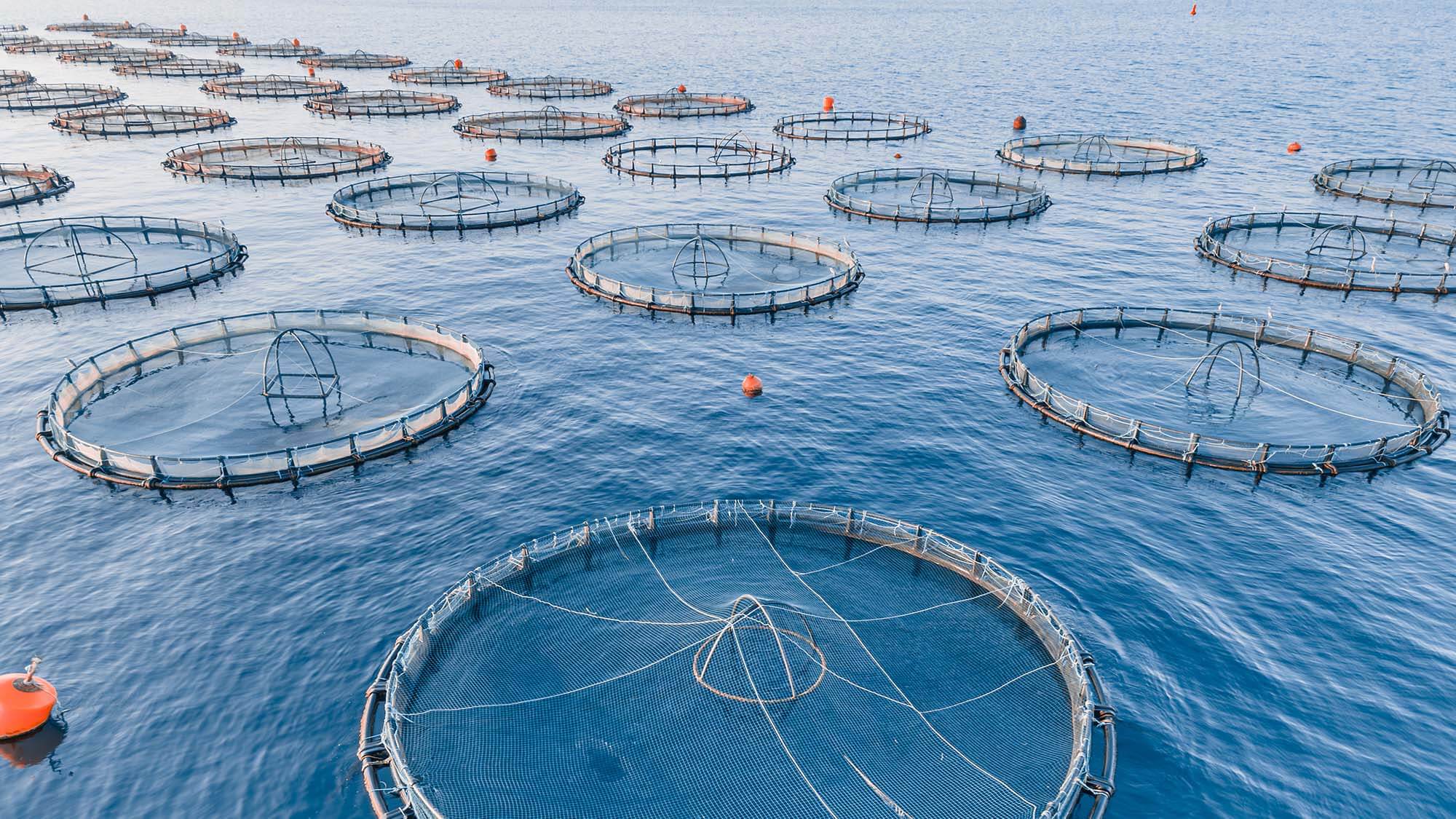
Not all aquaculture lighting fixtures perform equally when deployed on an offshore fish farm. The difference between a budget fixture and a premium marine lantern becomes apparent quickly in saltwater environments: in corrosion rates, in compliance failures, in the frequency and cost of maintenance trips to remote installations. For aquaculture operators managing offshore cages, the wrong choice does not simply mean a shorter product lifespan. It can mean an unlit perimeter, a vessel collision, and the regulatory and financial consequences that follow. Understanding the nine key differences between budget and premium aquaculture lighting fixtures gives operators the technical foundation to make procurement decisions that protect their infrastructure, their crew, and their licence to operate.
What Separates Budget from Premium Aquaculture Lights
Budget aquaculture lighting fixtures are typically designed to a price point. They meet minimum specifications on paper but are often built with commercial-grade components that were never intended for continuous offshore marine deployment. Premium fixtures, by contrast, are engineered from the outset for the specific demands of saltwater environments: constant UV exposure, wave impact, salt spray, and 24/7 operational cycles across multi-year service intervals.
The gap between these two categories is not always visible at the point of purchase. It becomes measurable over time, in maintenance costs, in compliance records, and in the operational continuity of the farm. The nine differences below define where that gap is widest and where the consequences of choosing incorrectly are most severe.
1: Corrosion Resistance in Saltwater Environments
Saltwater corrosion is the primary cause of premature fixture failure in offshore aquaculture applications. Budget fixtures typically use standard aluminium alloys or untreated plastics that begin to degrade within the first operational season when exposed to continuous salt spray and immersion.
Premium aquaculture LED lights are built with materials specifically selected for marine corrosion resistance. Powder-coated aluminium chassis, UV-resistant polycarbonate or polysiloxane housings, and stainless steel fasteners are standard in purpose-built marine lanterns. These material choices are not cosmetic upgrades. They directly determine whether a fixture maintains structural integrity and optical performance after two, five, or ten years of continuous offshore deployment.
For offshore fish farm operators, corrosion failure is not a gradual inconvenience. A corroded housing that admits water to the LED driver or battery compartment produces a sudden, complete failure. In a remote offshore installation, that failure may go undetected for days unless remote monitoring is in place, creating an unlit perimeter and a direct collision risk for approaching vessels.
2: LED Chip Quality and Luminous Output
LED chip quality determines both the initial luminous output of a fixture and how that output degrades over time. Budget fixtures frequently use commercial-grade LED chips with high initial lumen output but rapid lumen depreciation, meaning the effective visibility range of the lantern decreases significantly within the first two to three years of operation.
Premium marine aquaculture navigation lights use high-grade LED chips with temperature-corrected drivers that maintain consistent light intensity across the full operating temperature range, from Arctic winter conditions to tropical summer heat. Temperature-corrected LED drivers compensate for the well-documented relationship between LED junction temperature and light output, ensuring that a lantern rated for a specific nautical mile range delivers that range reliably throughout its design life.
For IALA-compliant installations, maintaining the specified intensity range is not optional. A fixture that falls below its rated output due to LED degradation is no longer performing to its certified specification, creating a compliance gap that can affect an operator’s regulatory standing even if the light appears to be functioning.
3: IALA and Regulatory Compliance Certification
Regulatory compliance is the single most consequential differentiator between budget and premium aquaculture lighting fixtures. Many budget fixtures are sold with vague references to “marine standards” or “international compliance” without certification to specific IALA requirements for colour chromaticity, intensity, and flash character accuracy.
Premium fixtures are designed and tested to meet IALA standards precisely. This includes correct chromaticity for IALA colour categories, verified intensity at the rated range, and flash character accuracy within IALA tolerances. For aquaculture installations in regulated waters, maritime authorities require lanterns that meet these standards. A fixture that cannot demonstrate certified IALA compliance may require replacement at the operator’s expense following a compliance inspection.
Operators should also consider the difference between a manufacturer that complies with IALA standards and one that actively participates in developing them. Sabik has been an active participant in IALA standard-setting for decades, a position that ensures its aquaculture lighting products are not simply compliant with current requirements but are aligned with the direction in which those requirements are evolving.
4: Ingress Protection and Wave Impact Ratings
Ingress protection ratings define a fixture’s resistance to water and particulate ingress. Budget fixtures marketed for marine use frequently carry IP65 or IP66 ratings, which indicate protection against water jets but not sustained immersion or wave impact loading. Offshore aquaculture environments routinely expose fixtures to conditions that exceed these ratings: wave wash over cage perimeters, spray immersion during storms, and periodic submersion during extreme sea states.
Premium offshore fish farm lighting fixtures are rated to IP67 or IP68 as a minimum, indicating protection against temporary or continuous immersion at defined depths and durations. Beyond ingress protection ratings, purpose-built marine lanterns are designed to withstand the mechanical shock loading associated with wave impact, which can fracture housings and dislodge optical components in fixtures not engineered for this load case.
The practical consequence of inadequate ingress protection in an offshore aquaculture context is water ingress into the battery compartment or LED driver, which produces immediate failure and, in alkaline or lithium battery systems, a potential chemical hazard. Premium fixtures eliminate this risk through design, not just ratings.
5: Power Consumption and Energy Efficiency
Power consumption directly determines the operational economics of an aquaculture lighting installation, particularly in offshore locations where grid power is unavailable and all energy must be stored or generated on-site. Budget fixtures with inefficient LED drivers or poorly optimised optical systems consume more power to achieve the same visible range, reducing battery autonomy and increasing the frequency of battery replacement or recharging.
Premium aquaculture LED lights are engineered for ultra-low power consumption, using high-efficiency LED drivers and precision optics that direct light output where it is needed rather than dissipating it in non-operational directions. Automatic day/night switching and adjustable intensity settings further reduce energy draw during periods of reduced visibility requirement, extending battery autonomy between service intervals.
For operators managing multiple offshore installations, the cumulative energy savings of premium fixtures over a multi-year deployment represent a measurable reduction in operational costs. Fewer battery replacement cycles, longer autonomous operation periods, and reduced service vessel requirements all follow directly from superior energy efficiency.
6: Solar and Battery System Compatibility
Solar-powered operation is the standard for remote offshore aquaculture lighting installations where grid connection is impractical. Budget fixtures often incorporate basic solar panels and standard battery chemistries without the charging algorithm optimisation required for reliable performance in variable solar conditions, including the low-insolation environments common at northern latitudes during winter months.
Premium solar aquaculture lighting fixtures incorporate high-efficiency solar cells, advanced battery chemistries such as lithium-ion or sealed lead-acid with optimised charging algorithms, and battery management systems that protect cell health across the full temperature range. Some premium systems offer replaceable battery packs that extend the service life of the fixture beyond the battery’s natural cycle life, reducing whole-unit replacement costs.
Battery compatibility with the specific operating environment is a critical consideration. A fixture using NiMH batteries with replaceable and recyclable cells offers a different operational profile than one using a sealed lithium pack. Premium manufacturers provide multiple battery options and clearly specify the performance characteristics of each in the context of solar availability and operating temperature, enabling operators to match the battery system to their specific deployment conditions.
7: Smart Features and Remote Monitoring Capability
Remote monitoring capability is the defining operational advantage of premium aquaculture lighting fixtures over budget alternatives. Budget fixtures operate as standalone units with no communication capability, meaning that failure detection depends entirely on visual inspection during maintenance visits. For offshore installations, this translates directly into periods of undetected non-compliance and elevated collision risk.
Premium marine aquaculture navigation lights incorporate Bluetooth connectivity for local programming and status checking, GNSS synchronisation for coordinated flash patterns across multiple fixtures, and optional remote monitoring integration through systems such as the LightGuard Monitor, which provides web-based access to real-time operational status, battery levels, and alarm notifications for every lantern in a network. Automatic alarms trigger when anomalies are detected, enabling maintenance teams to respond before a developing fault becomes a complete failure.
For aquaculture operators managing farms across multiple offshore sites, the ability to verify the operational status of every perimeter lantern from a shore-based interface eliminates the need for routine inspection voyages and enables condition-based maintenance scheduling. GNSS synchronisation ensures that all perimeter lights flash in coordination, producing a clearly defined and consistent visual boundary that approaching vessels can interpret without ambiguity.
8: Lifespan and Maintenance Intervals
Lifespan and maintenance interval data are among the most consequential specifications in any aquaculture lighting procurement decision, yet they are among the most frequently misrepresented by budget fixture suppliers. Claimed design lives of five or ten years mean little without specific data on the conditions under which those figures were established and the testing standards applied.
Premium marine lanterns are built to verified design lives, with specific battery service life figures, UV resistance data for housing materials, and LED lumen maintenance projections based on standardised test methods. Fixtures designed for offshore fish farm lighting should carry a minimum design life of ten years, with battery service lives of five years or more and housing materials rated for continuous UV and salt spray exposure throughout that period.
Longer maintenance intervals are not simply a convenience for offshore operators. Each maintenance visit to a remote installation requires vessel time, crew deployment, and weather-window dependency. Premium fixtures that extend maintenance intervals from annual to biennial or longer reduce these costs substantially and lower the operational risk associated with maintenance voyages in adverse conditions.
9: Total Cost of Ownership over a 10-Year Horizon
The purchase price of an aquaculture lighting fixture represents a small fraction of its total cost of ownership over a ten-year operational horizon. Budget fixtures with lower upfront costs typically generate significantly higher total costs through accelerated replacement cycles, frequent battery changes, non-compliance remediation, and the vessel and crew costs associated with unplanned maintenance visits.
A premium fixture with a verified ten-year design life, five-year-plus battery service life, and remote monitoring capability eliminates most of the cost drivers that make budget fixtures expensive to operate. The initial price premium is typically recovered within the first two to three years of operation through reduced maintenance frequency alone, before accounting for the avoided costs of compliance failures, vessel collision incidents, or stock loss events attributable to inadequate perimeter marking.
Operators evaluating budget versus premium offshore fish farm lighting on a total cost of ownership basis should account for all cost categories: purchase price, installation, battery replacement cycles, maintenance vessel costs, compliance inspection outcomes, and the financial exposure associated with an unlit perimeter. When these factors are fully costed, the economics of premium aquaculture lighting fixtures are consistently more favourable than the initial price comparison suggests.
Choosing the Right Fixture for Offshore Fish Farms
The selection of aquaculture lighting fixtures for an offshore installation should begin with the operating environment and the regulatory requirements of the relevant maritime authority. IALA compliance is non-negotiable for any installation in regulated waters, and the fixture specification should be verified against the authority’s current requirements before procurement.
Beyond compliance, the key selection criteria are corrosion resistance for the specific marine environment, solar and battery performance for the available insolation at the installation latitude, and remote monitoring capability appropriate to the operator’s maintenance model. Installations at northern latitudes with low winter insolation require fixtures with large-format solar engines and advanced battery management. Installations across multiple sites benefit most from GNSS-synchronised fixtures with integrated remote monitoring.
Sabik has been designing and manufacturing purpose-built aquaculture lighting solutions for more than 20 years, with products engineered to perform in the full range of offshore conditions, from Arctic deployments to equatorial fish farms. The SBFL 160 Marker Light, for example, is specifically designed for aquaculture farms, incorporating an internal radar reflector, GNSS synchronisation, IALA-yellow certification, and Bluetooth connectivity in a fixture built for direct installation on floats. For operators who require the operational assurance of remote monitoring across a distributed installation, integration with the LightGuard Monitor provides real-time network visibility without the need for routine inspection voyages.
Selecting the right fixture is a decision that affects the safety of every vessel operating near the farm, the regulatory standing of the operation, and the total cost of the installation over its full service life. The nine differences outlined above provide the technical framework for making that decision with confidence.
Contact Sabik’s technical team to discuss your aquaculture lighting requirements and identify the fixture specification best suited to your offshore installation.