
9 performance benchmarks to use when evaluating new fish farm lights
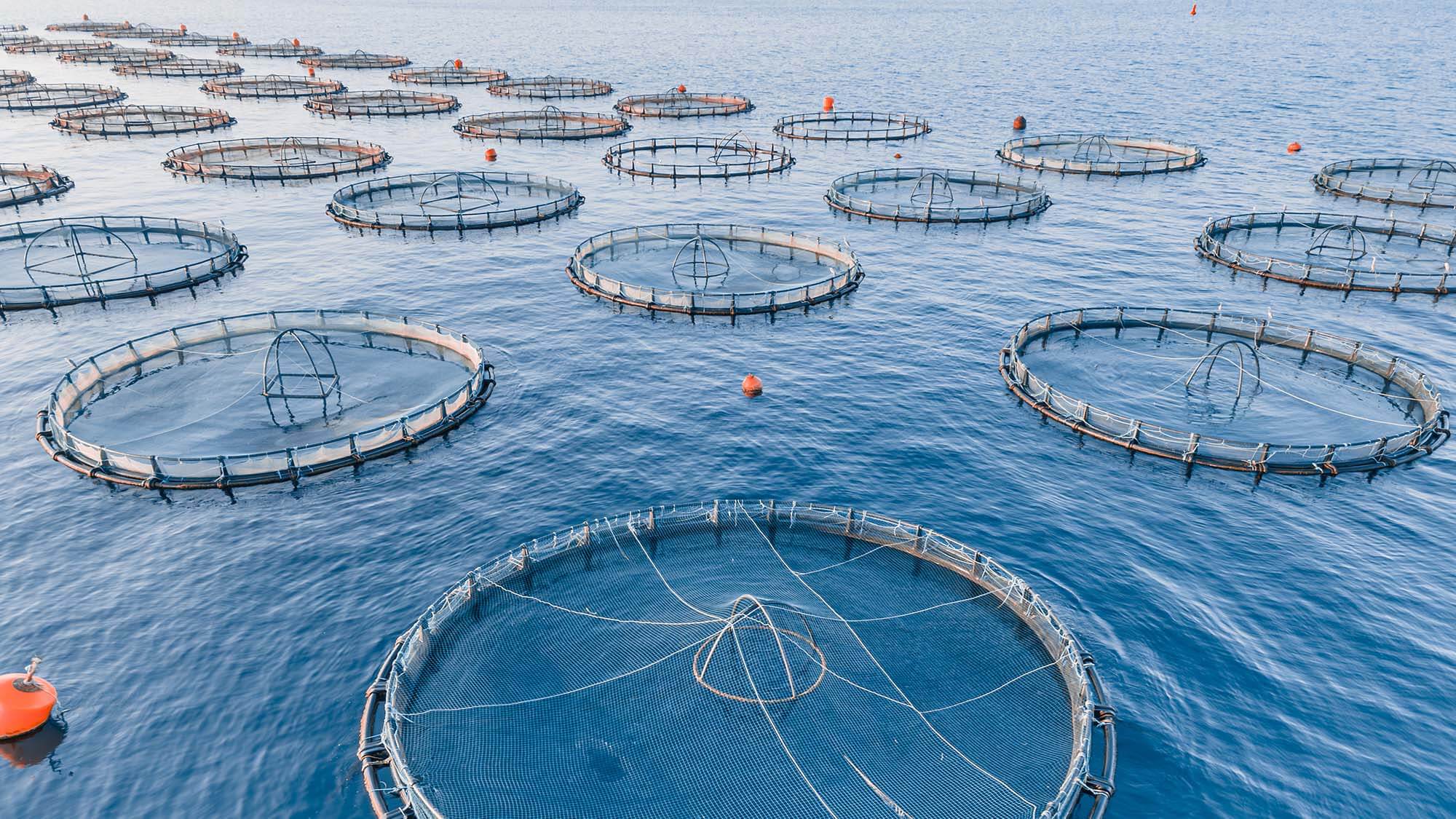
Procurement decisions for fish farm lights carry consequences that extend well beyond the purchase order. An undersized lantern that fails to meet visibility requirements, a housing that corrodes within two seasons, or a unit without IALA-compliant flash characters can expose an offshore aquaculture operation to regulatory penalties, vessel collision risk, and costly unplanned maintenance. With the offshore aquaculture sector operating in increasingly demanding marine environments, the performance gap between adequate and excellent aquaculture lighting has never mattered more. The nine benchmarks below give procurement teams and farm operators a structured framework for evaluating any marine lantern before it reaches the water.
1: Ingress protection rating for marine environments
Ingress protection (IP) rating is the single most immediate indicator of whether a marine lantern is genuinely designed for offshore deployment or merely marketed for it. In aquaculture environments, luminaires face continuous salt spray, wave wash, and submersion events — conditions that will expose any weakness in housing integrity within months.
For offshore fish farm lights, the minimum acceptable standard is IP67, which certifies temporary immersion to one metre. IP68 certification, covering sustained immersion beyond one metre, is the preferred benchmark for any unit mounted at or near the waterline, on cage perimeter structures, or on submerged marker systems. Units rated below IP66 should be disqualified from offshore aquaculture procurement regardless of other specifications.
When evaluating IP ratings, verify that the certification applies to the complete assembly, including cable entry points, battery compartments, and lens seals. A housing rated IP68 with an unsealed battery compartment provides no meaningful protection. Request the test standard and certificate reference, not just the rating number.
2: Corrosion resistance and material specification
Saltwater corrosion is the primary cause of premature failure in offshore aquaculture lighting. A lantern’s rated service life is only achievable if the materials used in its construction can withstand continuous exposure to chloride-rich marine atmospheres, biofouling, and the mechanical stress of wave action and tidal movement.
UV-resistant polycarbonate and polysiloxane are the preferred materials for lens and housing components, offering high impact resistance alongside long-term resistance to salt degradation and UV-induced brittleness. Aluminium chassis components should carry a powder-coated finish to resist corrosion in high-salinity environments. Stainless steel fasteners and mounting hardware are the appropriate specification for any component in direct contact with seawater or cage structures.
Request material datasheets and accelerated salt-spray test results when evaluating new suppliers. Offshore aquaculture installations in exposed coastal and open-ocean locations subject equipment to conditions that will degrade inadequately specified materials well before their nominal service life. The material specification, not the warranty period, is the reliable indicator of actual longevity.
3: Luminous intensity and visibility range
Visibility range determines whether approaching vessels can identify an aquaculture installation with sufficient time to alter course safely. This is not a performance preference — it is a safety-critical specification with direct implications for collision risk, crew safety, and regulatory compliance.
The required visibility range for any given installation depends on local maritime authority requirements, the traffic density of surrounding waters, and the geographic exposure of the site. For offshore fish farm lights marking perimeter boundaries, a minimum nominal range of 2 nautical miles is a widely applied baseline, with higher-traffic or more exposed sites requiring 3 nautical miles or greater. For primary hazard markers at the corners of large installations, lanterns capable of 5 nautical miles or beyond provide an appropriate safety margin.
Luminous intensity figures should be evaluated against IALA photometric standards, not manufacturer marketing specifications. Verify that intensity values are provided for the specific flash character and colour in use, not peak white-light output. Temperature-corrected LED drivers, which maintain consistent intensity output across operating temperature extremes, are a meaningful technical differentiator for installations in high-latitude or seasonally variable environments.
4: Energy consumption and solar autonomy
Energy efficiency in offshore aquaculture lighting is an operational imperative, not merely a sustainability consideration. Fish farm installations are frequently located at a significant distance from shore power infrastructure, making solar-powered autonomy the practical prerequisite for reliable, cost-effective operation.
When evaluating solar-powered marine lanterns, the critical benchmark is not panel wattage but autonomy days — the number of consecutive overcast days the unit can maintain full operation without solar input. For high-latitude aquaculture sites where winter insolation is severely limited, autonomy performance in low-light conditions is the decisive specification. Advanced battery management algorithms that optimise charging efficiency and protect battery capacity in temperature extremes are a meaningful differentiator between units that perform on paper and those that perform through a Northern European winter.
Battery chemistry also warrants evaluation. Lithium-ion batteries offer superior energy density and longer service life compared to sealed lead-acid alternatives, with some units offering optional dual battery packs for extended autonomy. Replaceable and recyclable battery systems reduce long-term operational cost and align with responsible asset management practices for installations expected to operate for a decade or more.
5: Operating temperature range
Offshore aquaculture operations span a wide range of climatic zones, from Arctic Norwegian fjords to equatorial Pacific sites, and the operating temperature range of a marine lantern must match the thermal demands of its deployment location without performance degradation.
Standard commercial LED lanterns are typically rated for operation between approximately minus 20 and plus 55 degrees Celsius. For high-latitude aquaculture deployments, verify that the rated lower limit reflects actual operational performance, not simply component survival. Battery performance, charging efficiency, and LED driver output all degrade at low temperatures, and units without temperature-compensated electronics will deliver materially reduced performance in winter conditions.
For tropical and equatorial deployments, thermal management within the housing becomes the primary concern. Passive ventilation design, UV-resistant lens materials, and heat-tolerant battery chemistry are the relevant specifications to evaluate. A unit optimised for Arctic autonomy may carry thermal characteristics that accelerate degradation in sustained high-temperature environments — operating temperature range should be matched to the specific deployment latitude, not treated as a generic specification.
6: Flash character and IALA compliance
IALA-compliant flash characters are not optional for aquaculture installations operating in navigable waters. Maritime authorities in most jurisdictions require that lights marking offshore structures comply with IALA recommendations, and non-compliant lanterns can result in permit conditions being breached or approvals being withdrawn.
The minimum benchmark for any aquaculture lighting procurement is a lantern capable of programming the specific flash character prescribed by the relevant maritime authority for the installation. Units offering more than 256 programmable flash characters provide the flexibility to meet any current or future regulatory requirement without hardware replacement. Automatic intensity adjustment using the Schmidt-Clausen method — which scales light output proportionally to the flash character to maintain consistent nominal range — is the technically correct implementation and should be specified over fixed-intensity alternatives.
IALA colour compliance is equally important. Lanterns should meet IALA chromaticity requirements across the full range of available colours, with yellow being the standard IALA designation for aquaculture and special structure marking. Verify that colour compliance is certified, not self-declared, and that the certification references the current IALA recommendations applicable to the procurement jurisdiction.
7: GPS synchronization capability
GPS synchronization enables multiple lanterns across an aquaculture installation to flash in precise coordination, creating a coherent, recognisable light pattern that allows mariners to identify the full extent of the installation at a glance. For large offshore fish farms with multiple cage arrays, coordinated flashing is a meaningful safety enhancement over independent, unsynchronised units.
GNSS synchronization, which encompasses GPS and compatible global navigation satellite systems, is the technically accurate specification term. Units with built-in GNSS sync capability maintain coordinated flash timing without requiring a wired connection between lanterns, making them practical for distributed installation across a large perimeter. This capability is particularly valuable in high-traffic areas where the spatial extent of an aquaculture installation needs to be immediately legible to an approaching vessel.
When evaluating GNSS sync capability, confirm that the feature operates without dependence on cellular or radio infrastructure, which may be unavailable at remote offshore sites. Standalone GNSS synchronization, requiring only clear sky visibility, is the appropriate specification for offshore aquaculture deployments beyond reliable network coverage.
8: Remote monitoring and diagnostics
The ability to monitor the operational status of aquaculture lighting remotely is no longer a premium feature — it is a practical requirement for offshore installations where physical inspection requires a vessel deployment. A lantern that fails silently in the middle of the night creates an unmarked hazard that may go undetected for days without remote monitoring capability.
Remote monitoring systems should provide real-time data on lantern operation status, battery levels, and positional data accessible through a web-based interface on any device. Automatic alarm outputs that trigger when a unit goes offline, battery voltage drops below threshold, or a lantern deviates from its programmed position enable maintenance teams to respond to issues before they become safety events. The LightGuard Monitor, Sabik’s remote monitoring platform, delivers this capability for compatible marine lanterns, providing the operational visibility that distributed offshore installations require.
Bluetooth-based programming and diagnostics, available through the Sabik Bluetooth® Control App on compatible units, provide a practical complement to network-based remote monitoring for on-site maintenance operations. The ability to configure flash characters, adjust intensity, and run diagnostics from a service vessel without physical lantern access reduces the time and risk associated with maintenance operations in adverse sea conditions.
9: Rated service life and lumen maintenance
Rated service life is the benchmark that determines the true cost of ownership for offshore aquaculture lighting, and it should be evaluated alongside the lumen maintenance specification that defines what “service life” actually means in practice. A lantern rated for ten years of service life at 70% lumen maintenance delivers materially different performance in year eight than one rated for the same period at 90% maintenance.
For offshore aquaculture deployments, a minimum design life of ten years is the appropriate baseline benchmark. Battery service life, which is typically the limiting factor in solar-powered units, should be evaluated separately: lithium-ion battery packs in well-designed solar lanterns can deliver eight years or more of service life, while sealed lead-acid alternatives typically require replacement within five years under demanding offshore conditions. Units with field-replaceable battery packs extend the useful life of the optical and electronic components beyond the battery’s service interval, reducing whole-life cost.
Lumen maintenance data should reference standard LED testing protocols, not projected extrapolations. Request L70 or L80 rated life data — the operating hours at which luminous flux falls to 70% or 80% of initial output — and verify that this data was generated under conditions representative of the deployment environment. A lantern tested in controlled laboratory conditions at 25 degrees Celsius will deliver different real-world lumen maintenance than the same unit operating through repeated freeze-thaw cycles on an exposed offshore aquaculture site. With over 20 years of experience designing aquaculture lighting for offshore environments, Sabik builds service life expectations from field-proven performance, not laboratory projections alone.
Build a benchmark checklist before your next procurement
Applying these nine benchmarks systematically transforms aquaculture lighting procurement from a specification comparison exercise into a genuine performance evaluation. The benchmarks are interdependent: a lantern with excellent ingress protection but inadequate solar autonomy will still fail in a Northern European winter. A unit with GNSS synchronization but non-compliant flash characters creates regulatory exposure regardless of its technical sophistication.
Before issuing any request for quotation for new fish farm lights, confirm that your specification document addresses each of the following:
- Minimum IP rating for the specific mounting position and exposure level of each light point
- Material specifications for housing, lens, chassis, and fasteners, with salt-spray test certification
- Required nominal range in nautical miles, referenced to the applicable IALA photometric standard
- Solar autonomy performance in days, evaluated for the insolation conditions of the deployment latitude
- Operating temperature range matched to the minimum and maximum temperatures of the deployment site
- Required flash character and IALA colour compliance, with certification reference
- GNSS synchronization capability for coordinated multi-lantern installations
- Remote monitoring capability with alarm output and web-based access
- Design life in years, battery service life, and lumen maintenance data under relevant operating conditions
Offshore aquaculture operations face genuine consequences when lighting underperforms — vessel collision risk, regulatory non-compliance, and the operational cost of unplanned maintenance at sea. A rigorous benchmark-based evaluation process protects against all three. The standards exist precisely because the stakes are real, and the right marine lantern, properly specified, should require minimal attention from the day of installation to the end of its design life.
Contact Sabik’s technical team to discuss the lighting requirements for your offshore aquaculture installation and request product specifications matched to your site conditions.