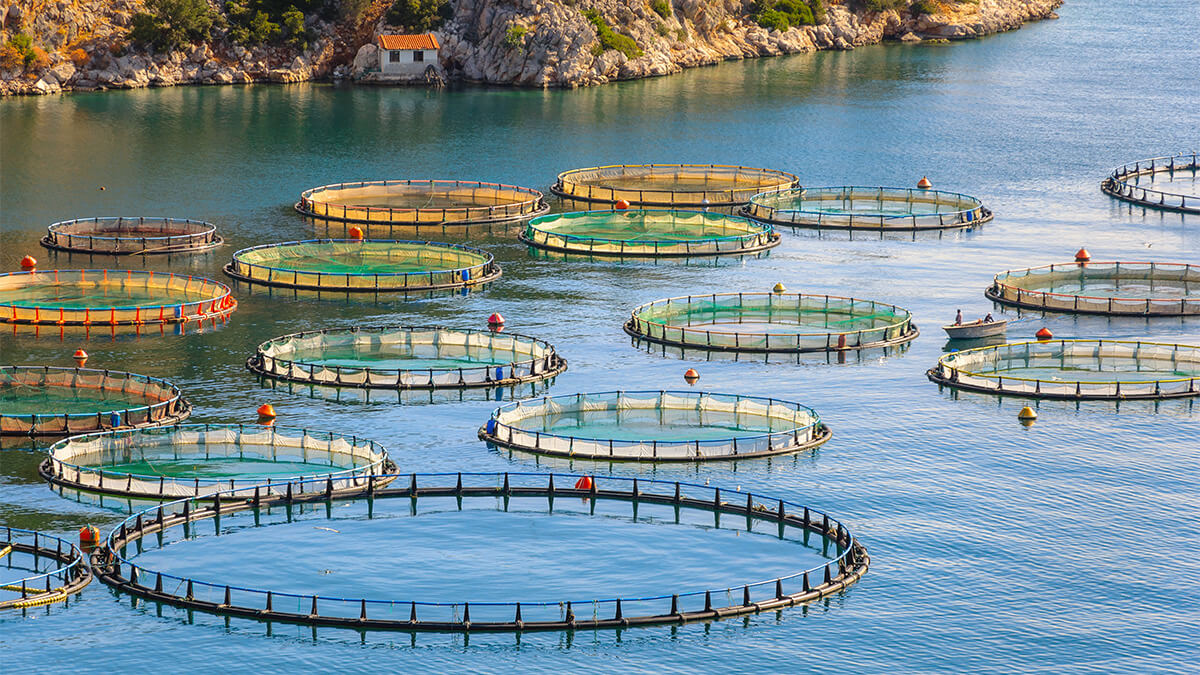

How lighting system failures cascade into biosecurity risks in high-density fish farming
In high-density offshore fish farming, biological stability and physical infrastructure are more tightly coupled than many operators recognise. A failed pump or a fouled net is immediately visible and prompts a rapid response. A failed lighting system, by contrast, often appears to be a compliance inconvenience rather than an operational emergency. That perception is wrong, and the consequences of holding it can be severe. Lighting system failures in offshore aquaculture do not stop at regulatory non-compliance. They trigger a cascade of biological, operational, and safety risks that compound quickly in the demanding conditions where offshore farms operate.
This article works through that cascade systematically, beginning with the biological mechanisms that connect light to fish physiology, then examining what happens inside a pen when illumination fails, how biosecurity barriers weaken under lighting instability, and what the operational and regulatory consequences look like in practice. It closes with a clear picture of what robust aquaculture lighting systems must be built to withstand in offshore environments.
How lighting failures disrupt biological stability in fish farms
To understand why lighting system failures carry biological consequences, it is necessary to start with what light actually does inside a fish pen. Light is not merely a visibility tool for human operators. For farmed fish, particularly salmonids, photoperiod controls fundamental biological processes including circadian rhythms, feeding behaviour, immune function, and reproductive cycling. In high-density farming environments, these processes are actively managed through controlled light regimes, making the lighting system a direct input into biological outcomes rather than a passive environmental feature.
When a lighting system fails, the fish experience an abrupt and uncontrolled shift in their light environment. For species where photoperiod management is used to suppress early maturation or to extend growth periods, even a short interruption can trigger hormonal responses that are difficult or impossible to reverse within a production cycle. The biological clock does not pause and resume cleanly. It responds to the signal it receives, and an unplanned dark period can register as a seasonal cue, initiating physiological changes the farmer did not intend and cannot easily correct.
For example, in Atlantic salmon farming, controlled photoperiod is used to prevent precocious maturation in males, a condition that reduces flesh quality and marketability. A sustained lighting failure during a critical photoperiod window can initiate maturation responses that compromise an entire cohort’s commercial value. The lighting system failure, in this scenario, is not an infrastructure problem. It is a production event with direct financial consequences measured in the value of the affected stock.
What happens inside a fish pen when light goes out
Building on the biological foundation established above, it is useful to examine the sequence of events that unfolds inside a high-density pen when lighting fails. The immediate effects, the secondary effects, and the compounding effects operate on different timescales and through different mechanisms, but they are all initiated by the same event.
Immediate behavioural disruption
Fish in high-density pens are conditioned to light cues that structure their feeding and movement patterns. When light fails suddenly, schooling behaviour becomes disorganised. In high-density environments, disorganised schooling increases the frequency of physical contact between fish, which elevates the risk of scale and fin damage. These physical injuries are not trivial in a biosecurity context. Damaged skin and fins are primary entry points for bacterial and fungal pathogens.
Feeding regime collapse
Modern offshore aquaculture relies on automated feeding systems that are often synchronised with light conditions. A lighting failure disrupts the environmental cues that regulate appetite and feeding behaviour, reducing feed intake efficiency. Uneaten feed accumulates at the pen base, creating localised zones of organic enrichment that promote bacterial proliferation. This is not a theoretical risk. It is a well-documented consequence of feeding regime disruption in high-density systems, and it directly elevates pathogen load within the pen environment.
Stress response and immune suppression
Sudden environmental change, including unplanned light loss, activates the stress response in fish, elevating cortisol levels. Chronic or repeated stress responses suppress immune function, reducing the fish’s capacity to resist pathogens that are always present in the marine environment at background levels. In a high-density pen, where pathogen transmission between individuals is rapid, a population-level reduction in immune competence creates conditions for disease outbreaks that would not occur in a well-managed light environment.
Why biosecurity barriers weaken under lighting instability
Biosecurity in offshore fish farming is not a single barrier. It is a layered system of physical, biological, and operational controls designed to prevent pathogen introduction, limit transmission within the farm, and detect disease early enough to respond effectively. Lighting instability undermines several of these layers simultaneously, which is why its biosecurity impact is disproportionate to what the failure event itself might suggest.
The physical integrity of the fish is the first biosecurity barrier. As noted above, lighting failures increase physical contact damage, creating skin and fin lesions that pathogens can exploit. The second barrier is immune function, which is compromised by the stress response that lighting instability triggers. The third barrier is surveillance, and this is where lighting failures have an effect that is often overlooked entirely.
Effective disease surveillance in a high-density pen depends on visual observation of fish behaviour and physical condition. Abnormal swimming, surface crowding, lethargy, and visible lesions are the primary early indicators of disease onset. All of these require adequate light for observation. When lighting fails or becomes unreliable, the observation window narrows. Early disease indicators go undetected. By the time the problem is visible under ambient light conditions, the infection has progressed further through the population than it would have under continuous, well-maintained illumination.
The practical consequence is that biosecurity risks in high-density fish farming are not simply elevated by lighting failure. They are elevated and simultaneously harder to detect, a combination that gives disease events more time to develop before intervention is possible.
Operational and regulatory consequences of lighting system failure
The biological and biosecurity consequences described above unfold within the farm boundary. The operational and regulatory consequences extend beyond it, involving third parties whose interests and authorities the farm operator cannot ignore.
Offshore aquaculture installations are required under maritime regulations, including the International Regulations for Preventing Collisions at Sea (COLREGS), to maintain visible marking that alerts approaching vessels to the presence of the installation. IALA-compliant lighting is the standard mechanism for meeting this requirement. When lighting system failures leave a farm’s perimeter markers dark or intermittent, the installation becomes a collision hazard for commercial vessels, fishing boats, and service craft operating in the area. A vessel collision with an offshore cage structure causes immediate and severe consequences: stock escape, structural damage, potential crew injury, and the environmental and reputational consequences that follow a containment breach.
Regulatory consequences are equally serious. Maritime authorities in most jurisdictions require farm operators to maintain compliant marking at all times. Lighting failures that are not promptly identified and rectified can result in:
- Formal notices of non-compliance from maritime authorities
- Suspension or revocation of operating licences
- Legal liability in the event of a vessel collision attributable to inadequate marking
- Increased scrutiny from regulators on subsequent licence renewal applications
The operational cost of a lighting failure also includes the service mobilisation required to restore compliance. In remote offshore locations, dispatching a maintenance vessel to address a failed lantern is not a routine task. It involves significant logistical cost, weather dependency, and time during which the installation remains non-compliant. This is precisely why the design philosophy behind purpose-built aquaculture lighting systems prioritises long service life and minimal maintenance requirements, not as a convenience feature, but as a direct operational risk mitigation.
What robust aquaculture lighting systems must withstand
Understanding the cascade of risks that lighting failures trigger makes the engineering requirements for offshore aquaculture lighting considerably clearer. A system that performs adequately in benign conditions but degrades under the actual operating environment of an offshore farm is not fit for purpose. The question is not whether a lighting system will encounter demanding conditions. It is whether it is designed to perform through them without interruption.
Offshore aquaculture lighting systems must be engineered to withstand the following conditions reliably and simultaneously:
- Continuous saltwater exposure: Corrosion-resistant materials and sealed housings are not optional features. Salt spray and full immersion cycles are constant in offshore environments, and any material degradation pathway will eventually produce a failure.
- Storm loading and wave action: Mounting hardware and lantern housings must maintain structural integrity under sustained dynamic loading. A lantern that survives calm water but fails in a storm fails precisely when visibility conditions are worst and the navigation risk is highest.
- Extended solar autonomy in low-insolation periods: At northern latitudes, winter months bring reduced solar input over extended periods. Solar-powered systems must incorporate battery technology and charging algorithms capable of sustaining operation through multi-day overcast conditions without manual intervention.
- Consistent photometric output across temperature ranges: LED performance varies with temperature. Robust systems use temperature-compensated drivers to maintain consistent light intensity and flash character regardless of ambient conditions, ensuring IALA-compliant visibility at all times.
- Remote monitoring capability: In offshore deployments, the only practical early warning system for lighting failure is remote monitoring. Systems equipped with remote status reporting allow operators to detect anomalies before they become outages, enabling planned maintenance responses rather than emergency mobilisations.
The Sabik SBFL 160 Marker Light, for example, is designed specifically for aquaculture farm marking, incorporating GNSS synchronisation, an integrated radar reflector, and IALA-standard yellow light output in a housing built for direct installation on floats. Systems of this specification address the full range of requirements described above: physical durability, regulatory compliance, and operational reliability in the conditions that offshore farms actually encounter.
The core principle is straightforward. In offshore fish farming, lighting system failures are not isolated infrastructure events. They initiate biological disruption, weaken biosecurity barriers, create collision hazards, and expose operators to regulatory and legal consequences. The appropriate response to this understanding is not reactive maintenance. It is the selection and deployment of lighting systems engineered from the outset to operate without failure in the environments where offshore farms operate, supported by remote monitoring that ensures any deviation from normal operation is detected and addressed before the cascade begins.