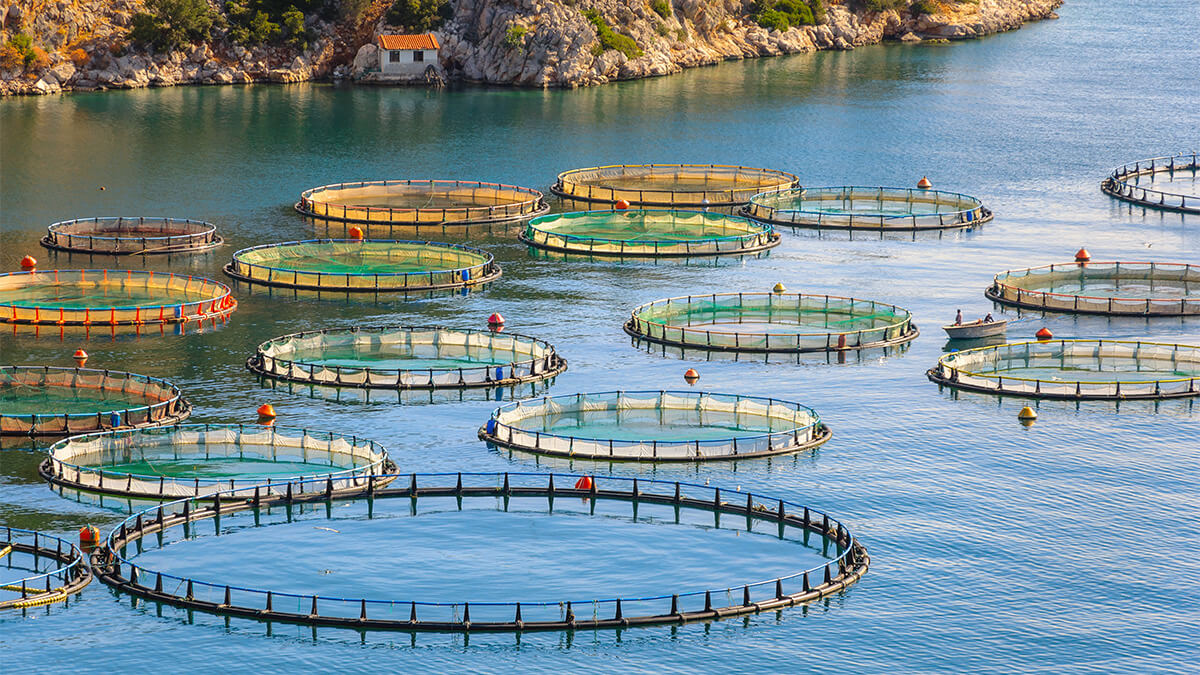

Why light pollution from aquaculture pens is becoming a regulatory flashpoint in 2026
Aquaculture’s expansion into offshore waters has brought with it a regulatory challenge that many operators are only beginning to fully understand: the light emitted by fish farm installations does not simply illuminate a work site. It spills across the water surface, penetrates the marine environment, and increasingly draws the attention of environmental regulators, maritime authorities, and coastal planning bodies. In 2026, that attention is crystallising into enforceable requirements that carry real consequences for operators who have not yet addressed their lighting footprint.
This article provides the knowledge you need to navigate that landscape, starting with a clear definition of what light pollution from aquaculture pens actually means, moving through its ecological and regulatory dimensions, and arriving at practical guidance for building a compliant, future-proof lighting strategy. Each section builds on the last, so the frameworks introduced early in the article will inform the compliance decisions discussed at the end.
What is light pollution from aquaculture pens?
Light pollution from aquaculture pens refers to the uncontrolled or excessive emission of artificial light from fish farm installations into the surrounding marine and coastal environment. It is distinct from the intentional, safety-critical lighting required to mark offshore structures for vessel navigation. The problem arises when lighting intensity, spectral output, or directional spread exceeds what operational or regulatory requirements demand.
Aquaculture installations use artificial light for several legitimate purposes: marking cage perimeters and submerged structures for navigational safety, enabling work operations during night hours, and, in some species-specific applications, manipulating photoperiod to influence fish growth cycles. Each of these functions requires a different light intensity and duration profile. When those profiles are not carefully managed, the cumulative output creates a persistent artificial glow that extends well beyond the installation boundary.
A useful way to understand the distinction is to think of it in terms of purposeful versus incidental light. An IALA-compliant marker lantern on a cage perimeter buoy is purposeful light: it is calibrated, directional, and serves a defined safety function. Floodlights left running at full intensity throughout the night, or underwater grow lights whose spectral output extends into ecologically sensitive wavelengths, represent incidental light output that has not been designed or controlled with the surrounding environment in mind. Fish farm light pollution, in regulatory terms, is primarily concerned with this second category.
How aquaculture lighting affects marine ecosystems
Artificial light at night disrupts biological processes in marine organisms that have evolved over millennia in environments governed by natural light cycles. The effects are not uniform across species or habitats, but they are well-documented enough to form the scientific basis for the regulatory frameworks now emerging in 2026.
Phototactic responses and species aggregation
Many marine organisms are phototactic, meaning they move toward or away from light sources. Zooplankton, juvenile fish, and invertebrates that form the base of the marine food web exhibit strong phototactic responses to artificial light. Persistent illumination from aquaculture installations can draw these organisms into unnatural aggregations around the farm site, disrupting local food web dynamics and potentially concentrating predator activity in ways that affect both wild fish populations and farmed stock.
Photoperiod disruption and spawning cycles
Many commercially important fish species use day length as a cue for spawning migration, gonadal development, and seasonal behaviour. Artificial light that extends the apparent photoperiod in coastal and offshore zones can interfere with these cues for wild populations in the vicinity of aquaculture installations. Regulators in several jurisdictions have begun to treat this as an environmental impact requiring assessment, in the same way that noise or chemical discharge is assessed.
Benthic habitat effects
Light penetrating the water column reaches benthic habitats, where it can alter the behaviour of bottom-dwelling species and affect the growth of photosensitive organisms such as seagrass and certain algae communities. For offshore installations in shallower coastal zones, this is a documented concern that environmental impact assessments increasingly require operators to quantify and mitigate.
Why 2026 marks a turning point in regulatory pressure
The regulatory scrutiny around aquaculture pen lighting has been building for several years, but 2026 represents a meaningful threshold for three converging reasons: the maturation of offshore aquaculture as an industry, the tightening of environmental licensing frameworks, and the increasing technical capability of regulators to monitor and enforce lighting standards.
Offshore aquaculture has grown significantly as coastal sites become congested and operators move into deeper, more exposed waters. This expansion has brought fish farms into proximity with shipping lanes, protected marine areas, and coastal communities in ways that earlier, nearshore operations did not. The resulting conflicts have accelerated regulatory attention. In the European Union, the Marine Strategy Framework Directive and national transpositions are being interpreted with increasing strictness in relation to artificial light as a form of marine pollution. Similar developments are occurring in Norway, Chile, Canada, and Australia, all of which host significant offshore aquaculture industries.
At the same time, regulators now have access to satellite-based light monitoring data that makes it possible to detect and document excessive illumination from offshore installations without requiring physical inspection. This fundamentally changes the enforcement dynamic. Operators who previously operated under the assumption that offshore locations reduced oversight are discovering that aquaculture lighting standards in 2026 are being applied with a level of monitoring capability that did not exist five years ago. The regulatory flashpoint is not theoretical: licence conditions in multiple jurisdictions now include explicit provisions on artificial light management, and enforcement actions have begun to follow.
What compliance means in practice for offshore operators
Understanding the regulatory landscape is the foundation; understanding what compliance actually requires in operational terms is the next step. Offshore aquaculture compliance in relation to lighting involves three distinct but interconnected obligations: navigational marking requirements, environmental light management standards, and documentation and reporting responsibilities.
Navigational marking obligations
Offshore aquaculture installations are required under maritime law to be marked in accordance with IALA recommendations and applicable national maritime authority requirements. This means installing approved marine lanterns on cage perimeter structures, anchor buoys, and any submerged hazards that could present a collision risk to passing vessels. These lights must meet specific intensity, colour, and flash character requirements. Non-compliance with navigational marking is the most immediately enforceable category of obligation, and it carries the most direct safety consequences.
Environmental light management
Increasingly, environmental licences for offshore aquaculture installations include conditions governing the intensity, spectral composition, and operating hours of artificial lighting beyond what is required for navigational marking. Compliance in this area requires operators to demonstrate that lighting is limited to operational necessity, that underwater lighting is managed to minimise ecological impact, and, in some cases, that light spill is contained within defined boundaries. For operators accustomed to treating lighting as an unregulated operational decision, this represents a significant shift in how aquaculture pen lighting regulations are applied.
Documentation and audit readiness
Regulatory compliance is not simply a matter of having the right equipment installed. Authorities increasingly require operators to maintain records of lighting configurations, operating schedules, and any modifications made to installed systems. Audit readiness means being able to demonstrate, on request, that the lighting in use meets the specifications required by the licence conditions. Remote monitoring systems that log operational data provide a significant practical advantage here, as they generate the audit trail that manual record-keeping often fails to produce consistently.
Common compliance gaps that put licences at risk
Drawing on the obligations described above, it is possible to identify the compliance gaps that most commonly expose offshore aquaculture operators to regulatory risk. These are not obscure technical failures; they are systematic patterns that arise when lighting decisions are made without reference to the full regulatory picture.
- Using non-approved lighting for navigational marking: Installing general-purpose marine or industrial lights rather than IALA-compliant marine lanterns designed for aids to navigation. Approved products must meet specific photometric standards that general-purpose lights do not satisfy.
- Operating lights at unnecessary intensity: Running navigational or work lights at maximum output continuously, rather than using automatic intensity adjustment calibrated to ambient conditions. Lights that are significantly brighter than required by their navigational function represent an unmanaged light pollution risk.
- No operating schedule management for non-navigational lights: Work lights, underwater grow lights, and other operational lighting left running through the full night without schedule control. Environmental licence conditions typically require that non-essential lighting is minimised outside of active operational periods.
- Absence of remote monitoring: No system in place to verify that installed lights are operating as specified. An unmonitored installation cannot demonstrate continuous compliance, and a failed navigational light that goes undetected creates both a safety incident and a regulatory breach simultaneously.
- Inadequate documentation: No records of installed equipment specifications, configuration settings, or operational schedules. When a regulator requests evidence of compliance, the absence of documentation is itself treated as a compliance failure in many jurisdictions.
The pattern underlying most of these gaps is the same: lighting decisions made on the basis of operational convenience rather than regulatory design. Operators who have not yet reviewed their installations against current aquaculture lighting standards in 2026 should treat that review as an immediate priority.
How to build a future-proof aquaculture lighting strategy
Building on the compliance framework and gap analysis covered above, the path to a future-proof lighting strategy is one that addresses both current requirements and the direction of regulatory travel. The regulatory trend is clearly toward stricter management of marine light pollution, not looser, so a strategy designed only for today’s requirements will require revision within a short planning horizon.
The starting point is specifying IALA-compliant marine lanterns for all navigational marking functions. Products purpose-built for aquaculture marking, such as the Sabik aquaculture lighting range, are designed to meet navigational marking requirements while incorporating features such as automatic intensity adjustment, GNSS synchronisation, and low power consumption that directly address the environmental light management obligations described earlier. Automatic intensity adjustment, in particular, is significant: it ensures that a lantern operates at the minimum intensity required for its navigational function at any given time, reducing unnecessary light output without compromising safety.
The second element of a future-proof strategy is integrating remote monitoring from the outset. A remote monitoring capability serves three functions simultaneously: it provides the operational assurance that lights are performing as required, it generates the documentation record that regulators increasingly demand, and it enables rapid response to equipment issues before they become compliance incidents. In offshore environments where physical inspection is costly and weather-dependent, remote monitoring is not an optional enhancement; it is the mechanism through which continuous compliance can be credibly demonstrated.
The third element is a formal lighting schedule and configuration policy. This means documenting the installed equipment, its configuration settings, its intended operating schedule, and the regulatory basis for each lighting decision. This policy should be reviewed whenever licence conditions are renewed or when the installation configuration changes. Operators who approach lighting as a managed compliance function, rather than an operational afterthought, are substantially better positioned when regulatory scrutiny arrives.
Offshore aquaculture compliance in relation to lighting is no longer a peripheral concern. The regulatory frameworks are in place, the monitoring tools exist, and enforcement is following. Operators who treat their lighting strategy as a proactive investment in licence security, rather than a reactive response to inspection, will find themselves ahead of a requirement that is only becoming more demanding.
Contact Sabik’s technical team to discuss your aquaculture lighting requirements and ensure your installation meets current IALA and environmental standards.